If your multi-city limo or black-car operation still runs on texts, spreadsheets, and callbacks, you're losing bookings every week. This guide breaks down what to look for in limousine software in 2026 — and how to stop leaving money on the table.
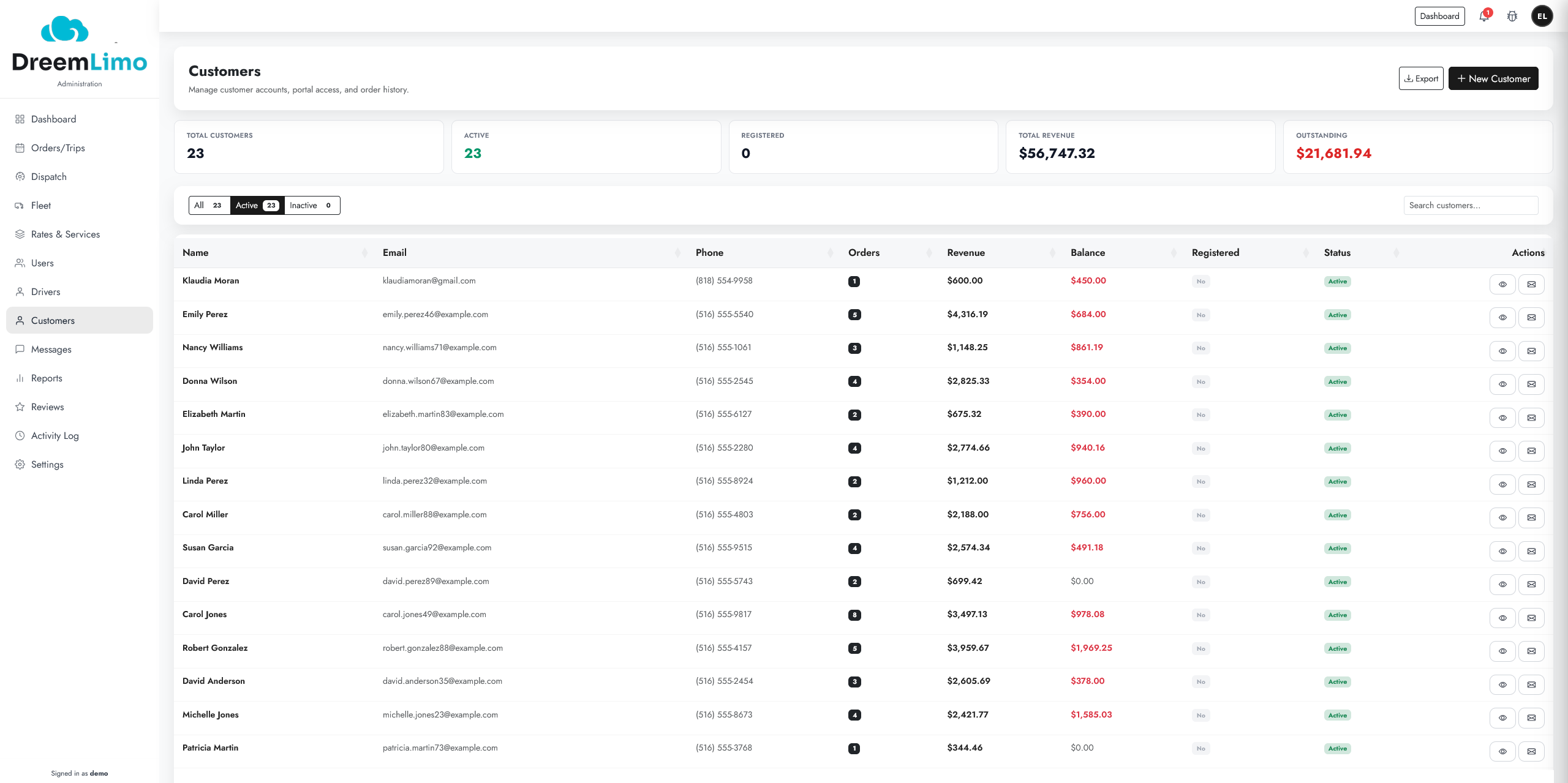
It’s 2:07 a.m. A corporate travel coordinator in the local area needs a black-car transfer from the airport for a client landing at 6:00 a.m. She fills out your contact form, waits 20 minutes, and books with a competitor. You wake up to the notification at 7:15 a.m. — after the run is already done. That single missed airport transfer was worth $180 to $280. If it happens three times a week, that’s $2,500 to $4,000 a month walking out the door while you sleep. Operators searching for the best limo booking software multi-city 2026 are usually at exactly this breaking point.
This guide is written for owner-operators running 3 to 25 vehicles — limos, black-car sedans, SUVs, sprinter vans, or party buses — across more than one city or metro zone. You’re the dispatcher, the driver scheduler, the quote writer, and the bookkeeper. You don’t have time to read a 40-page software manual. What you need is a clear picture of what the right limousine software actually does, what it costs you not to have it, and what to look for before you sign anything.
What Does a Missed Booking Actually Cost a Multi-City Operator?
A single unanswered inquiry during peak hours costs the average black-car operator $150 to $350 in direct revenue — and potentially 3 to 5 times that in lost repeat business. The math gets worse when you factor in seasonal demand spikes.
A single unanswered inquiry during peak hours costs the average black-car operator $150 to $350 in direct revenue — and potentially 3 to 5 times that in lost repeat business.
In the local area, wedding season runs roughly April through October. Prom weekend clusters in May and June. Corporate holiday party season hits November and December hard. During those windows, a single stretch SUV booking can run $600 to $1,200 for a 4-hour minimum (the hourly minimum is the lowest number of billable hours you’ll charge regardless of actual trip time). Miss two bookings on a Saturday in June and you’ve lost more than most operators pay per month for a quality limousine software platform.
Double-bookings are the other silent killer. When dispatch lives in a text thread or a shared Google calendar, it’s only a matter of time before two jobs land on the same vehicle. A double-booked stretch SUV on prom night doesn’t just cost you that job — it costs you the review, the referral, and any chance of rebooking that family for the next four years of school events.
Chargebacks (when a passenger disputes a charge with their card issuer) are also rising. As of 2024, card-not-present disputes in the ground transportation category increased year over year, according to industry payment processors. Card-on-file capture — where the system stores a payment method at booking and charges it automatically — is the single most effective protection against no-shows and chargebacks. Any limo apps worth considering in 2026 must include this feature natively.

What Should You Look for in the Best Limo Booking Software Multi-City 2026?
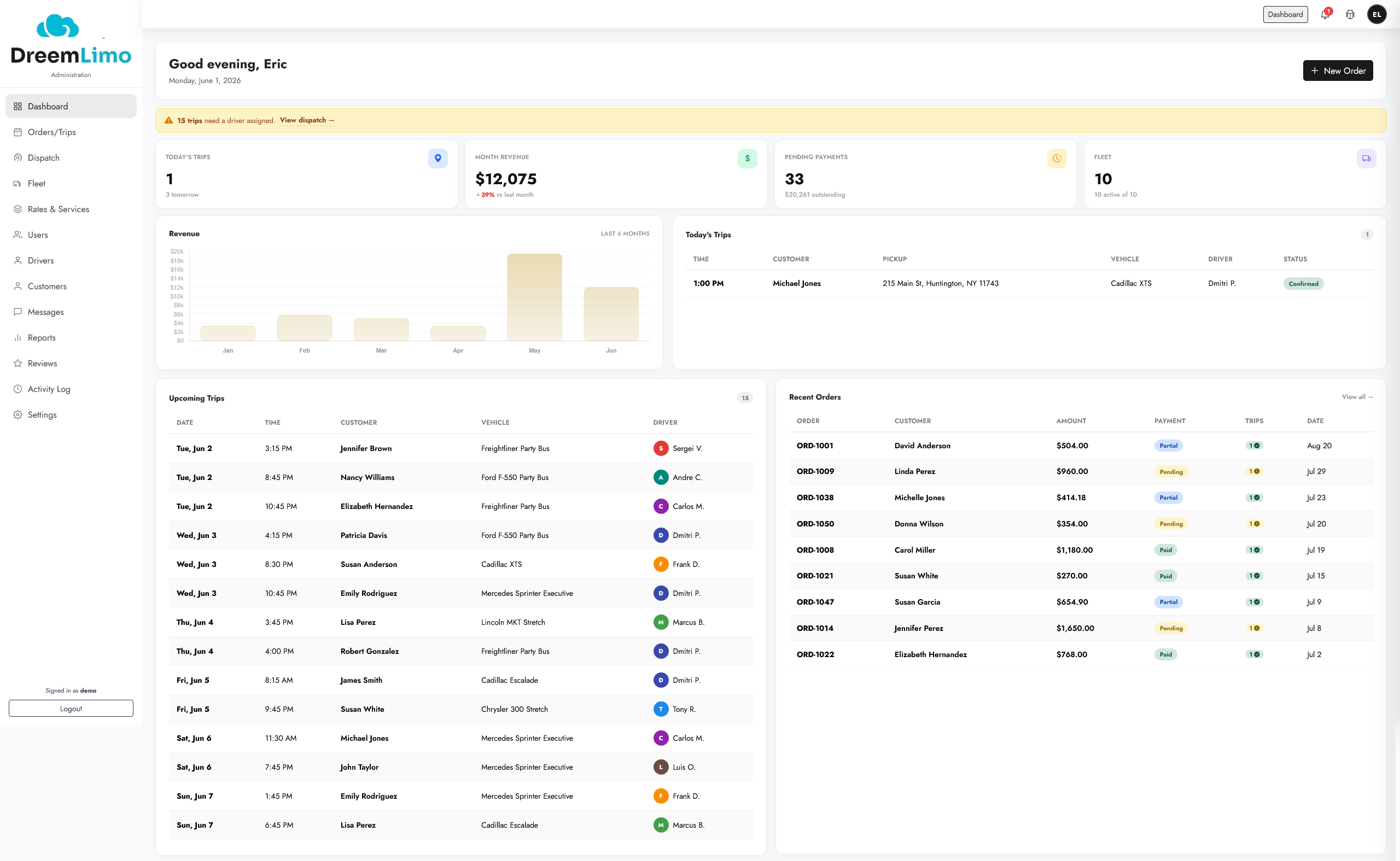
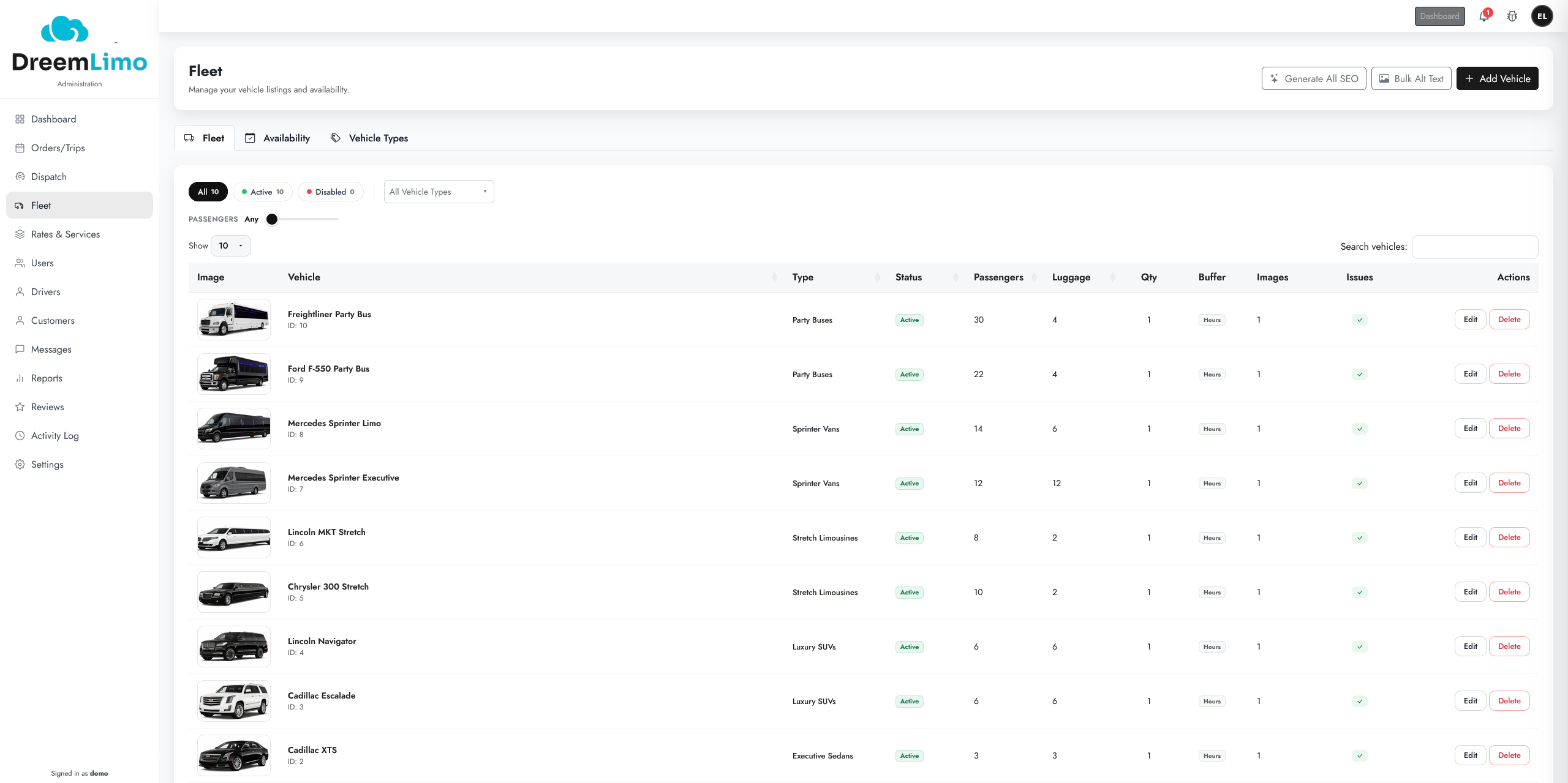
The five features that separate a capable multi-city limousine booking platform from a basic scheduling tool are: zone-based pricing, automated dispatch, card-on-file capture, farm-out management, and a real-time dispatch board. Here’s what each one means in practice.
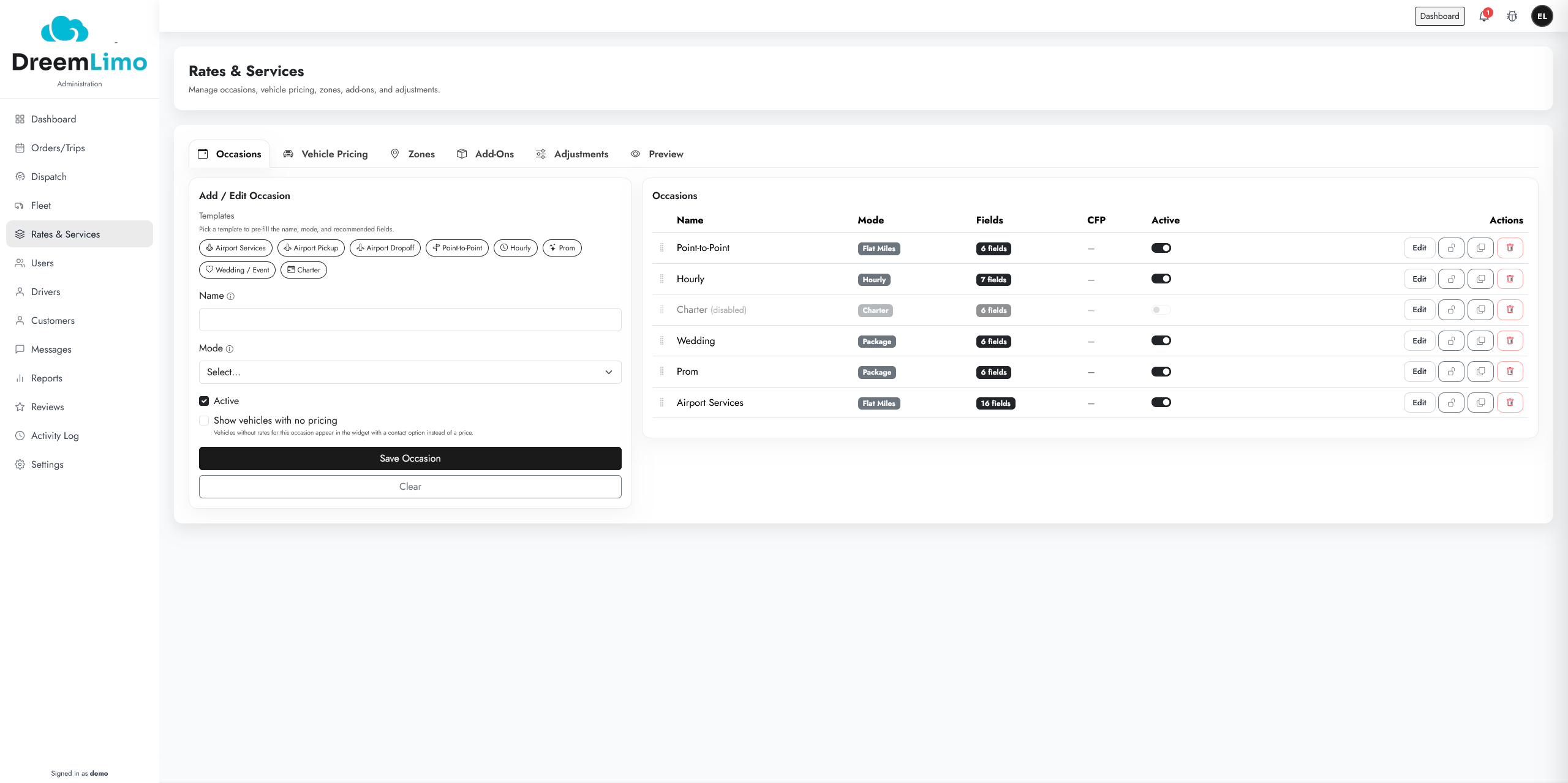
- Zone-based pricing: Automatically calculates fares based on pickup and drop-off zones rather than requiring manual quotes. Critical when you’re running jobs across multiple cities with different base rates.
- Automated dispatch: Assigns a driver and sends confirmation to the passenger without you touching a phone. Handles that 2 a.m. airport inquiry while you sleep.
- Card-on-file capture: Stores the passenger’s payment method at booking. Eliminates no-shows and simplifies post-trip charging for wait time or extras.
- Farm-out management: Farm-outs are jobs you subcontract to an affiliate operator in another city when your own fleet is unavailable. Good limo software tracks these separately so you never confuse affiliate jobs with in-house revenue.
- Real-time dispatch board: A live visual grid showing every vehicle, every driver, and every job status. Replaces the whiteboard or the group text thread that breaks down at scale.
- Passenger-facing online booking: A branded booking widget or page where clients can price, configure, and book a run without calling you. This is what captures the 2 a.m. inquiry.
The table below compares three common approaches operators use to manage bookings as they grow across cities.
| Approach | Best For | Key Strengths | Key Limitations | Typical Monthly Cost |
|---|---|---|---|---|
| Manual (texts, spreadsheets, phone) | Single-vehicle owner-operators just starting out | Zero software cost, no learning curve | Misses after-hours inquiries, double-booking risk, no card-on-file protection | $0 in software; high in owner hours |
| Generic scheduling app (Calendly, Square Appointments) | Operators wanting basic online booking | Low cost, easy setup | No dispatch board, no zone pricing, no farm-out tracking, not built for ground transport | $15–$50/month typically |
| Purpose-built limousine software (Dreem Limo) | Multi-city operators running 3–25+ vehicles | Zone pricing, dispatch board, card-on-file, farm-out management, branded booking, scales to any fleet size | Requires initial setup and data migration | Varies by fleet size and features; request a custom quote |
How Do Larger Fleets Handle Dispatch Across Multiple Markets?
Operators running 10 or more vehicles across 2 or more cities typically rely on a centralized dispatch board that shows all vehicles and all jobs in real time, regardless of which city the run is in. Without that single view, you’re managing two businesses instead of one.
The deadhead problem gets expensive fast at scale. Deadhead miles are the miles a vehicle travels empty — driving from your garage to a pickup, or returning after a drop-off. In the local area, deadhead on a round-trip airport run can add 20 to 40 minutes of unpaid drive time. Operators who track deadhead by zone can reprice their rates to recover that cost. Most generic scheduling tools have no concept of deadhead. Purpose-built limo apps do.
Rideshare competition is real, especially Uber Black, which targets the same corporate traveler your black-car service does. The difference is reliability, accountability, and the ability to pre-book 30 days out with a guaranteed vehicle class. Your limousine software needs to make that pre-booking experience as frictionless as Uber’s — or you’ll keep losing the comparison.
Our dispatch team across the local area handles roughly 3 times more concurrent jobs during the November–December holiday corporate window than during any other 8-week period. Without a live dispatch board filtering by vehicle status, those weeks would require a dedicated phone operator just to avoid conflicts.
What Can You Do This Week Without Buying New Software?
Three immediate changes — setting up an auto-reply for after-hours inquiries, creating a written rate card for your top 5 routes, and requiring a credit card hold at booking — can reduce missed revenue within 7 days at zero software cost.
- Set up an after-hours auto-reply: Use your email or Google Business Profile to send an automatic response to any inquiry received between 9 p.m. and 7 a.m. Include your top 3 routes with flat rates and a link to book or call back. This alone recovers a portion of the overnight inquiries you’re currently losing.
- Build a written rate card: Price your 5 most common jobs — airport transfer, hourly wedding package, prom package, corporate account flat rate, and out-of-town transfer. Written rates reduce phone-tag quotes from 20-minute calls to 90-second confirmations.
- Require a card hold at booking: Even if you’re using a manual process, collect a card number and authorization before confirming any reservation. No-show rates drop sharply when passengers have skin in the game. Industry data consistently shows no-show rates fall by 40% or more when a card hold is in place.
- Audit your Google Business Profile: In the local area market, 70% or more of new local service inquiries start with a Google search. If your profile is missing photos of your vehicles, has no response to recent reviews, or shows an incorrect phone number, fix it today. It costs nothing and directly affects how many calls you get this week.
These steps buy you time and reduce immediate losses. But they don’t solve the core problem: you’re still the bottleneck. Every booking still requires your attention. That ceiling is what purpose-built limousine software removes.
Where Does Online Booking Change the Math for Limo Operators?
When a passenger can price, configure, and pay for a run at 11 p.m. on a Tuesday without calling anyone, your effective selling hours go from roughly 12 per day to 24 — and your cost per booking drops because no owner labor is involved.
As of 2026, the U.S. Department of Energy and consumer behavior research both confirm that mobile-first, self-service booking is the dominant preference for travelers under 45. That’s your corporate travel coordinator, your bride-to-be, and your prom parent. If your booking process requires a phone call, a meaningful share of that audience will choose a competitor who doesn’t.
The economics are straightforward. An airport transfer in the local area typically runs $150 to $280 depending on distance and vehicle class. A 4-hour wedding package runs $500 to $1,100. A corporate account with 8 to 12 monthly runs is worth $1,500 to $3,000 per month in recurring revenue. Capturing one additional corporate account per quarter through better online visibility and frictionless booking pays for most limousine software platforms for the entire year.
We see roughly 35% of new bookings on the Dreem Limo platform come in outside of standard business hours — between 7 p.m. and 8 a.m. — precisely the window when a solo operator answering their own phone is unavailable. That’s not a small slice of demand. It’s more than a third of total volume.
Roughly 35% of new bookings on the Dreem Limo platform come in outside of standard business hours — between 7 p.m. and 8 a.m. — precisely the window when a solo operator answering their own phone is unavailable.
Reviews and referrals still drive local market share in the local area. A 5-star review on Google from a corporate client carries more weight than any ad spend. Good limousine software sends automated post-trip review requests, which consistently generate 2 to 4 times more reviews than operators who ask manually. More reviews means better local search placement, which means more inbound calls — without paying for clicks.
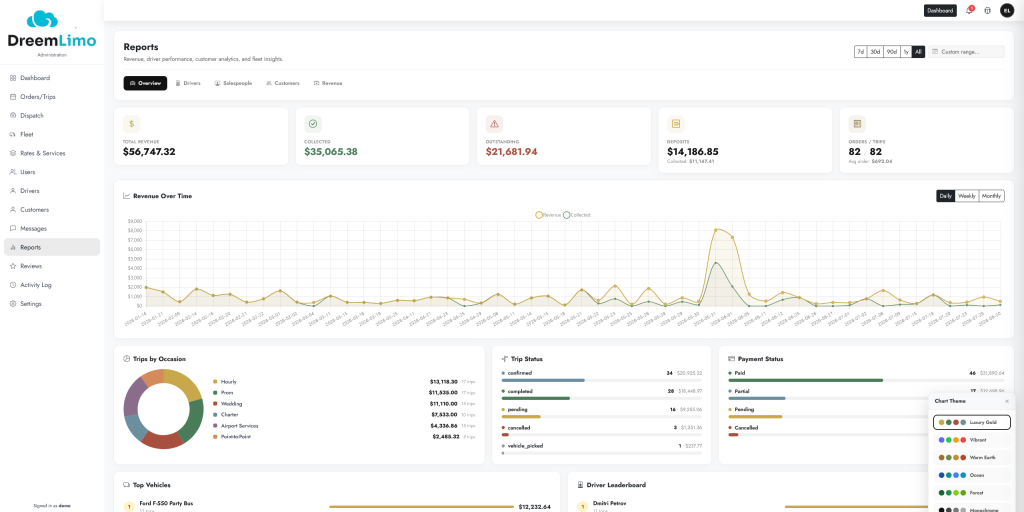
For operators evaluating the best limo booking software multi-city 2026, the question isn’t whether automation pays for itself. It’s how quickly. For most operators in the local area running 5 or more vehicles, the payback period is under 60 days based on recovered after-hours bookings alone.
For most operators in the local area running 5 or more vehicles, the payback period is under 60 days based on recovered after-hours bookings alone.
Get Your Multi-City Operation Running on One Platform
Stop losing after-hours bookings, double-booking vehicles, and spending 10-plus hours a week on manual dispatch. Dreem Limo’s platform is built for exactly the operator described in this guide — growing, multi-city, wearing every hat, and ready to let software handle the parts that don’t require a human.
Book a platform demo or launch your own branded booking page for your local area operation. See how zone-based pricing, automated dispatch, and card-on-file capture work together in a single limo software dashboard built for fleets of any size.
Call Dreem Limo directly or request a custom quote online. Whether you’re running 3 vehicles or 25, the right limousine booking software pays for itself faster than most operators expect — and the operators who move first in a local market tend to hold the Google ranking advantage for years.
Frequently Asked Questions
What is the best limo booking software for a multi-city operation in 2026?
The best limo booking software for multi-city operations in 2026 is one that handles zone-based pricing, automated dispatch, card-on-file capture, and farm-out management from a single dashboard. Generic scheduling tools don't include these ground-transport-specific features. Dreem Limo's platform is built for exactly this use case and serves operators across the local area and neighboring markets. Request a demo to see how it fits your fleet size.
How much does limousine software typically cost per month?
Limousine software pricing in the regional market generally ranges from around $100 to $400 or more per month depending on fleet size, number of users, and which features are included. Purpose-built limo apps with dispatch boards and online booking typically cost more than basic scheduling tools, but the cost is usually recovered quickly through reduced missed bookings. Contact Dreem Limo for a custom quote based on your specific operation.
How do I stop double-booking vehicles in my limo business?
Double-bookings almost always happen when dispatch lives in a shared calendar, a text thread, or a spreadsheet that isn't updated in real time. A real-time dispatch board — a live grid showing every vehicle, driver, and job status — eliminates this problem because the system prevents two jobs from being assigned to the same vehicle at the same time. Setting this up is one of the first things operators in the local area do when they move to purpose-built limousine software.
Can limo software help me compete with Uber Black in my local market?
Yes — the main advantage black-car operators have over Uber Black is pre-booking reliability, guaranteed vehicle class, and personal accountability. Limo software that offers a frictionless online booking experience, automated confirmations, and post-trip review requests helps you match Uber's convenience while keeping your service advantages. Operators in the local area who invest in a branded booking platform consistently outperform those relying solely on phone calls for new business.
What is a farm-out in the limo industry and does software track it?
A farm-out is a job you subcontract to an affiliate operator in another city when your own fleet is unavailable or out of range. It's common for multi-city operators who want to serve clients across a wider area without owning vehicles everywhere. Good limousine software tracks farm-out jobs separately from in-house runs so you can see your true revenue, manage affiliate relationships, and avoid billing confusion. Dreem Limo's platform includes farm-out tracking as a core feature.