AI limo booking software in 2026 is changing how small and mid-size chauffeur operations handle inquiries, dispatch, and pricing — here is what operators in the local area need to know.
It is 2:07 a.m. A bride’s maid of honor just texted your inquiry form asking about a 6-hour wedding package for June — peak season, a job worth $900 to $1,400 in the local area market. You are asleep. Your phone is on silent. By 9 a.m. she has already booked with someone else. That is not a hypothetical. That is a Tuesday for most single-operator and small-fleet limo, black-car, and party-bus companies. The rise of AI limo booking software 2026 is a direct answer to exactly that problem.
What Does a Missed Booking Actually Cost You?
A single unanswered airport transfer inquiry in the local area typically represents $85–$175 in lost revenue. A missed wedding or prom package runs $600–$1,500 per booking. Multiply that by 3–5 missed contacts per week during wedding season (April through October) and you are looking at $7,000–$30,000 in annual revenue walking out the door before you even know it was there.
Phone-tag quotes are the second drain. The average small operator spends 6–10 hours per week writing manual quotes, following up by text, and re-explaining hourly minimums (the fewest billable hours required per booking, typically 3–4 for local transfers) and zone-based pricing (flat rates tied to geographic pickup and drop-off zones). That is a part-time job you are doing for free.
No-shows and chargebacks add another layer. Without a card-on-file capture (storing a payment method at booking to secure the reservation), no-show rates on unconfirmed bookings can run 15–25% during prom and holiday-party season. Each no-show on a stretch SUV or party bus costs you a deadhead (a drive with no paying passenger) plus the blocked time slot.
Rideshare competition from Uber Black has compressed the lower end of airport-transfer pricing, but it has not touched the wedding, corporate-event, or multi-hour charter market. Operators who respond within 5 minutes to an inquiry close bookings at roughly 3x the rate of those who respond within an hour, according to industry response-time benchmarks. Speed of response is now a competitive advantage, not a courtesy.
Operators who respond within 5 minutes to an inquiry close bookings at roughly 3 times the rate of those who respond within an hour.
What Is AI Limo Booking Software in 2026 and How Does It Work?
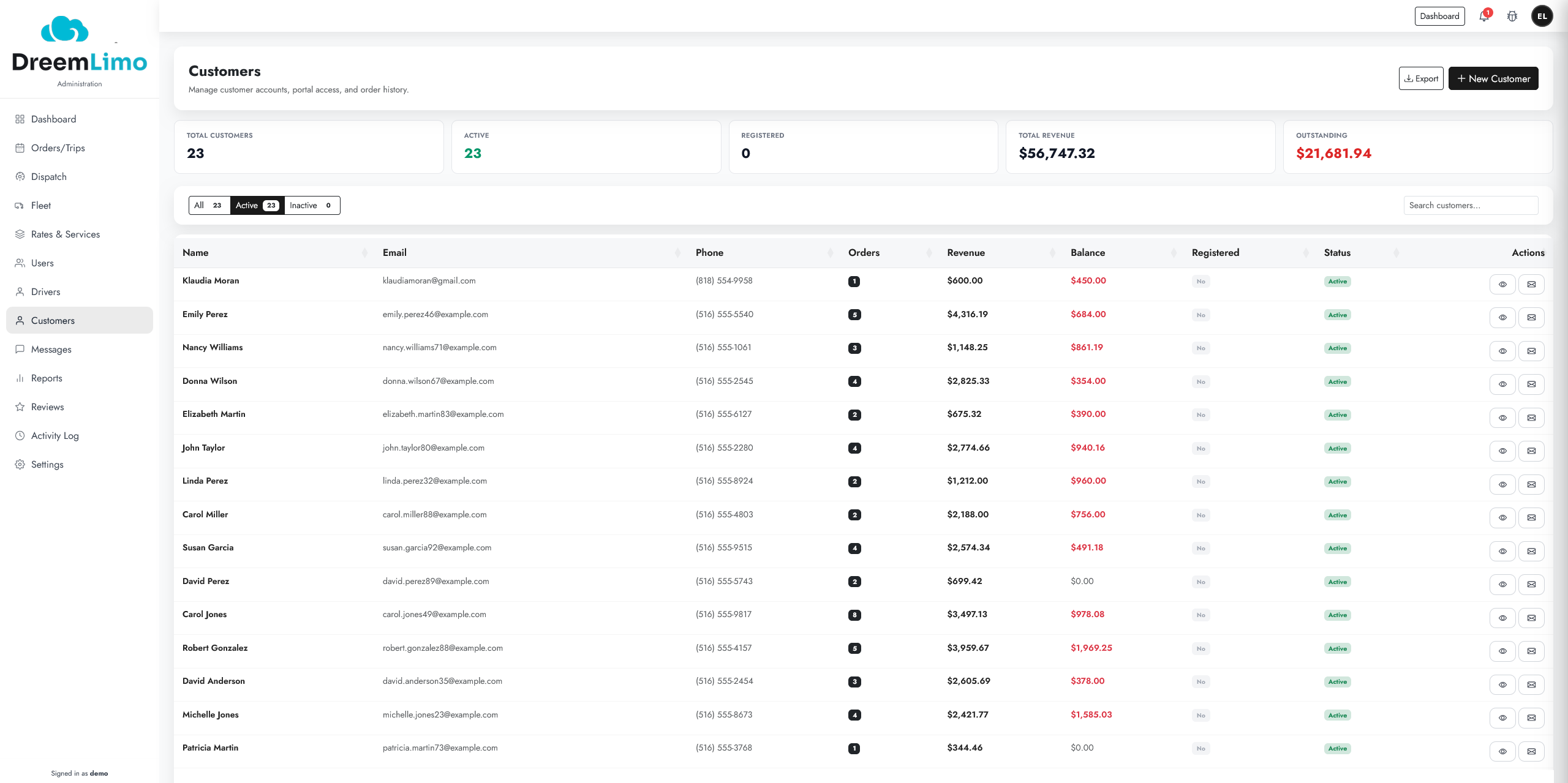
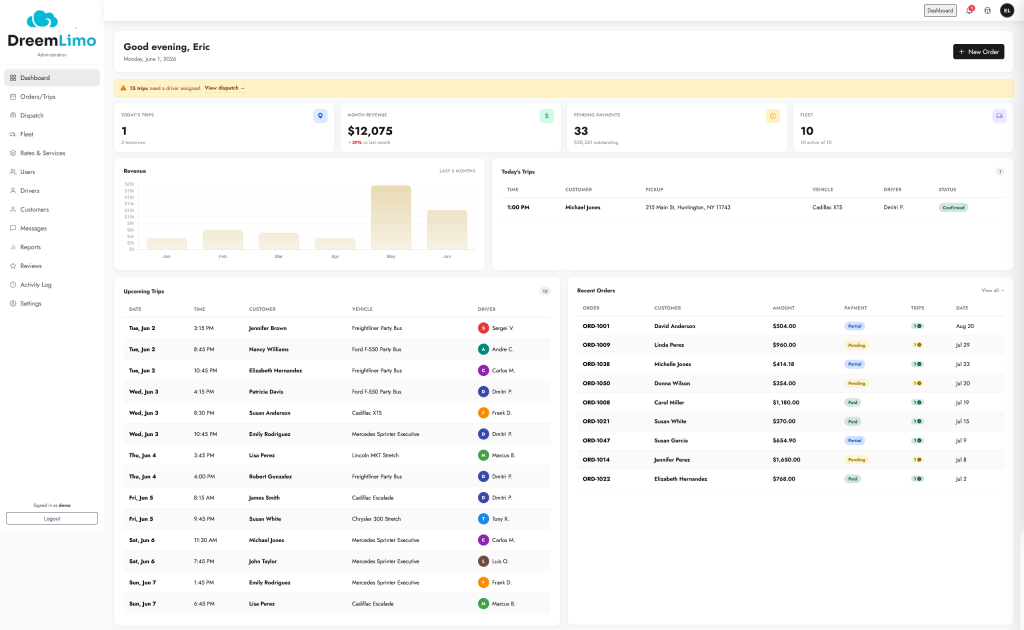
AI limo booking software in 2026 refers to platforms that combine automated quoting, real-time availability, payment capture, and dispatch-board integration into a single system — with AI handling the repetitive steps that used to require a human on the phone. Think of it as a dispatcher who never sleeps and never misses a form submission.
Here is what a modern limo software stack typically does:
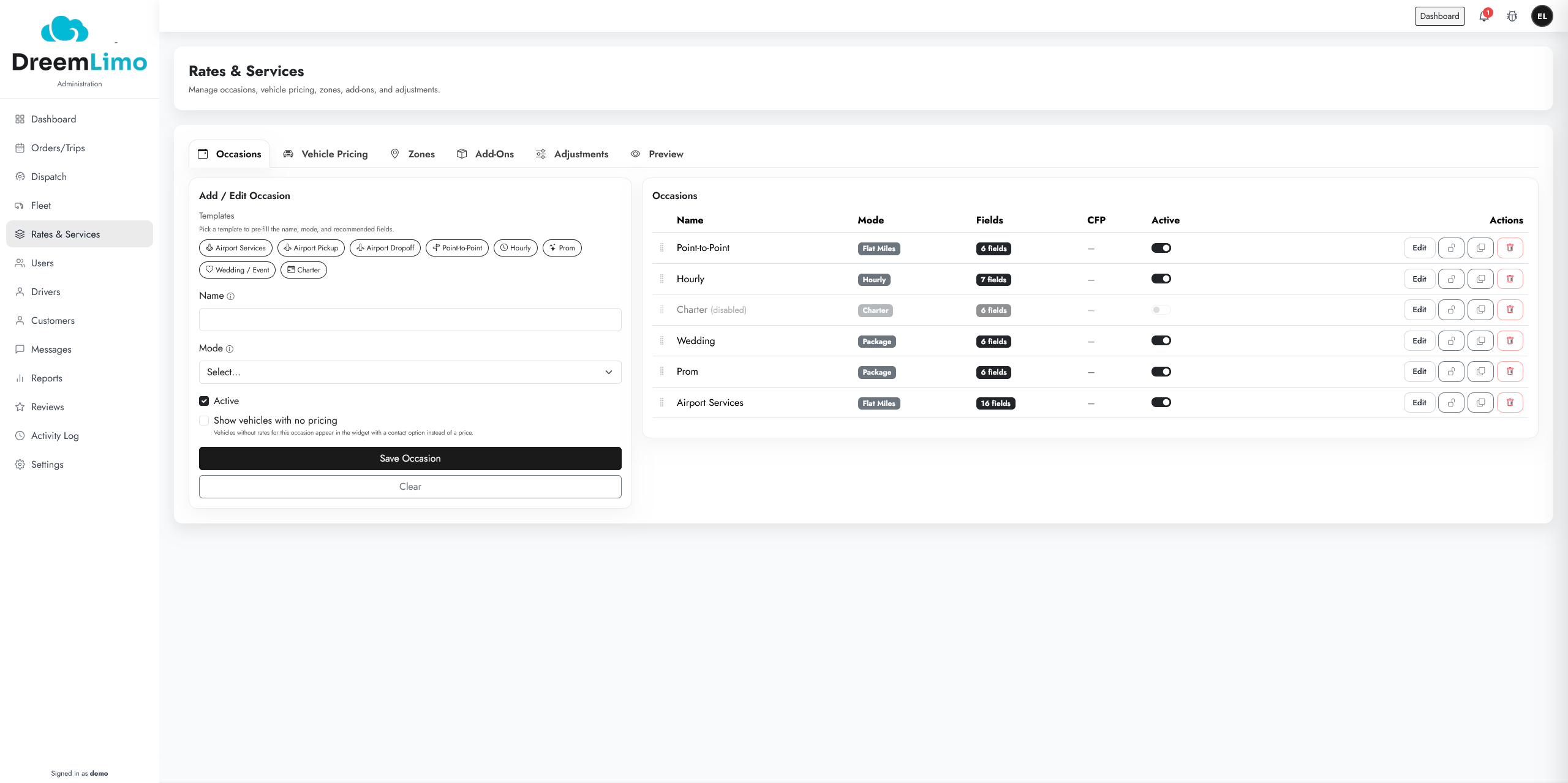
- Instant quote engine: The customer enters pickup ZIP, drop-off location, date, and vehicle type. The system returns a price in under 10 seconds using your zone-based pricing rules.
- Card-on-file capture: The booking is not confirmed until a payment method is stored, cutting no-shows dramatically.
- Automated follow-up: If a quote is viewed but not booked within 2–4 hours, the system sends a follow-up text or email automatically.
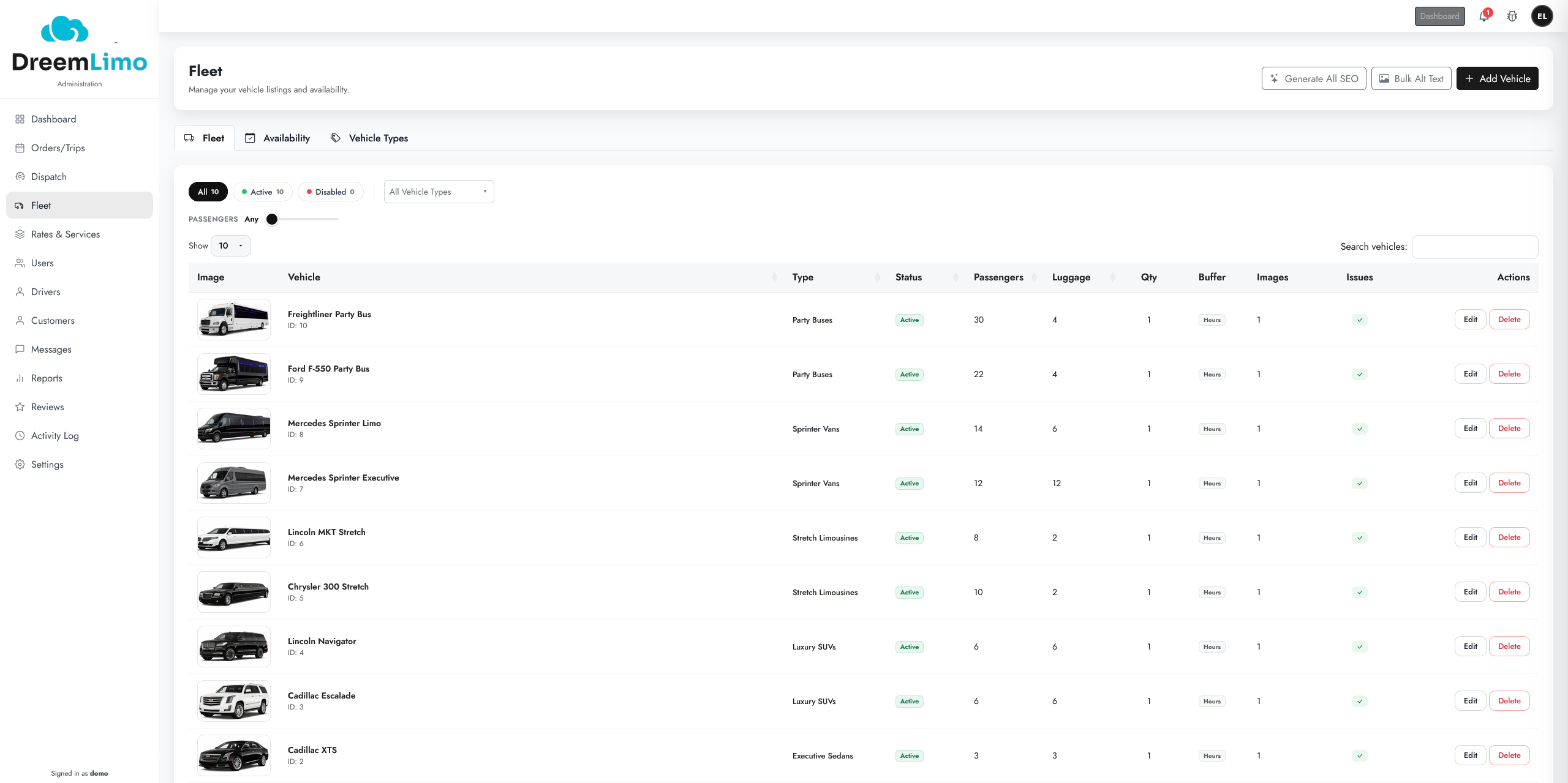
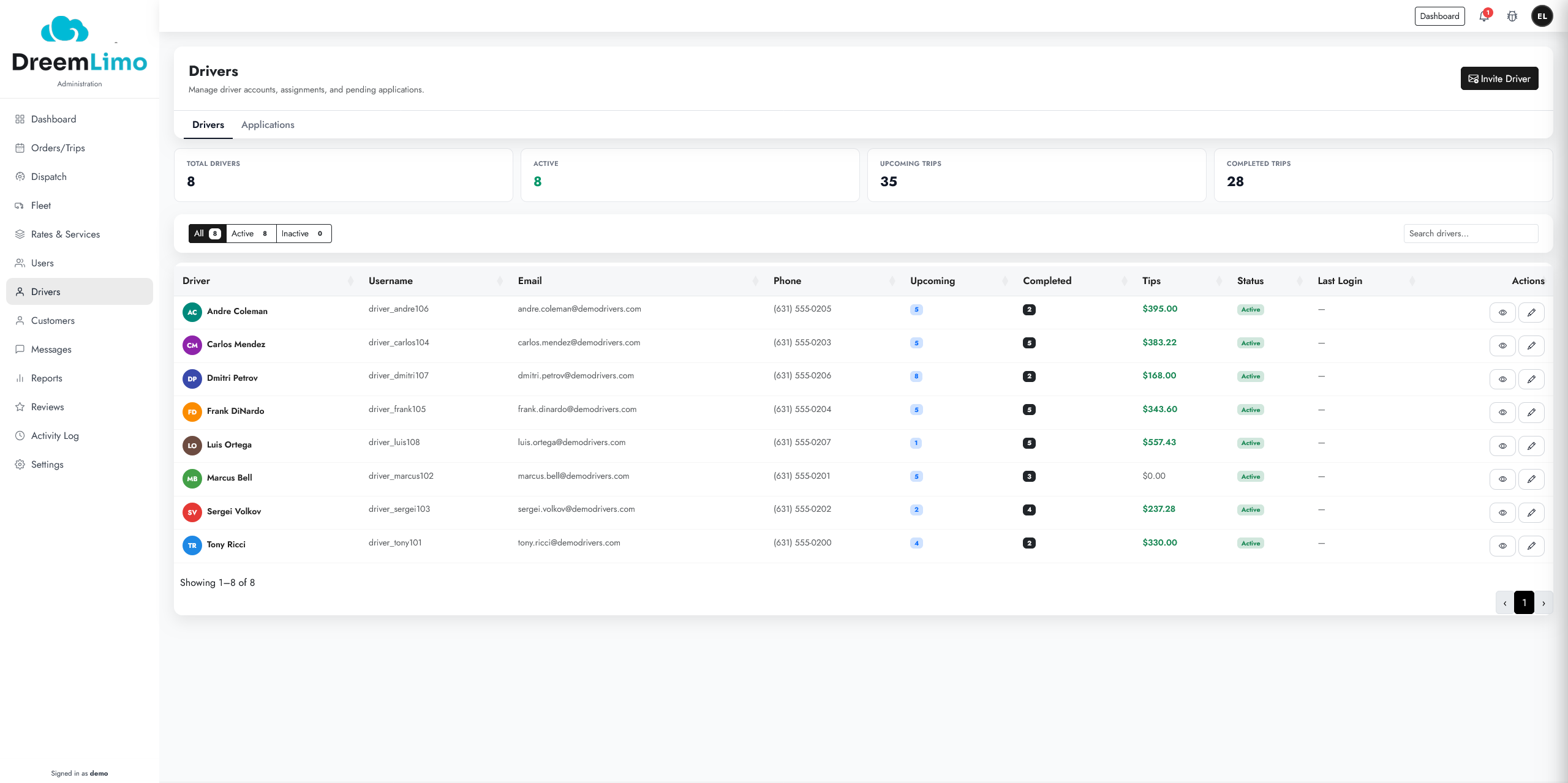
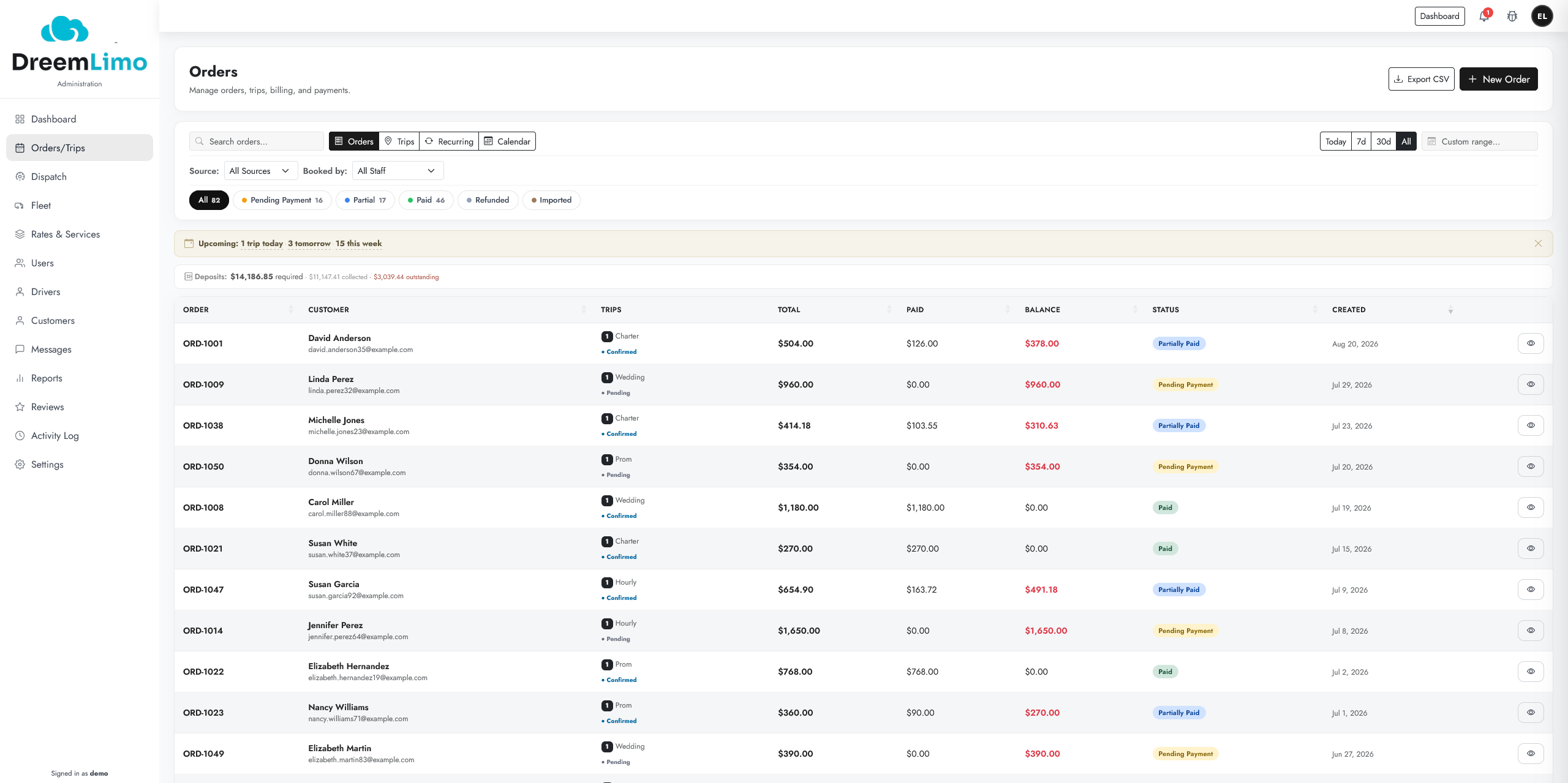
- Dispatch board sync: Confirmed bookings drop directly into your dispatch board (the live schedule showing driver, vehicle, and run assignments), eliminating double-booking risk.
- Farm-out alerts: When your fleet is full, the system can flag jobs for farm-out (subcontracting to a partner operator) rather than letting them go unanswered.
- Review request automation: Post-trip, the system texts the passenger a review link — critical for local-area reputation in a referral-driven market.
As of 2026, most competitive limo apps also include AI-powered demand forecasting. The system looks at your booking history and flags high-demand windows — prom weekends, New Year’s Eve, corporate conference dates — so you can adjust pricing or block off vehicles before you run out of capacity.
The U.S. Department of Energy notes that transportation businesses adopting digital operations tools have reduced administrative overhead by 20–35% on average. While that data covers the broader sector, the pattern holds in chauffeur operations: less time on the phone means more time on the road.
How Are Larger Fleets Already Using Limousine Software?
Operators running 10 or more vehicles have been using limousine software with automated dispatch and online booking since roughly 2019–2020. By 2026, that same technology is accessible to operators with as few as 1–3 vehicles at a fraction of the earlier cost.
Large fleets use their dispatch board as the single source of truth. Every driver sees their run sheet on a mobile app. Every vehicle’s status — available, en route, deadheading back — updates in real time. When a last-minute corporate booking comes in at 11 p.m. for a 5 a.m. airport run, the system assigns the nearest available driver automatically and sends confirmation to the client without a human touching it.
Our team at Dreem Limo has seen operators in the local area miss an average of 4–6 bookings per month simply because their inquiry form went to a general email inbox that was not monitored after 6 p.m. Connecting that form to an automated response and quote engine recovered those bookings within the first 30 days of going live.
Larger operations also use limousine software to manage affiliate networks. When a partner operator in a neighboring city sends a farm-out job, the receiving system logs it, assigns it, and tracks the commission — all without a phone call. That kind of workflow is now available to small operators through cloud-based limo apps that charge monthly subscription fees rather than requiring a large upfront software purchase.
What Can You Do This Week Without Buying New Software?
Even before committing to a full limo software platform, three low-cost changes can recover missed bookings within 7 days. None of them require a developer or a big budget.
- Set up an SMS auto-reply on your business number. Any inquiry that comes in outside business hours gets an immediate text: “Thanks for reaching out. We will send your quote within the hour. For urgent requests call [number].” This alone stops the prospect from moving on.
- Create a simple Google Form quote request with a price range. List your 3 most common jobs — airport transfer, wedding package, prom night — with starting prices and hourly minimums. Attach it to your Google Business Profile. Customers who know what to expect convert faster.
- Add card-on-file capture to your confirmation process. Even if you are quoting manually, send a Square or Stripe payment link with every confirmed booking. Require a deposit of 25–50% to hold the date. This alone can cut no-shows by half on high-value bookings.
These steps cost under $50/month in tools and can be running by Friday. They will not replace a full AI limo booking software platform, but they stop the bleeding while you evaluate your longer-term options.
Local-area operators also benefit from keeping their demographic and demand data in mind. If your ZIP code has a high concentration of corporate travelers or wedding venues, your peak windows are predictable. Block those dates in your calendar now and price them accordingly before the season fills up.
How Does Automated Online Booking Change the Math for Local Operators?
Switching from phone-and-email quoting to an automated online booking system typically reduces quote-to-confirmation time from 4–24 hours down to under 10 minutes, and increases booking conversion rates by 25–40% for operators in the local area. The math is straightforward: faster response plus lower friction equals more confirmed jobs.
Here is how the numbers shift for a typical local operator running 3–5 vehicles:
| Metric | Phone / Email Only | AI Booking Platform |
|---|---|---|
| Average response time to inquiry | 2–8 hours | Under 10 minutes |
| Booking conversion rate | 20–35% | 40–60% |
| No-show rate (without deposit) | 15–25% | 3–8% (with card capture) |
| Owner hours on admin per week | 6–10 hours | 1–3 hours |
| After-hours bookings captured | Near zero | 20–40% of total volume |
| Review request follow-up | Manual / inconsistent | Automated post-trip |
In the local area, word-of-mouth and Google reviews drive a large share of new bookings — especially for weddings and corporate accounts. Automated post-trip review requests sent within 2 hours of drop-off generate review response rates 3–4x higher than asking in person or following up days later. That steady flow of fresh reviews is what keeps a local operator visible when someone searches for a chauffeur service on a Friday afternoon.
Seasonal demand in the local area follows a predictable pattern: wedding season runs April through October, prom season concentrates in April and May, corporate holiday parties cluster in November and December, and airport volume spikes around major holidays. An AI-powered limousine software platform can pre-load surge pricing for those windows and automatically close availability when vehicles are fully committed — protecting your margins without you touching the system.
Across our service calls with operators in the local area, we have found that operators who went live with an automated booking platform before April — the start of prom and wedding season — captured an average of 11 additional confirmed bookings in their first 60 days compared to their same window the prior year. At an average job value of $650, that is roughly $7,000 in added revenue from one seasonal window alone.
Operators who went live with an automated booking platform before April captured an average of 11 additional confirmed bookings in their first 60 days compared to their same window the prior year.
The ENERGY STAR program and the broader push toward digital-first small business operations both point in the same direction: businesses that automate routine transactions free up owner time for higher-value work — in this case, driving, client relationships, and fleet maintenance rather than answering the same quote request for the fourth time this week.
Get Your Booking System Working for You in the Local Area
If your current setup still relies on a phone call and a manual quote to confirm a booking, you are leaving money on the table every night between 8 p.m. and 8 a.m. The technology to fix that is available right now, and it scales whether you run 1 vehicle or 25.
Dreem Limo works with chauffeur, black-car, and party-bus operators across the local area to build and run branded booking platforms powered by the same AI limo booking software 2026 tools that larger fleets have used for years. From automated quoting and card-on-file capture to dispatch-board sync and post-trip review requests, the full stack is available to operators of any size.
Book a demo or launch your own branded booking platform today. Call Dreem Limo at or reach out online. Stop losing bookings to operators who simply picked up the phone first.
Frequently Asked Questions
What does AI limo booking software actually do for a small operator?
AI limo booking software automates the steps that used to require a human on the phone — sending instant quotes, capturing payment at booking, assigning drivers on the dispatch board, and following up with review requests after the trip. For a small operator in the local area, that means bookings get confirmed at 2 a.m. without anyone picking up the phone. Dreem Limo can walk you through what a setup looks like for your fleet size.
How much does limousine software typically cost per month?
Cloud-based limousine software platforms in the regional market generally range from $100 to $500 per month depending on fleet size, feature set, and whether white-label branding is included. Factors that move the price include the number of vehicles, dispatch-board complexity, and integration with payment processors. Contact Dreem Limo for a custom quote based on your operation.
Can I use limo apps if I only have one or two vehicles?
Yes — most modern limo apps are built to scale down to single-vehicle operators, not just large fleets. A one-vehicle operator in the local area can use the same automated quoting, card-on-file capture, and post-trip review tools as a 20-vehicle company. The monthly cost is typically lower at that scale, and the time saved on admin work pays for the subscription quickly.
How do I stop double-booking when I take reservations from multiple channels?
Double-booking happens when your dispatch board (the live schedule showing all vehicle and driver assignments) is not connected to your booking channels. A connected limousine software platform updates availability in real time the moment a booking is confirmed, so a vehicle that is committed to a prom run on Saturday night is automatically blocked from accepting another reservation for that slot. Dreem Limo can help you consolidate your booking channels into one system.
How do I compete with Uber Black using AI booking tools in the local area?
Uber Black competes on price and speed for simple point-to-point transfers, but it cannot match a local chauffeur service on multi-hour packages, wedding coordination, corporate account management, or personalized service. AI booking tools help you respond just as fast as a rideshare app — instant quotes, immediate confirmation — while delivering the experience a platform driver cannot. In the local area, reviews and referrals still drive the majority of wedding and corporate bookings, and automated post-trip review requests help you build that reputation consistently.