Wedding season is the most profitable stretch of the year for local limo operators — and the easiest to botch with manual booking. Here is what the right limo software actually does for your bottom line.
It is 11:47 p.m. on a Wednesday. A bride-to-be just found your website, filled out the contact form for a 6-hour wedding package, and hit send. By 8:00 a.m. Thursday, she has already booked with someone else. You never saw the inquiry until you sat down with coffee. That is not a rare situation — it is a Tuesday for most solo operators who are still running bookings through a phone, a Gmail draft, and a Google Sheet. If you are shopping for limo booking software for wedding transportation, the real question is not which app looks nicest. It is: how many bookings are you losing right now, and what is each one worth?
What Does a Missed Wedding Booking Actually Cost You?
A single missed wedding inquiry in the local area typically represents $600 to $1,800 in lost revenue, depending on vehicle type, hours booked, and gratuity. A 6-hour stretch SUV package runs higher than a 3-hour sedan transfer. Multiply that by even 4 missed inquiries per month during May through August — the core of wedding season — and you are looking at a $10,000 to $28,000 annual gap that never shows up on any report because it never got recorded.
A single missed wedding inquiry in the local area typically represents $600 to $1,800 in lost revenue, depending on vehicle type, hours booked, and gratuity.
Wedding clients also have a longer booking window than airport or corporate runs. Most couples lock in transportation 4 to 8 months before the date. That means a missed inquiry in October costs you a June Saturday — your highest-demand day of the year. Industry data consistently shows June and October as the two peak months for U.S. weddings, with Saturday demand outpacing weekday demand by roughly 3 to 1.
No-shows and chargebacks are a separate line item. Wedding bookings without a card-on-file capture (a saved payment method tied to the reservation) see no-show rates as high as 15% on unconfirmed reservations. With a deposit collected at booking — typically 25% to 50% of the total — that number drops below 3% in most local markets. The software pays for itself on the deposit-capture feature alone.
What Should Limo Booking Software for Wedding Transportation Actually Do?
Good limo booking software for wedding transportation handles four things automatically: real-time availability, instant quoting, deposit collection, and driver dispatch. If the tool you are evaluating requires you to manually confirm availability before a quote goes out, it is not solving your core problem — it is just digitizing your current bottleneck.
Here is what a purpose-built platform should include for wedding operators specifically:
- Hourly minimums by vehicle: Wedding packages almost always carry a 3- to 6-hour minimum. The software should enforce that floor automatically so a client cannot book a stretch limo for 90 minutes at a flat rate.
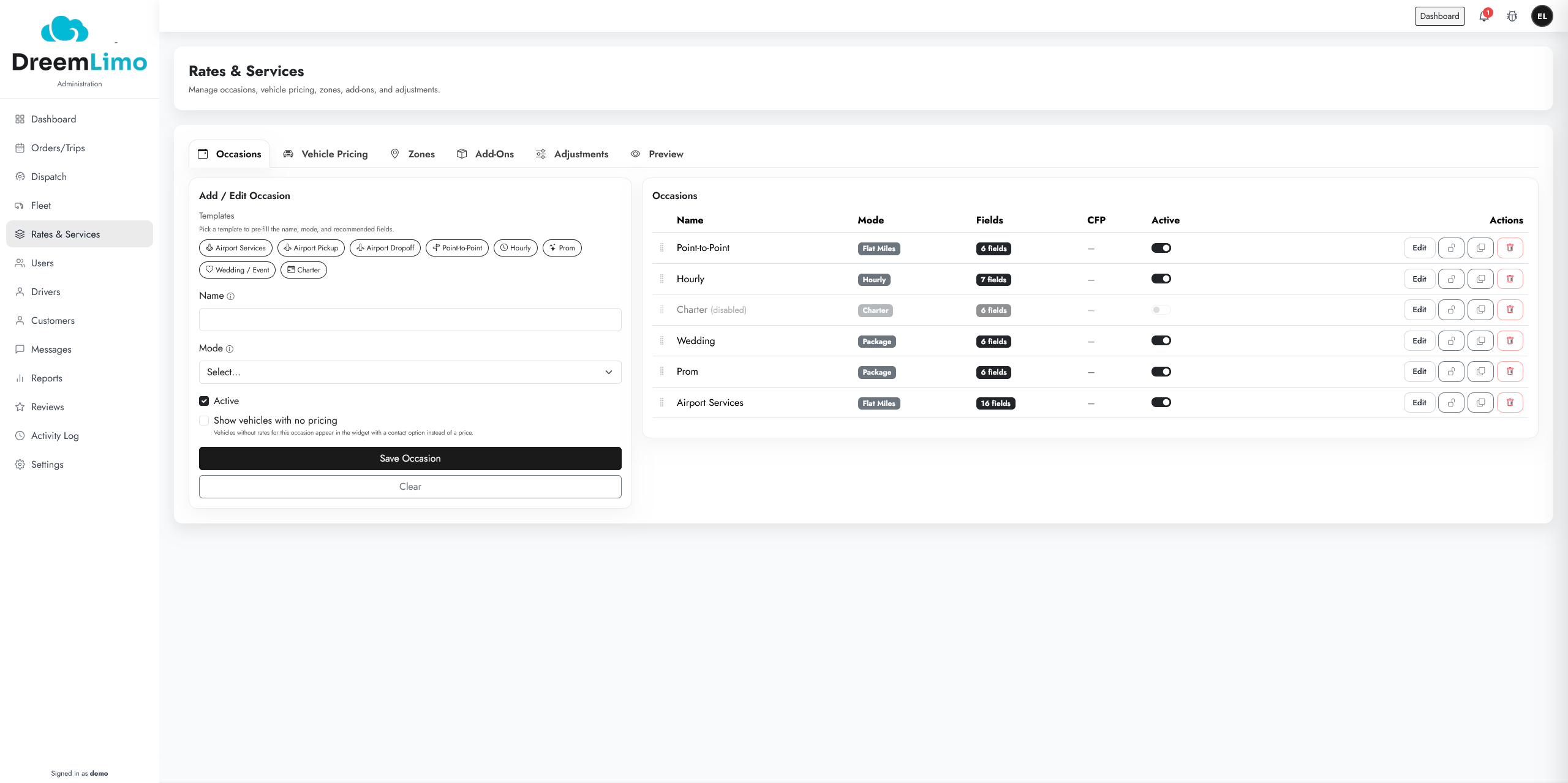
- Zone-based and hourly pricing: Zone-based pricing (flat rates tied to pickup/dropoff geography) works for airport runs. Hourly pricing works for weddings. You need both in the same system, switchable by booking type.
- Deposit and card-on-file capture: The system should collect a deposit at the time of booking and store the payment method for the balance. No manual invoicing follow-up required.
- Automated confirmation and reminder texts: A confirmation sent within 60 seconds of booking and a reminder 48 hours before the event cuts no-shows and reduces the “did you get my form?” calls.
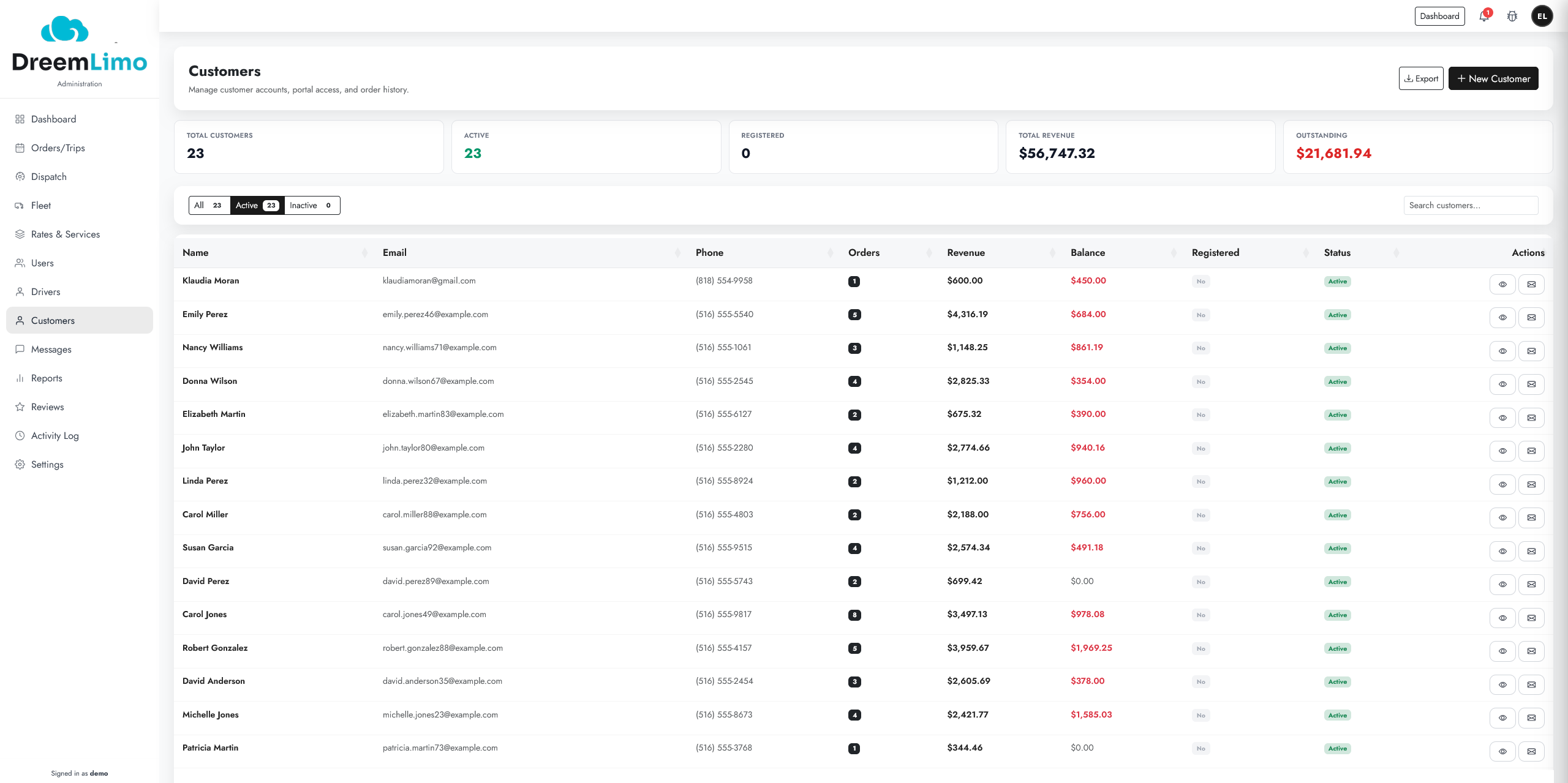
- Dispatch board integration: A dispatch board (the real-time view of which driver has which vehicle on which run) should update the moment a booking is confirmed, not after you manually enter it.
- Farm-out flagging: Farm-out (subcontracting a run to another operator when your fleet is full) needs to be visible in the system so you are not double-promising availability you do not have.
- Deadhead tracking: Deadhead miles (miles driven without a paying passenger, usually to the pickup point) eat into wedding job margins. The software should log them so you can price future jobs accurately.
For a deeper look at how these features stack up across platforms, see our 2026 guide to limo booking software for wedding transportation companies — it covers platform comparisons in detail. This article focuses on what operators in the local area need to evaluate and implement right now.
Our team sees roughly 70% of all wedding inquiry form submissions arrive between 9:00 p.m. and midnight — well outside normal business hours. An automated instant-quote response during that window converts at nearly double the rate of a next-morning callback.
How Do Larger Wedding Fleets Handle Peak Season Differently?
Operators running 10 or more vehicles during wedding season treat their dispatch board like a live inventory system, not a calendar. Every vehicle has a status — available, reserved, in-service, or in deadhead — updated in real time. That visibility is what lets them take a Saturday with 6 weddings and 4 airport transfers without a double-booking.
Smaller operators in the local area can replicate this structure without a large fleet. The key is treating your booking software as the single source of truth. If a vehicle’s status lives in two places — the software and a text thread with your driver — you will eventually get a conflict. Larger fleets learned that lesson early and enforce a single-system rule.
They also use automated follow-up sequences. A client who requested a quote but did not book gets a follow-up at 48 hours and again at 7 days. According to industry conversion benchmarks, a second touchpoint recovers 20% to 30% of initially unconverted leads. For a wedding package worth $1,200, that follow-up email is worth writing.
Rideshare competition is real but limited in the wedding niche. Uber Black and similar services cannot hold a vehicle for a 6-hour window, cannot coordinate multi-stop itineraries with a bridal party, and do not offer the contract and liability structure that wedding planners require. Your competitive edge is reliability and accountability — both of which are reinforced by a professional booking and confirmation flow, not undermined by it.
What Can You Fix This Week Without Buying New Software?
Three operational changes cost nothing and reduce missed bookings immediately: a dedicated inquiry response window, a standard quote template, and a deposit policy communicated upfront. These are the manual version of what software automates — and running them manually for 30 days will show you exactly where the friction is before you spend anything on a platform.
- Set a 2-hour inquiry response window during business hours. Most brides are comparison-shopping 3 to 5 operators simultaneously. The first professional response wins a disproportionate share of bookings. Set a phone alarm if you have to.
- Build one quote template per vehicle type. A stretch SUV wedding quote should take 4 minutes to produce, not 20. Include your hourly minimum, fuel surcharge, gratuity policy, and deposit requirement in the template so nothing gets negotiated away later.
- State your deposit policy in the first message. “We hold your date with a 30% deposit, balance due 7 days before the event” eliminates the back-and-forth that stalls bookings and lets tire-kickers self-select out early.
- Create a simple availability log. Even a shared Google Sheet with vehicle, date, time-block, and status (available/reserved/confirmed) is better than memory. Update it every time a booking changes.
- Ask every confirmed wedding client for a review within 48 hours of the event. Wedding reviews on Google are the highest-converting content in the local area limo market — couples trust peer accounts far more than any ad copy.
These steps will not scale past a certain volume, but they will clarify exactly which part of your process breaks first. That tells you what to prioritize when you do choose a limousine software platform.
Where Does Automation Change the Math for Wedding Operators?
The clearest ROI on limo software comes from three places: after-hours booking capture, deposit automation, and review solicitation — all running without you touching anything. A platform that handles all three pays for itself within the first 2 to 3 captured bookings in most local markets.
Here is a realistic comparison of a manual workflow versus an automated one for a single busy June Saturday:
| Task | Manual Workflow | Automated Platform |
|---|---|---|
| After-hours inquiry response | Next morning, often 8+ hours later | Instant quote sent within 60 seconds |
| Deposit collection | Manual invoice, 1-3 day delay | Card captured at booking confirmation |
| Driver dispatch notification | Manual text or call to driver | Auto-assigned on confirmation |
| 48-hour client reminder | Manual call or forgotten entirely | Automated SMS and email |
| Post-event review request | Rarely sent, easy to forget | Automated 24 hours after job close |
| Admin hours per weekend | 4 to 7 hours | Under 1 hour |
As of 2026, most purpose-built limo apps price their operator plans between $99 and $299 per month, depending on fleet size and features. That range is well below the value of a single recovered wedding booking. Platforms that include a branded booking page — so clients book directly on your site rather than a generic portal — also reduce your dependence on third-party lead aggregators that charge per-booking fees.
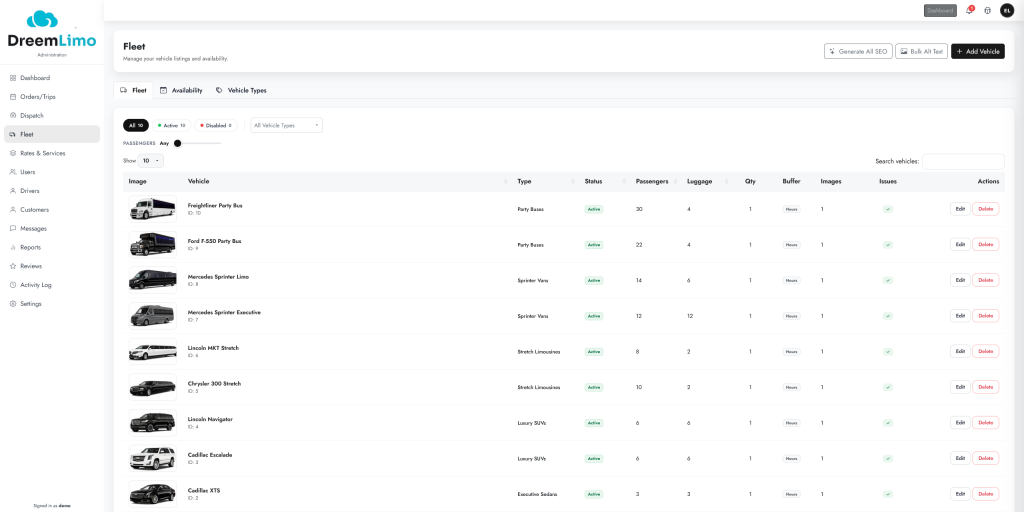
Wedding season in the local area runs hard from late April through early October, with a secondary spike around holiday parties in November and December. Operators who set up their limo booking software before April — including vehicle photos, package descriptions, and pricing rules — capture early-planning couples who book 6 to 8 months out. Waiting until May to configure the system means missing February and March inquiries from couples planning June weddings.
Operators who set up their limo booking software before April capture early-planning couples who book 6 to 8 months out.
Across our service calls in the local area, we see operators lose an average of 3 to 5 confirmable wedding bookings per month during peak season simply because their quote response came 12 or more hours after the inquiry — after the couple had already confirmed with a competitor.
Get Set Up for Wedding Season in the Local Area
Wedding transportation is one of the highest-margin niches in the local area limo market — and one of the most time-sensitive to get right. A professional booking flow, automated deposits, and real-time dispatch are not luxuries for operators with 10-vehicle fleets. They are the baseline that lets a 3-vehicle owner-operator compete without burning every evening on phone tag.
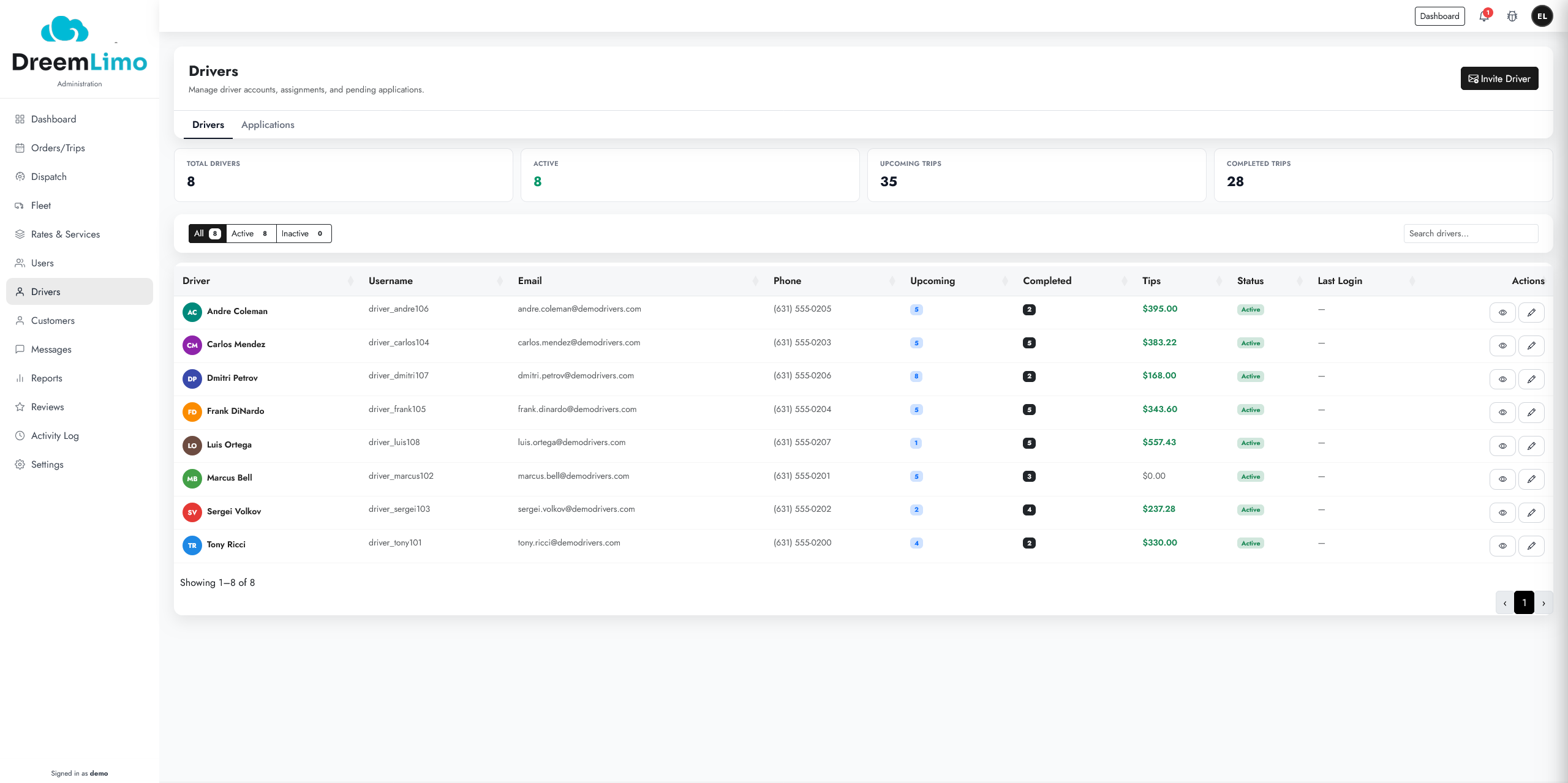
Dreem Limo’s platform is built specifically for operators like you — wedding specialists, black-car services, and party-bus companies running real vehicles on real margins. Book a demo or launch your own branded booking page today. Call us at your local Dreem Limo number or visit our site to get started before the summer calendar fills up.
Frequently Asked Questions
How much does limo booking software for wedding transportation usually cost?
Most purpose-built limo software platforms in the regional market price between $99 and $299 per month for operator plans, depending on fleet size and included features. Some platforms also charge a per-booking fee on top of the monthly rate, so read the pricing structure carefully. A single recovered wedding booking — typically worth $600 to $1,800 in the local area — usually covers several months of subscription cost. Contact Dreem Limo for a custom quote on the right plan for your fleet size.
Can I use general scheduling software instead of limousine-specific software for my wedding bookings?
General scheduling tools like Calendly or Acuity handle appointment slots but cannot enforce hourly minimums, manage zone-based pricing, track deadhead miles, or dispatch drivers automatically. For wedding transportation specifically, you need a platform that understands vehicle inventory, multi-stop itineraries, and deposit capture — features that general scheduling apps do not include. Limo-specific software pays for itself by handling those niche requirements out of the box.
How do I stop double-booking vehicles during busy wedding weekends?
Double-bookings happen when availability lives in more than one place — a booking platform, a text thread, and a personal calendar all showing different information. The fix is a single dispatch board that updates in real time the moment a booking is confirmed. Good limousine software locks a vehicle's time block the instant a deposit is collected, so no second booking can claim the same slot. Dreem Limo's platform does this automatically for every vehicle in your fleet.
When should I set up my booking software before wedding season starts in the local area?
Set up your platform by February at the latest. Couples planning June and July weddings in the local area typically start locking in vendors 5 to 8 months out, which means February and March are active inquiry months for summer dates. Operators who configure their vehicle listings, packages, and pricing rules before February capture those early-planning bookings; operators who wait until April miss them. Give yourself at least 2 to 3 weeks to test the system before going live.
Does limo software help me compete with Uber Black for wedding clients?
Yes, in a meaningful way. Uber Black and rideshare services cannot hold a vehicle for a 6-hour window, build multi-stop wedding itineraries, or provide the written contract that most wedding planners require from vendors. A professional booking platform reinforces your accountability advantage by delivering instant confirmations, automated reminders, and a clear contract and deposit structure — all things rideshare cannot match. Your edge is reliability and professionalism, and good software makes that visible to clients from the first interaction.