Limo dispatch software automates bookings, routing, and payments for chauffeur operators. This guide breaks down what it does, what it costs to go without it, and how to decide if it's right for your fleet.
What is limo dispatch software, and what does it actually do?
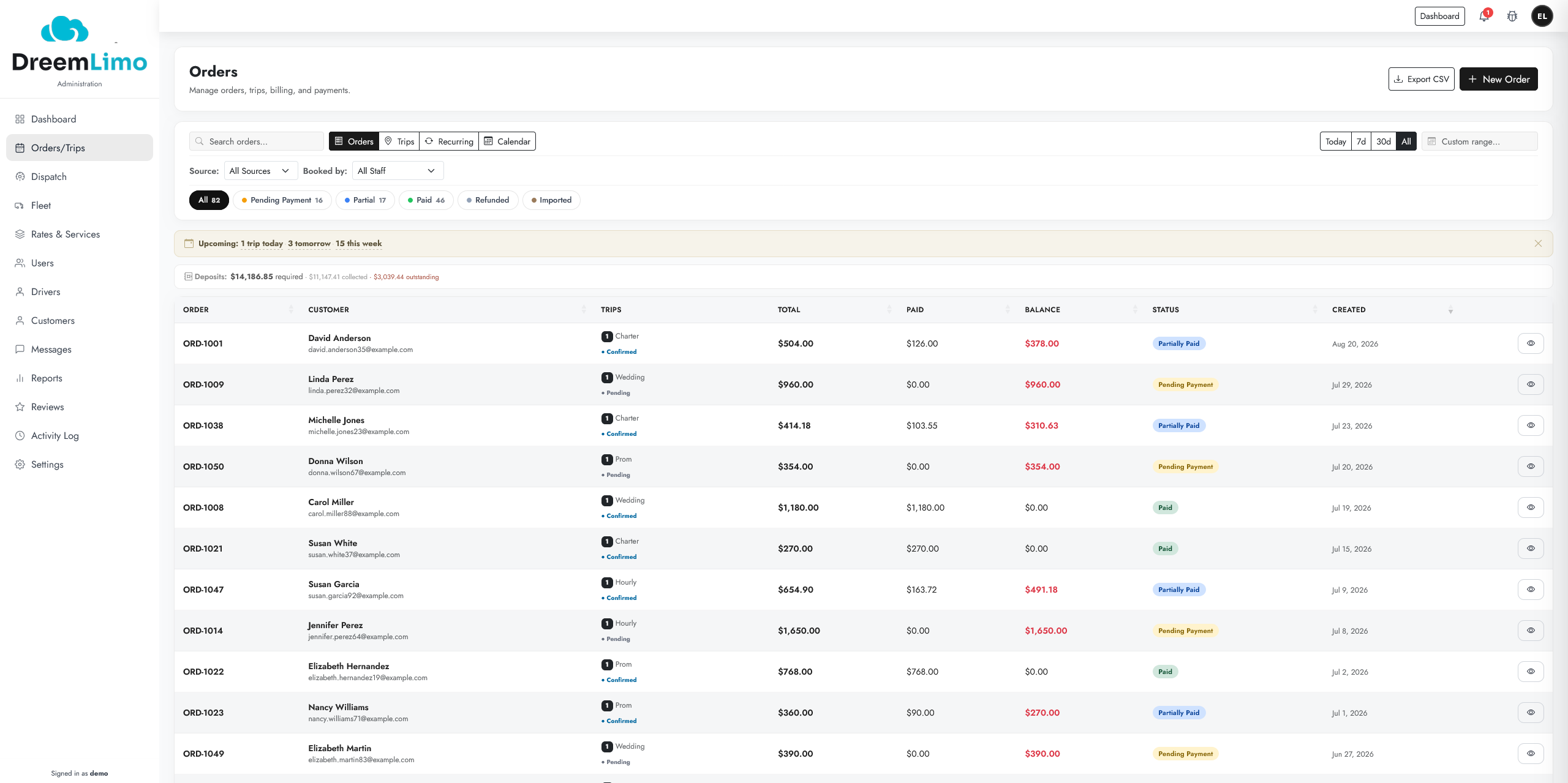
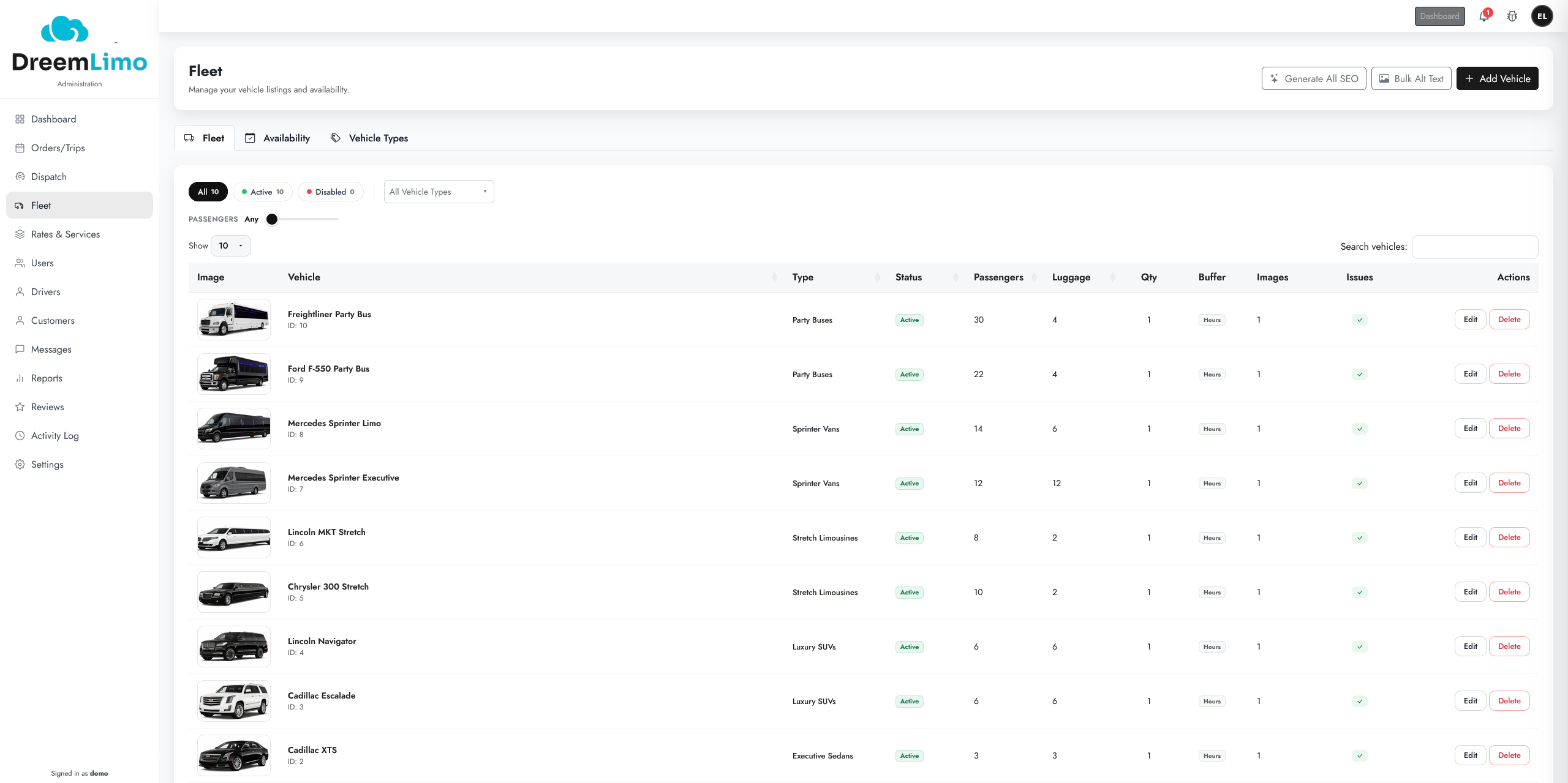
Limo dispatch software is a digital platform that handles reservations, driver assignments, real-time vehicle tracking, and payment capture from one dashboard. It replaces the combination of phone calls, text threads, spreadsheets, and paper run-sheets that most small operators still rely on in 2026.
Picture this: it’s 2:07 a.m. on a Wednesday. A corporate traveler lands early at the airport and sends a booking request through your website. You’re asleep. Your phone is on silent. By 2:15 a.m. they’ve already booked an Uber Black. That inquiry — worth anywhere from $85 to $180 for a standard airport transfer in a typical regional market — is gone, and you never even saw it.
That’s the core problem limo dispatch software solves. It captures the booking automatically, confirms it to the client, assigns the nearest available driver, and stores a card on file (meaning a payment method saved securely so you can charge it at trip completion without a second call). No human needed at 2 a.m.
Before going further, a few terms worth knowing:
- Deadhead: The miles a driver travels with no passenger — going to pick up a client or returning to base. Deadhead time is unpaid cost.
- Farm-out: When you subcontract a trip to another operator because your fleet is full. Software tracks these so you don’t lose the client relationship.
- Hourly minimum: The minimum number of hours billed on an hourly charter, typically 2 to 4 hours depending on vehicle type.
- Zone-based pricing: Flat rates tied to geographic zones rather than metered mileage — common for airport runs.
- Dispatch board: The live visual calendar showing every active and upcoming run, driver status, and vehicle location.
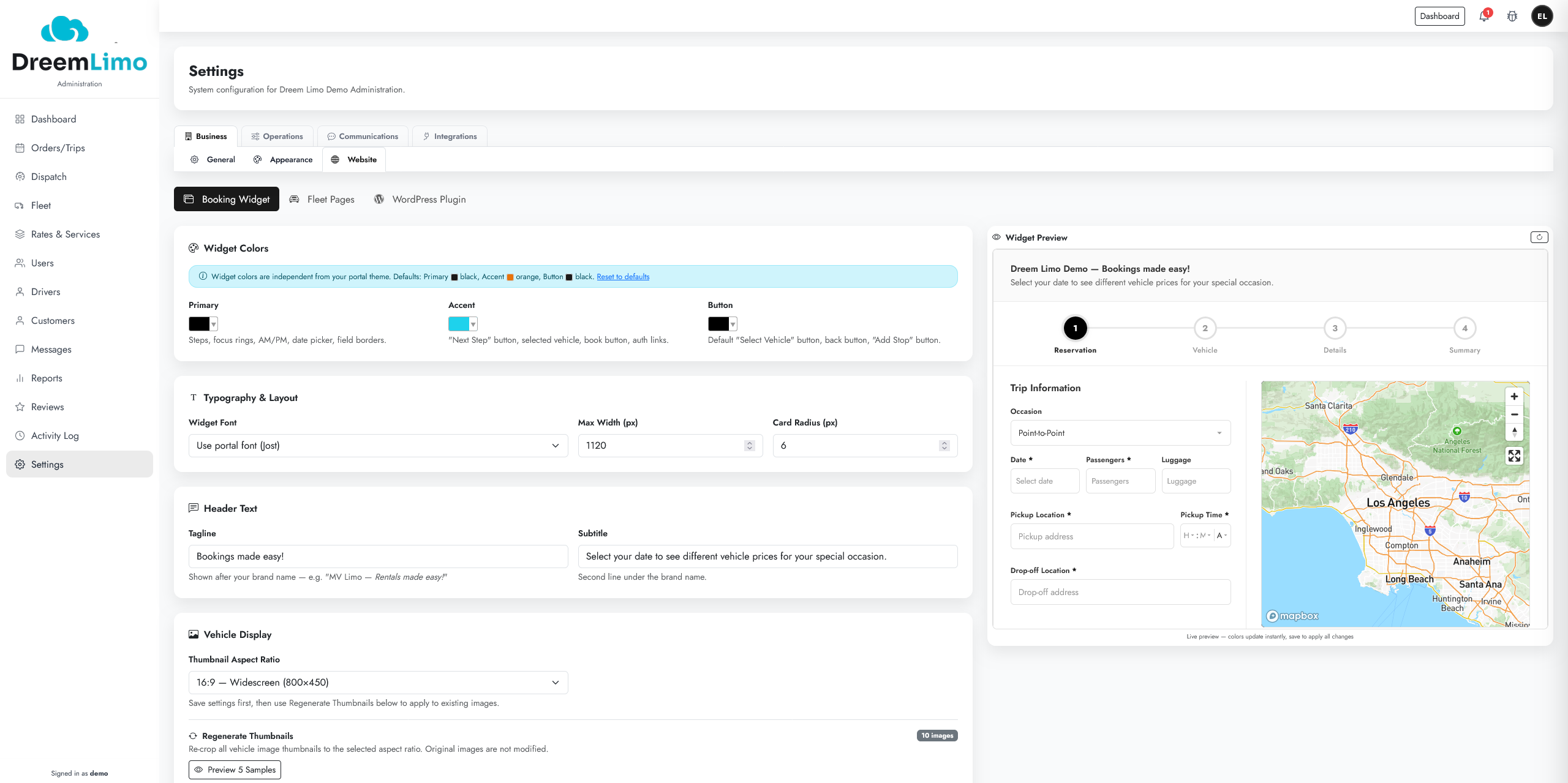
Modern limo software — sometimes called limousine booking software or limo apps — bundles all of these into one interface. Platforms like Limo Anywhere, Livery Coach, and Ground Alliance have been refining this category since the early 2010s. As of 2026, most cloud-based options also include a passenger-facing booking widget you can embed directly on your website.
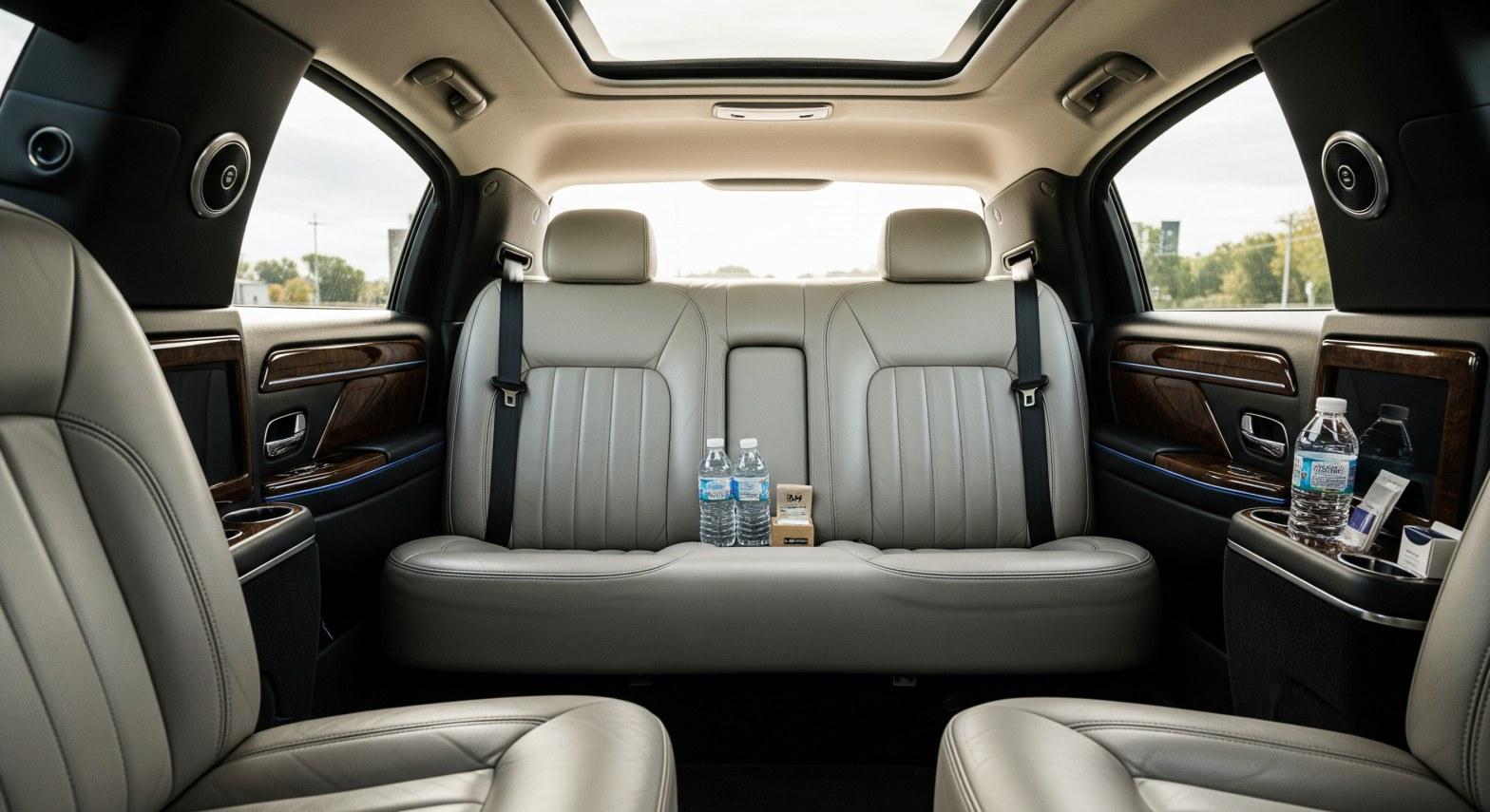
What does skipping software actually cost you in missed revenue?
Operators who rely entirely on phone quotes and manual scheduling typically miss 15 to 30 percent of after-hours inquiries — and after-hours is when a large share of airport and event bookings arrive. A single missed prom night booking for a stretch SUV can represent $400 to $800 in lost revenue, depending on the hourly minimum and run length.
A single missed prom night booking for a stretch SUV can represent $400 to $800 in lost revenue, depending on the hourly minimum and run length.
Here’s a realistic cost breakdown across the booking types most local operators run:
| Trip Type | Typical Market Range | Booking Urgency | Risk of Manual Miss |
|---|---|---|---|
| Airport transfer (sedan) | $85 – $180 | High — often booked same day | High if after hours |
| Wedding package (hourly) | $600 – $1,800+ | Low — planned weeks out | Medium — quote delays lose it |
| Prom / party bus (hourly) | $400 – $900 | Medium — booked 2–8 weeks out | Medium — first responder wins |
| Corporate hourly charter | $150 – $350/hr | Varies — repeat clients book fast | Low if you have their number; high for new leads |
| Holiday party transfer | $200 – $600 | High — November and December spike | High — volume overwhelms manual systems |
Beyond missed bookings, manual dispatch burns owner hours. If you spend 45 minutes per day on phone-tag quotes, confirmation texts, and payment follow-ups, that’s roughly 270 hours a year — time that could go toward fleet maintenance, marketing, or sleep.
No-shows and chargebacks are another real cost. Without a card-on-file capture at booking, collecting a no-show fee requires a second conversation that most operators avoid. Across our service calls in the local area, we see operators lose the equivalent of 3 to 5 no-show fees per month simply because they never collected payment details upfront — that adds up to $300 to $750 in unrecovered revenue over a single quarter.
Rideshare competition makes this worse. Uber Black responds to a booking request in under 60 seconds. If your manual quote process takes 20 minutes, you’ve already lost the price-sensitive traveler — and you’re competing on speed, not just price.
How do larger fleets in the local area handle dispatch and booking?
Operators running 8 or more vehicles in the local area almost universally use dedicated limousine software with a live dispatch board, automated confirmations, and driver apps that push run details to the chauffeur’s phone. The difference in operational overhead between a 5-vehicle manual shop and a 10-vehicle software-run shop is not twice the work — it’s often four times.
Larger fleets typically layer in three capabilities that small operators lack:
- Automated confirmation and reminder sequences: The client gets a booking confirmation, a 24-hour reminder, and a driver-on-the-way notification — all without a human sending a single text.
- Farm-out network integration: When a run comes in and every vehicle is booked, the software can push the trip to a trusted affiliate operator. The booking stays in your system; you earn a referral margin (typically 10 to 20 percent) without turning the client away.
- Post-trip review requests: An automated message goes out 2 hours after drop-off asking for a Google or Yelp review. In a local market where 4 to 6 reviews can move your ranking by a full page, this single feature pays for the software subscription many times over.
The ACCA (Air Conditioning Contractors of America) analogy holds here — trades that systemized dispatch first dominated their local markets. The same pattern played out in ground transportation. The operators who adopted limo software between 2018 and 2022 now own the top Google positions and the strongest referral pipelines in their ZIP codes.
That said, software is not a magic fix. A 2-vehicle owner-operator with a tight repeat-client base and a simple pricing structure may find that a well-organized Google Sheet and a Square terminal covers 80 percent of their needs. The honest question is whether your current system is actually capturing every booking opportunity — or just the ones you happen to be awake for.

What can you fix this week without buying anything new?
Three free or near-free changes can recover a meaningful share of missed bookings before you spend a dollar on new software. Start here if you’re not ready to commit to a monthly platform fee.
- Add a contact form with instant auto-reply to your website. Even a basic Google Forms submission that triggers a confirmation email tells the client you received their request and will respond within a set window. This alone reduces the chance they book elsewhere in the first 10 minutes.
- Set up a Google Business Profile with your hours, service area, and a booking link. As of 2026, Google Business Profile allows direct booking integrations. Operators in the local area who have completed their profile with photos and accurate hours show up in the local 3-pack — the map results that capture 40 to 60 percent of local service clicks.
- Create a simple rate sheet and send it as a PDF or link — not a verbal quote. A written quote with a 48-hour hold and a deposit link (PayPal, Venmo Business, or Square) converts faster than a phone conversation because the client can share it with a spouse or event planner without calling you back.
These steps don’t replace limo software. They reduce the bleeding while you evaluate your options. If you’re in the local area running airport runs, wedding charters, or corporate accounts, the volume and seasonality of demand — especially the November-December holiday party spike and the April-May prom and wedding surge — will eventually outpace a manual system.
Where does online booking automation change the math for local operators?
Online booking automation changes the math by converting your website from a digital brochure into a 24-hour booking agent — one that collects payment details, confirms the run, and notifies the driver without your involvement. For operators in the local area running 3 or more vehicles, this shift typically means recovering 8 to 15 additional bookings per month that would otherwise have slipped through after-hours.
The financial case is straightforward. If the average booking in your market is worth $200, and automation recovers 10 bookings per month that you were previously missing, that’s $2,000 in additional monthly revenue. Most cloud-based limousine software subscriptions run between $100 and $400 per month depending on fleet size and feature set. The math closes fast.
What automation also does — and this part is underappreciated — is reduce the emotional tax of running a solo operation. Our team has tracked dispatch patterns across the local area and found that operators using automated booking handle roughly 3 times the reservation volume with the same response time, because the system handles confirmation and payment while the operator focuses on the actual driving.
Operators using automated booking handle roughly 3 times the reservation volume with the same response time, because the system handles confirmation and payment while the operator focuses on driving.
A few automation features worth prioritizing when evaluating limo apps:
- Card-on-file capture at booking: Eliminates the no-show fee conversation entirely. The charge runs automatically if the client cancels inside your policy window.
- Driver app with real-time push notifications: The chauffeur gets run details, client contact, and navigation in one tap — no group text chains.
- Automated post-trip review requests: Sent 1 to 2 hours after drop-off. In a local market, reviews drive referrals as much as any paid advertising.
- Affiliate and farm-out management: Critical during peak season when your fleet is fully committed and you still want to serve the client rather than turn them away.
- Zone-based and hourly pricing rules: Set your rates once; the system quotes accurately every time without a manual calculation.
One caution: switching software mid-season is painful. If you’re heading into wedding or prom season — typically April through June in most of the region — plan your software migration for January or February when volume is lower. Give yourself 4 to 6 weeks to learn the platform before your busiest months hit.
Get your local area fleet running on a smarter system
If you’re still quoting by phone, confirming by text, and chasing payments after the run, you’re spending real money on a system that was never designed to scale. The local area market has enough demand — airport runs, corporate accounts, weddings, and holiday events — to justify building a booking infrastructure that works while you drive.
Dreem Limo works with operators across the local area who are ready to move past the notebook-and-spreadsheet stage. Whether you want to explore what limo dispatch software looks like for a fleet your size, or you’re ready to launch a branded online booking platform, the conversation starts with a single call.
Call Dreem Limo to schedule a walkthrough: . No pressure, no pitch deck — just a practical look at what’s possible for your operation this year.
Frequently Asked Questions
What is limo dispatch software, and do I really need it for a small fleet?
Limo dispatch software is a platform that manages bookings, driver assignments, real-time tracking, and payment collection in one place. If you're running 3 or more vehicles in the local area, the monthly cost of most platforms is typically recovered within 2 to 3 bookings you would have otherwise missed. Operators with 1 to 2 vehicles can often start with free tools and upgrade when volume demands it.
How much does limousine booking software usually cost per month?
In the regional market, cloud-based limousine software subscriptions typically range from $100 to $400 per month, depending on fleet size, the number of driver seats, and add-on features like passenger apps or affiliate network access. Some platforms charge a flat monthly fee; others add a per-booking transaction fee. Contact Dreem Limo to discuss which structure fits your operation.
Can limo software help me compete with Uber Black in my area?
Yes — the biggest advantage limo software gives you over Uber Black is the ability to respond to a booking request instantly, even at 2 a.m., without you being awake. Automated confirmation, card-on-file capture, and a professional booking experience close the speed gap that rideshare apps exploit. Combined with a strong Google Business Profile in the local area, this positions you as the professional alternative for clients who want a known driver and a guaranteed vehicle.
What's the difference between limo dispatch software and a regular booking app?
General booking apps handle scheduling but lack the ground-transportation specifics that limo operators need — zone-based airport pricing, deadhead tracking, farm-out management, and chauffeur apps with run-sheet delivery. Dedicated limo software is built around the actual workflow of a chauffeur operation: quote, confirm, assign driver, track, charge, and request a review. Generic tools require significant workarounds to replicate that.
When is the best time to switch to new limo software?
The best window for switching limo software in the local area is January through early February — after the holiday party season ends and before wedding and prom bookings start filling in for spring. Plan for 4 to 6 weeks of parallel operation where you run both your old system and the new one to catch any setup errors before peak season. Migrating during April or May, when the calendar is full, is the most common mistake new adopters make.