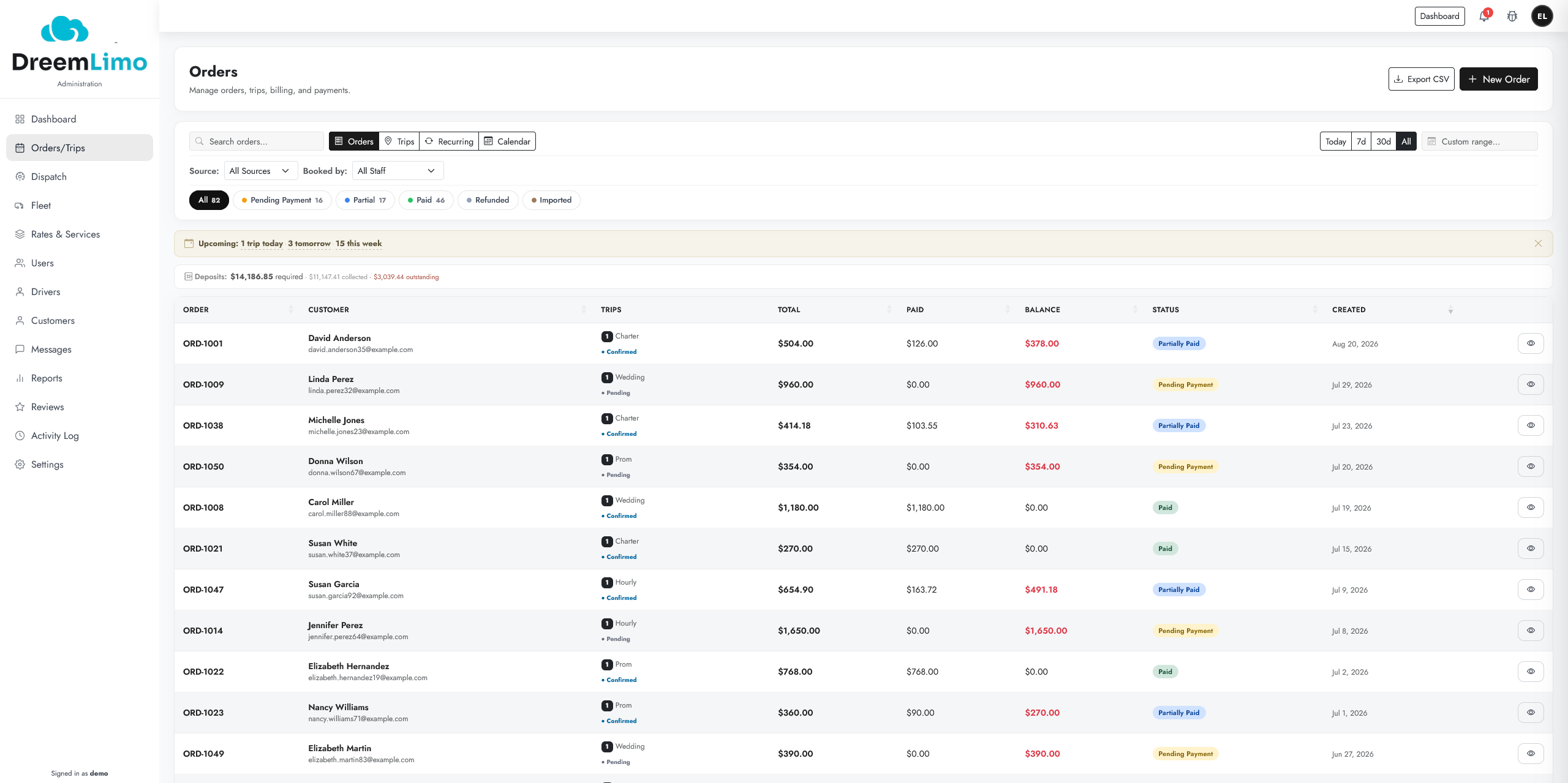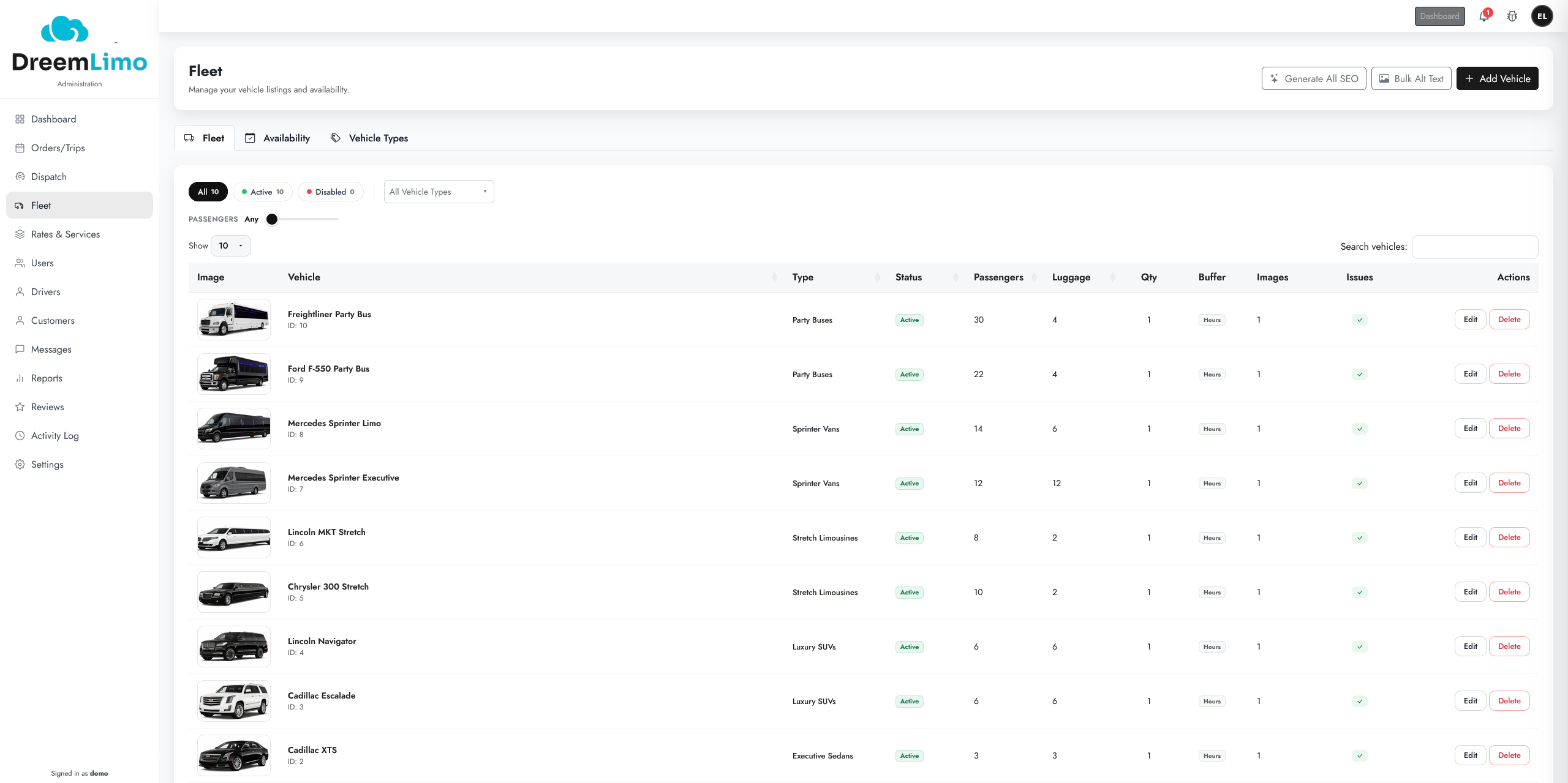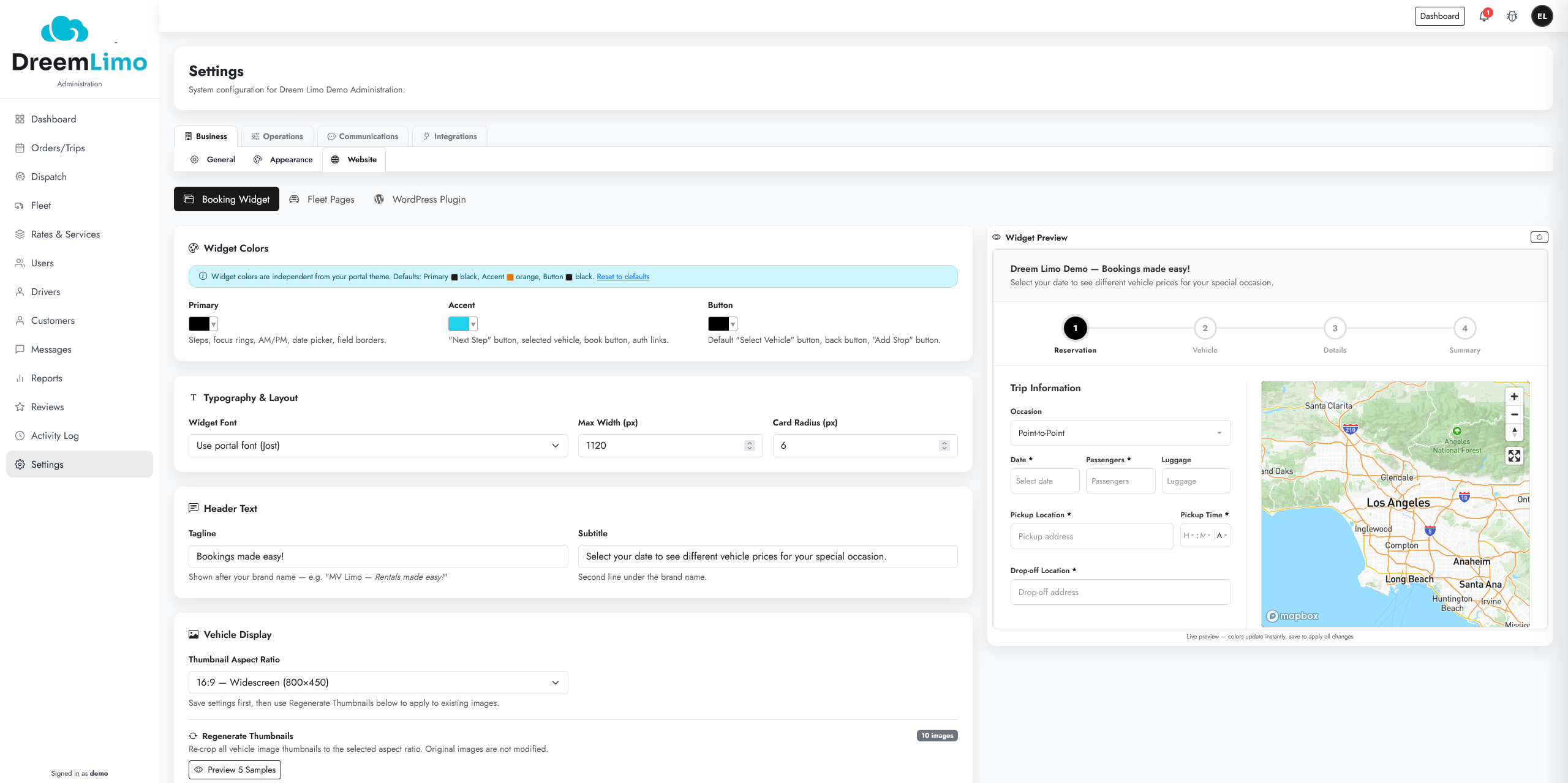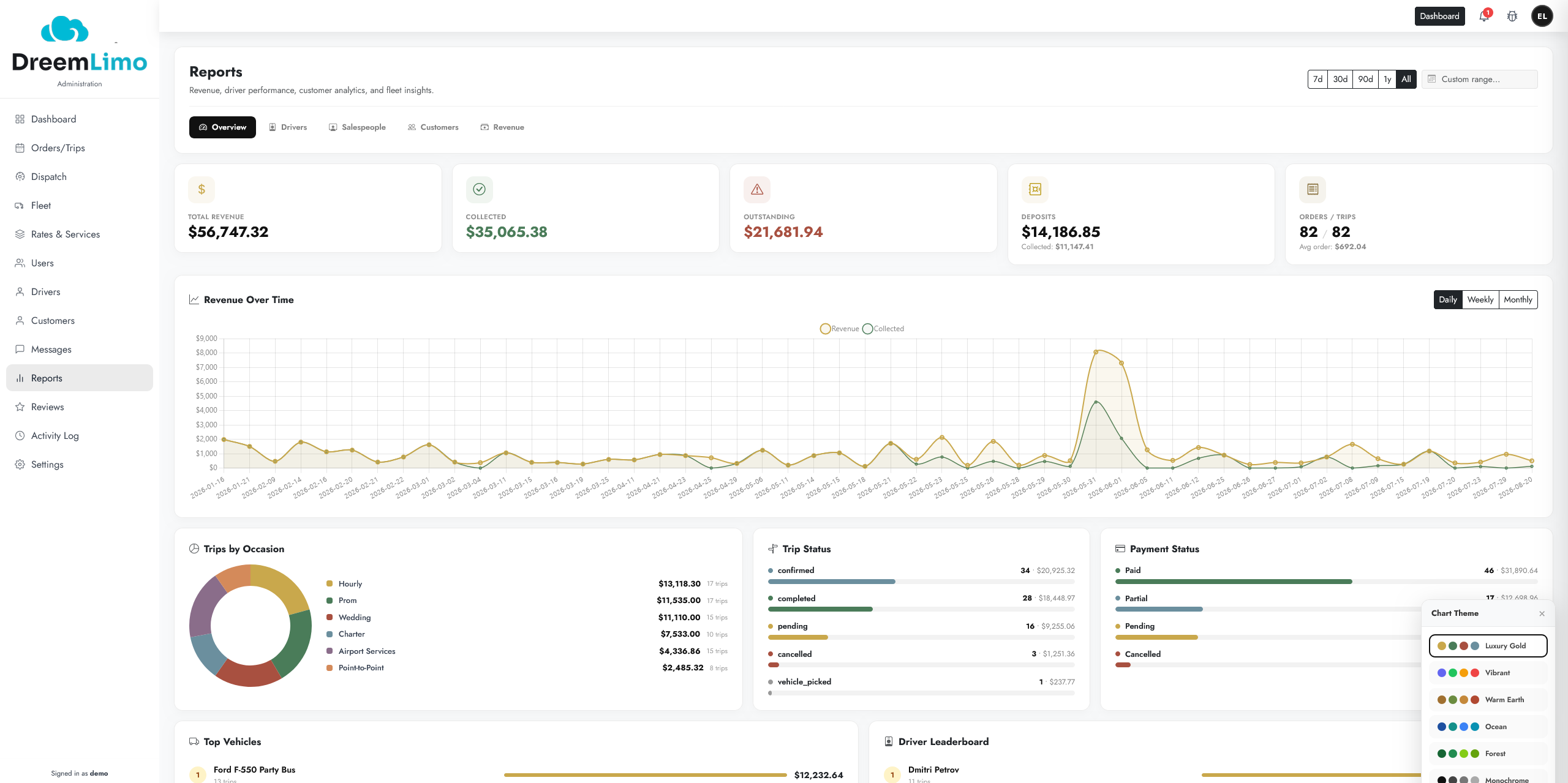
Choosing between Dreem Limo and Fasttrak limo software? This side-by-side breakdown covers dispatch, online booking, pricing tools, and what each platform actually costs your operation in missed revenue.
What Does a Missed 2 AM Booking Actually Cost You?
A corporate traveler lands at the airport at 2 AM, pulls up your website on their phone, and wants to book a black-car transfer right now. If your booking system is offline, asleep, or buried in a phone-tag quote form, that job goes to Uber Black before sunrise. A standard airport transfer in the local area typically runs anywhere from $85 to $180 depending on distance and vehicle class. Lose three of those a week and you’re looking at a gap of $1,000 to $2,000 in monthly revenue — before you even count the repeat corporate account that never forms.
This is the problem that limousine booking software is supposed to solve. But not all limo software handles it the same way. When operators in the local area search dreem limo vs fasttrak limo software, they’re usually trying to answer one question: which platform actually captures bookings while I’m driving, dispatching, or asleep?
The answer matters more than most operators realize. According to the U.S. Bureau of Labor Statistics, the for-hire transportation sector has seen consistent demand growth since 2022, with corporate and event travel leading recovery. That demand is there. The question is whether your software captures it or lets it walk.

Dreem Limo vs Fasttrak Limo Software: Feature-by-Feature Breakdown
Both Dreem Limo and Fasttrak are purpose-built limo apps designed for chauffeur and black-car operators — but they take different approaches to the core problems of booking, dispatch, and payment capture. Here is how they compare across the features that move the needle for a local operator running a small to mid-size fleet.
| Feature | Dreem Limo | Fasttrak |
|---|---|---|
| Branded online booking page | Yes — fully branded, mobile-optimized | Basic booking widget |
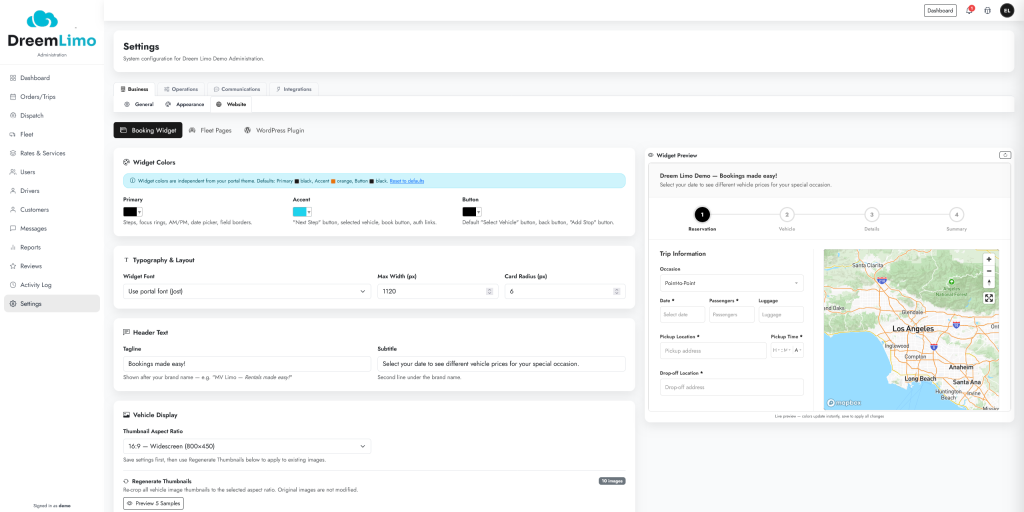
| Automated instant quotes | Yes — zone-based and hourly pricing built in | Manual quote follow-up required |
| Card-on-file capture at booking | Yes — captures payment at reservation | Invoicing after the fact |
| Dispatch board | Yes — real-time, color-coded | Yes — standard dispatch view |
| Driver app | Yes — iOS and Android | Yes — iOS and Android |
| Farm-out / affiliate network | Yes — partner dispatch supported | Limited affiliate tools |
| Automated passenger notifications | Yes — SMS and email confirmations | Email only in base tier |
| Fleet size supported | 1 vehicle to large multi-location fleets | 1 vehicle to large fleets |
| Setup complexity | Low — guided onboarding | Moderate — manual configuration |
| Review and referral tools | Built-in follow-up prompts | Not included |
The gap that stands out most for operators in the local area is the automated instant quote. Zone-based pricing (a flat rate tied to pickup and drop-off zones rather than metered distance) is how most limo operators price airport runs. If a passenger has to wait 4 hours for a manual quote email, they’ve already booked elsewhere. Dreem Limo’s system delivers that quote instantly at the point of booking.
Card-on-file capture is equally critical. Chargebacks and no-shows are a real cost in this industry — some operators report losing 3 to 5 percent of monthly revenue to no-shows alone. Capturing a card at reservation time cuts that exposure significantly.
How Does Each Platform Handle Pricing and Dispatch?
Dreem Limo lets operators set up zone-based flat rates, hourly minimums (the minimum number of billable hours on an hourly booking, typically 2 to 3 hours for weddings and proms), and surge or event pricing — all without touching code. Fasttrak requires more manual configuration to achieve the same result, which means owner-operators spend more setup time before they can take a single booking.
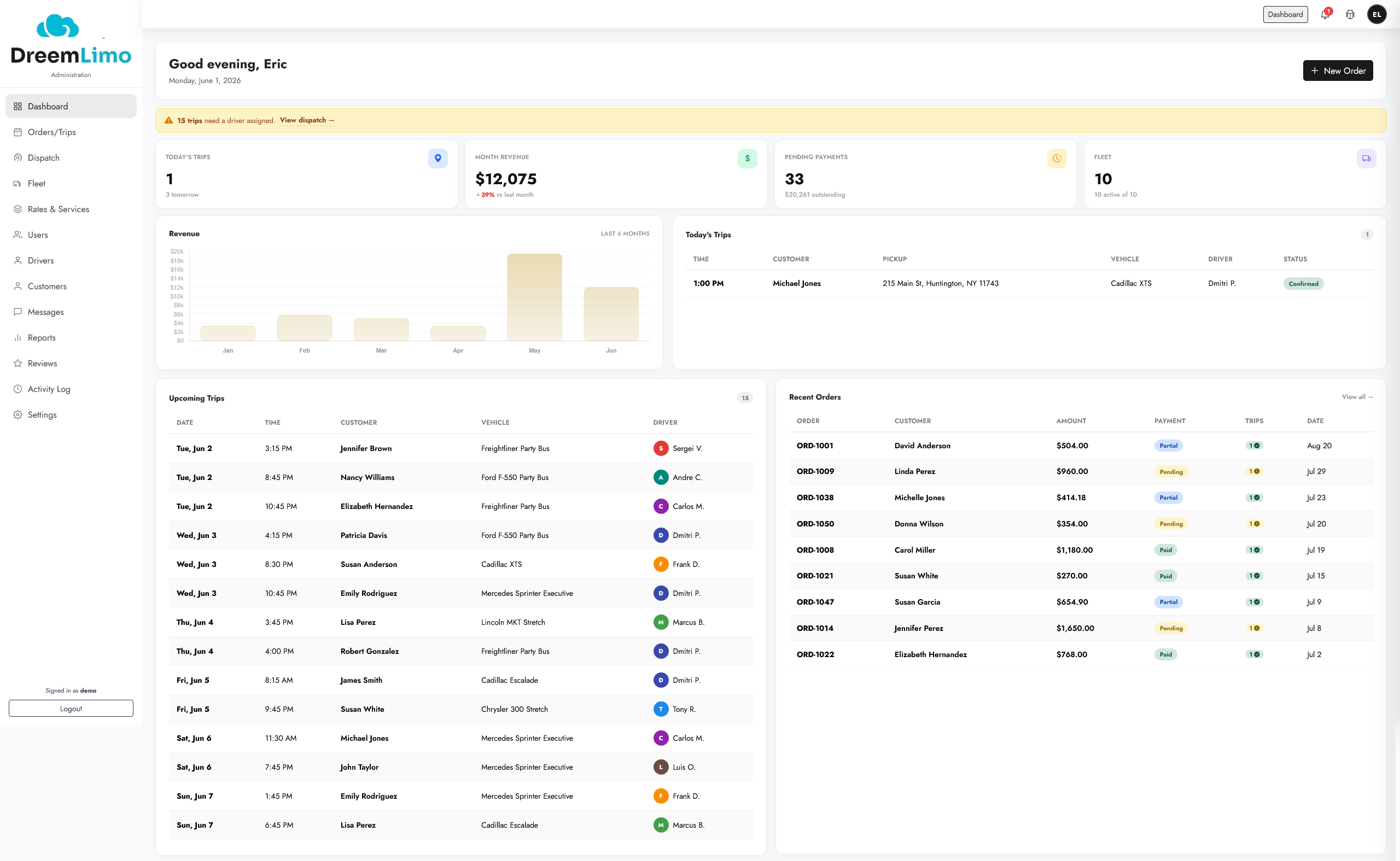
On the dispatch side, both platforms offer a dispatch board — the visual grid showing which vehicles and drivers are assigned to which jobs at what time. Dreem Limo’s board updates in real time and flags conflicts (like a double-booked stretch SUV on prom night) before they become a problem. Our team has seen double-booking errors spike during the April-to-June prom and wedding window, with roughly 1 in 8 operators reporting at least one scheduling conflict during that 10-week stretch when running manual dispatch spreadsheets.
Fasttrak’s dispatch view is functional but requires more manual input to stay current. For an operator running 5 or more vehicles across a busy Saturday in the local area — say, two weddings, a corporate airport run, and a birthday party bus — real-time sync between the dispatch board and driver app is not optional. It’s the difference between a smooth day and a phone-call crisis at 6 PM.
Farm-out (sending a job to a partner or affiliate operator when your own fleet is full) is another area where Dreem Limo leads. If your fleet is maxed out on a holiday weekend, the ability to hand off a job to a trusted affiliate — and still track it through your system — protects the client relationship and keeps revenue in your network. The U.S. Department of Energy’s for-hire vehicle data shows that demand peaks during November and December holiday travel periods can run 35 to 50 percent above average monthly volume. Having farm-out tools ready before that window is a practical necessity.
What Do Operators in the Local Area Actually Need From Limo Software?
Operators in the local area are competing on three fronts at once: Uber Black on price, national limo brands on brand recognition, and each other on service and availability. The right limousine software tips all three of those battles in your favor — but only if it handles the specific job types that drive local revenue.
- Airport transfers: High frequency, lower margin per run, but the backbone of steady weekly revenue. Automated zone pricing and instant confirmation are non-negotiable.
- Wedding packages: Hourly minimums of 3 to 6 hours, higher ticket values ($400 to $1,200 per booking is typical in this market), and clients who book 6 to 12 months out. Contract management and deposit capture matter here.
- Prom and event runs: Concentrated demand in a 10-week window (April through early June). Double-booking risk is highest. Real-time dispatch sync is critical.
- Corporate accounts: Repeat billing, card-on-file, and clean digital invoices. These clients will not chase you for a receipt.
- Holiday party buses: November and December surge. Operators who can take bookings online at 11 PM on a Tuesday capture this business. Those who rely on phone quotes do not.
Dreem Limo is built around all five of these job types. The platform’s pricing engine handles flat-rate airport zones, hourly wedding packages, and event-night pricing in the same interface — without needing a separate tool for each. Across our service calls and operator onboarding sessions in the local area, we’ve found that operators switching from manual quoting to automated instant quotes recover an average of 6 to 10 hours per week that were previously spent on phone-tag and email follow-up.
Operators switching from manual quoting to automated instant quotes recover an average of 6 to 10 hours per week that were previously spent on phone-tag and email follow-up.
Reviews and referrals are the other local-market lever. In a market where a single corporate account can be worth $15,000 to $30,000 a year in recurring transfers, one five-star Google review from the right client has real dollar value. Dreem Limo includes automated post-trip follow-up prompts that ask satisfied passengers to leave a review — something Fasttrak does not include in its base feature set.
Local operators should also be aware that subscription and billing transparency matters when evaluating any software platform. As of 2026, more operators are scrutinizing per-booking fees versus flat monthly subscriptions before committing to a limo app. Dreem Limo’s pricing structure is straightforward and scales with your fleet — no hidden per-booking surcharges that erode margin on your highest-volume months.
Which Limo Software Wins for Your Operation in 2026?
For owner-operators in the local area running 1 to 25 vehicles — or scaling beyond that — Dreem Limo is the stronger choice when you compare dreem limo vs fasttrak limo software on the features that actually drive bookings and protect margin. Fasttrak is a serviceable dispatch tool, but it requires more manual work to achieve what Dreem Limo delivers out of the box.
Here is the practical breakdown for the operator making this decision in 2026:
- If you’re losing bookings after hours: Dreem Limo’s 24/7 automated booking and instant quote engine captures those jobs. Fasttrak’s manual quote workflow does not.
- If chargebacks and no-shows are cutting into your margin: Dreem Limo’s card-on-file capture at booking reduces that exposure. Fasttrak’s post-trip invoicing leaves you exposed.
- If you’re heading into prom or wedding season: Dreem Limo’s real-time dispatch board and conflict alerts prevent the double-booking that costs you a client and a reputation.
- If you want to grow a corporate account base: Dreem Limo’s clean digital invoicing, automated confirmations, and review follow-up tools build the professional impression that converts a one-time transfer into a monthly account.
- If you need farm-out capability: Dreem Limo supports affiliate dispatch. Fasttrak’s tools in this area are limited.
The math is straightforward. If automated booking recovers even 2 missed airport transfers per week at an average of $120 each, that’s roughly $960 per month in revenue that was previously walking out the door. Software that pays for itself in the first week of recovered bookings is not a cost — it’s infrastructure.
If automated booking recovers even 2 missed airport transfers per week at an average of $120 each, that's roughly $960 per month in revenue that was previously walking out the door.
Get Your Booking Platform Running in the Local Area
Stop losing bookings to Uber Black and unanswered phones. Dreem Limo gives operators in the local area a branded, automated booking platform that works while you’re behind the wheel. Instant quotes, card capture, real-time dispatch, and post-trip review prompts — all in one limo software built for how you actually run your business.
Book a demo or get your platform live today. Call Dreem Limo directly or reach out online to see how fast setup actually is. Your next corporate account or wedding package booking could come in tonight — make sure your system is ready to take it.
Frequently Asked Questions
What is the main difference between Dreem Limo and Fasttrak limo software?
Dreem Limo offers automated instant quotes, card-on-file capture at booking, and built-in review follow-up tools that Fasttrak does not include in its base platform. Fasttrak is a functional dispatch tool, but operators in the local area who need 24/7 online booking and automated passenger communication will find Dreem Limo's feature set more complete. For owner-operators who wear every hat, that automation directly translates to recovered revenue and saved hours.
Can limo software really help me compete with Uber Black in my area?
Yes — the biggest advantage a local chauffeur operator has over Uber Black is the ability to offer a branded, professional experience with confirmed pricing and a real vehicle guarantee. Limousine booking software like Dreem Limo lets you capture that booking instantly online, at any hour, with a confirmed quote and card on file. Passengers who need a guaranteed vehicle for a corporate trip or wedding are not looking for surge pricing — they're looking for reliability, and your software is how you demonstrate that.
How long does it take to set up a limo booking platform in the local area?
With Dreem Limo, most operators in the local area are set up and taking live bookings within a few days of onboarding. The platform uses guided setup for zone-based pricing, vehicle inventory, and driver accounts, which cuts the configuration time significantly compared to platforms that require manual setup for each pricing rule. You do not need a developer or IT background to get it running.
What limo software features matter most for wedding and prom season?
For the April-to-June prom and wedding window, the most critical features are real-time dispatch conflict alerts, hourly minimum pricing, deposit capture at booking, and driver-app sync. Without real-time dispatch, a double-booked stretch SUV on prom night is a genuine risk when you're managing 5 or more vehicles across a single Saturday. Dreem Limo's dispatch board flags those conflicts before they become a problem.
Is Dreem Limo software good for a small fleet of just a few vehicles?
Dreem Limo is built to serve operators of any fleet size in the local area, from a single vehicle to large multi-vehicle operations. The platform scales with your business — you pay for what you need and add capacity as your fleet grows. For a solo operator or small fleet, the automated booking and quote tools are especially valuable because they replace the hours you'd otherwise spend on manual phone and email quoting.