A no-hype buying guide for limo, black-car, and party-bus operators researching the right software in 2026. Covers the 10 features that actually move the needle on bookings, dispatch, and cash flow.
What Does a Missed Booking Actually Cost You?
It is 2:07 a.m. A bride’s mother just filled out your quote form for a 6-vehicle wedding package. You are driving an airport run and your phone is on do-not-disturb. By 9 a.m. she has already booked your competitor. That one missed reply cost you a wedding package worth somewhere between $1,800 and $4,500 depending on vehicle count and hours — a realistic range in this market.
This is not a rare Tuesday. Airport transfers, prom night stretch SUVs, and corporate holiday parties all follow the same pattern: the customer who moves fastest wins. If your limousine software cannot capture and confirm a booking while you are behind the wheel, you are working harder than you need to for fewer dollars.
The right limo apps close that gap. The wrong ones add a monthly subscription fee and still leave you answering texts at midnight. This guide helps you tell the difference before you commit.
What Are the Top 10 Features Limo Booking Software 2026 Must Have?
The 10 features below are ranked by the direct impact they have on bookings captured, hours saved, and chargebacks avoided. Each one solves a specific pain point that owner-operators in the local area deal with on a weekly basis.
1. 24/7 Online Booking With Instant Confirmation
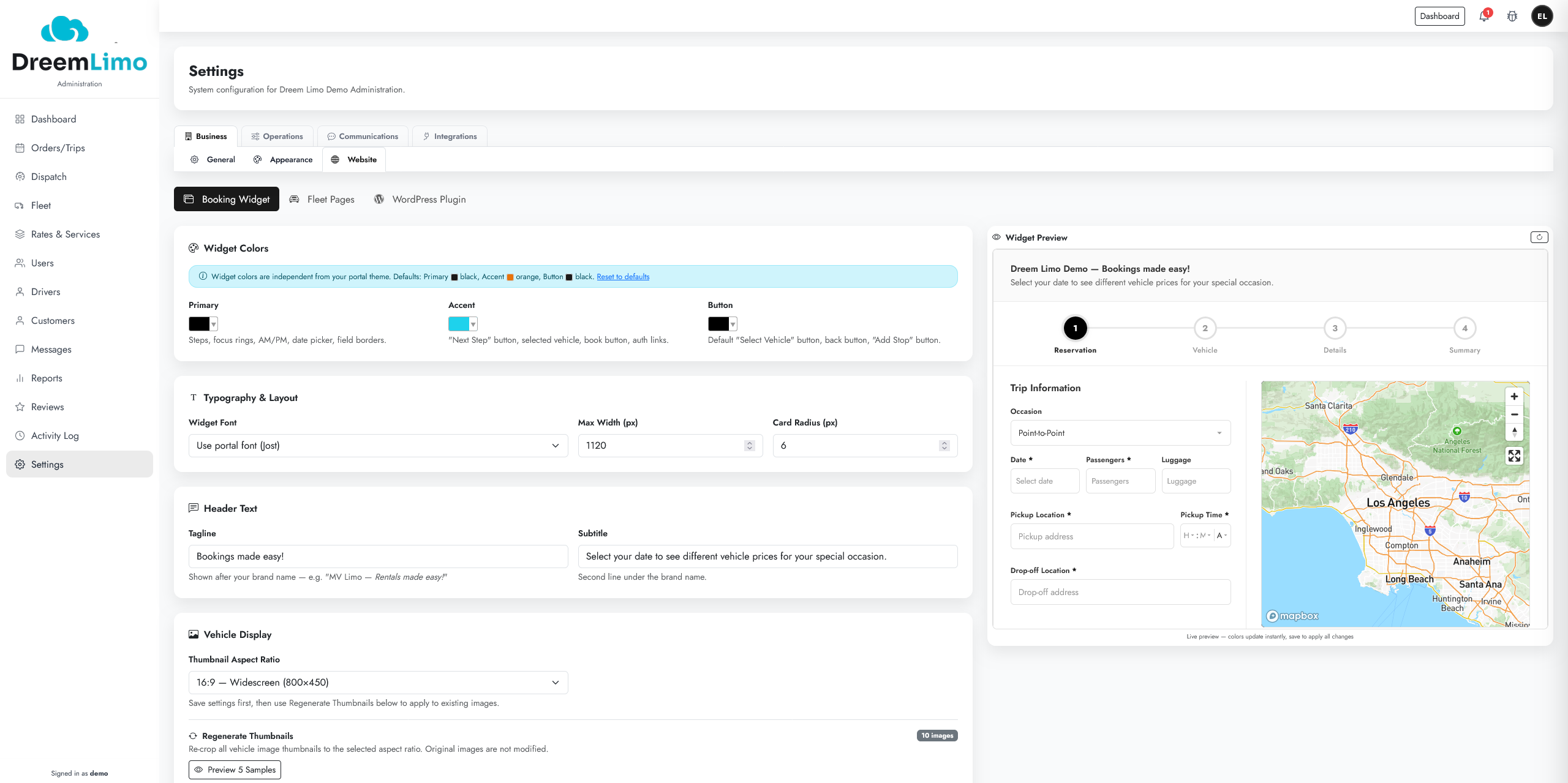
Roughly 60% of limo inquiries happen outside normal business hours, based on industry booking-data patterns. A booking widget on your website that captures the trip details, quotes a price, and sends an automatic confirmation email closes jobs while you sleep. Without it, you are competing on response speed against operators who have already automated this step.
Roughly 60% of limo inquiries happen outside normal business hours, and a booking widget that captures the trip details and sends an automatic confirmation email closes jobs while you sleep.
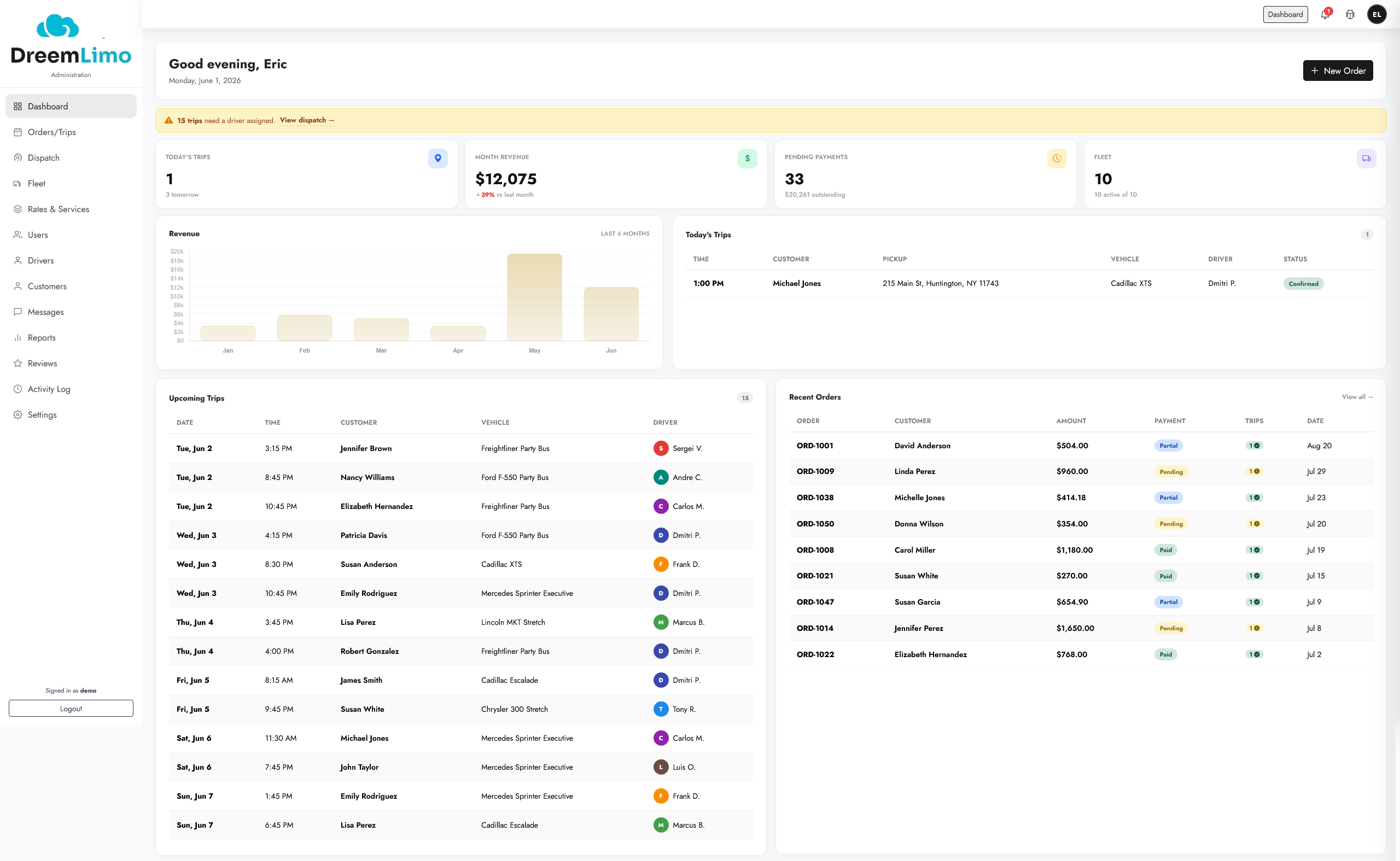
2. Real-Time Dispatch Board
A dispatch board (a live visual map of every driver, vehicle, and active job) prevents double-booking. Double-booking a stretch SUV on prom night is not just a lost job — it is a refund, a one-star review, and a story that travels through every parent group chat in the ZIP code. Look for a board that updates in under 30 seconds when a driver accepts or completes a run.
3. Card-on-File Capture and Pre-Authorization
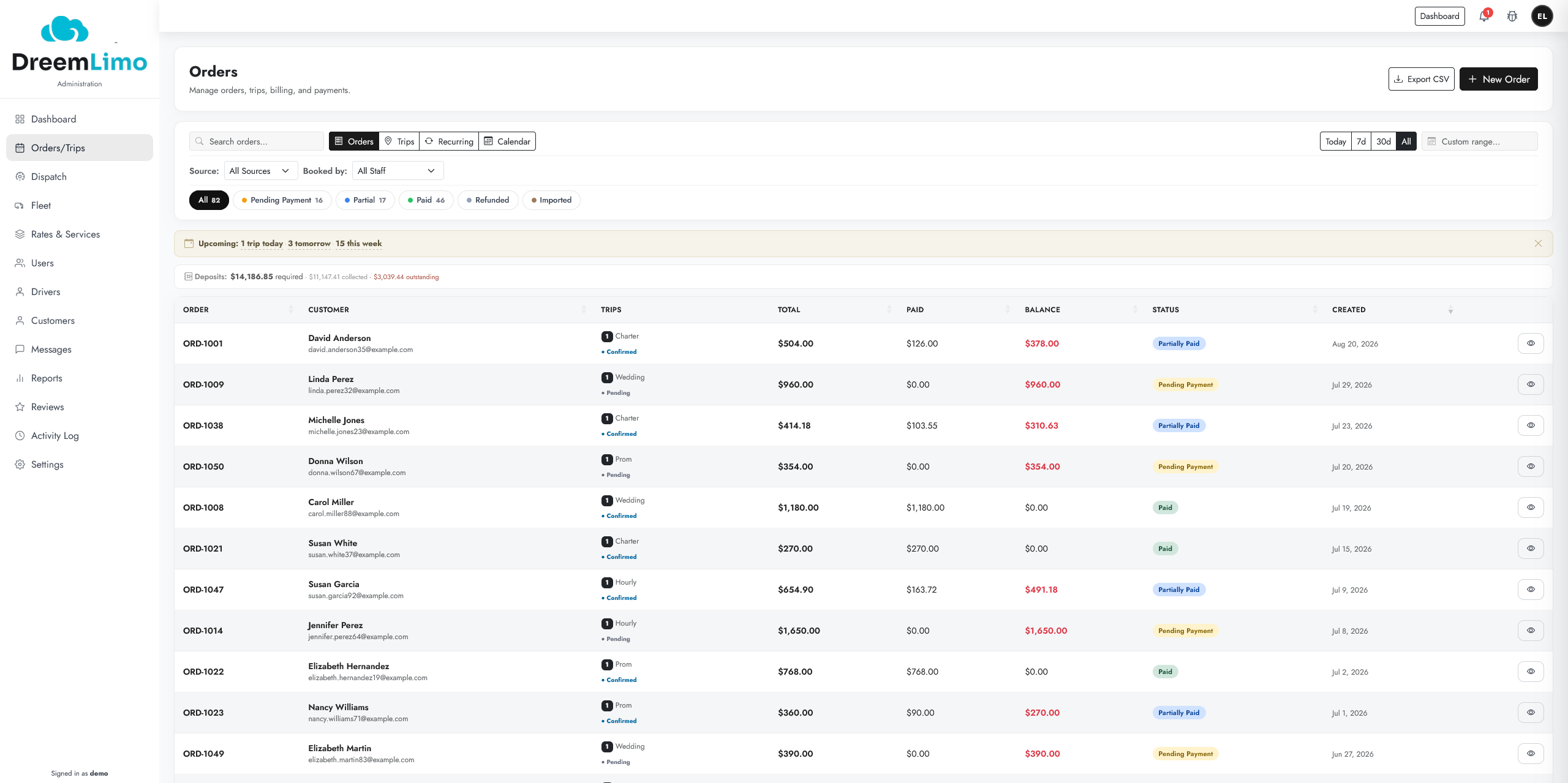
Card-on-file capture means the customer’s payment method is stored and pre-authorized at booking, not at pickup. This single feature cuts no-show losses and chargeback disputes significantly. Operators without it spend an average of 2 to 4 hours per month chasing unpaid balances, based on common operator reports. Make sure the software is PCI-DSS compliant for stored card data.
4. Zone-Based and Hourly Pricing Rules
Zone-based pricing (flat rates tied to geographic zones, like airport to downtown) and hourly minimums (a set minimum number of billable hours per booking, common for weddings and proms) need to live inside the software, not in your head. If you have to manually calculate every quote, you will underprice late-night runs and lose margin on peak-season dates like May prom weekends and December holiday parties.
5. Automated Driver Notifications and GPS Tracking
When a booking is confirmed, the assigned driver should receive a push notification with the full trip sheet — pickup address, passenger name, flight number if it is an airport transfer, and any gratuity instructions. GPS tracking lets you monitor on-time performance without a phone call. This matters most during high-volume weekends when you may have 4 or more vehicles running simultaneously across the local area.
6. Flight Tracking Integration
Airport transfers are among the highest-value single trips in the local market, often ranging from $85 to $200 or more depending on distance and vehicle class. Flight delays are the leading cause of driver wait time and overtime charges. Software that pulls live flight data and automatically adjusts pickup times saves your drivers from sitting in cell-phone lots for 90 minutes unpaid — and keeps your on-time rating clean.
7. Farm-Out and Affiliate Network Support
Farm-out (sending a job you cannot cover to a trusted affiliate operator, or accepting overflow jobs from another company) is how small fleets handle demand spikes without buying a third vehicle. Your limousine software should let you send and receive farm-out jobs with a paper trail: confirmed rates, driver details, and passenger notifications all in one place. Without this, farm-out arrangements rely on text messages and handshakes — which fail at the worst moments.

8. Customer CRM and Repeat-Booking Tools
In a local market, referrals and repeat customers are your lowest-cost acquisition channel. A built-in CRM (customer record system) that stores past trips, vehicle preferences, and contact history lets you send a targeted email in March to every customer who booked a prom package last year. One re-engagement campaign to 50 past customers can fill a weekend with zero ad spend.
9. Review and Reputation Prompts
Uber Black and rideshare competitors have review systems built into their apps. Independent operators compete on reputation, and Google reviews are the primary trust signal for new customers searching in the local area. Look for limo software that sends an automatic post-trip review request by text or email within 2 hours of job completion — when the experience is still fresh. Our drivers see review response rates drop by more than half when the request goes out the next day instead of the same evening.
10. Reporting and Revenue Dashboards
You cannot manage what you cannot see. A revenue dashboard that breaks down income by vehicle, driver, job type, and month tells you whether your sedan is carrying its weight or whether your party bus only earns during 6 weeks of the year. As of 2026, the best limo apps include exportable reports that sync with QuickBooks or similar bookkeeping tools, cutting month-end reconciliation from 3 hours to under 30 minutes.
A revenue dashboard that breaks down income by vehicle, driver, job type, and month tells you whether your sedan is carrying its weight or whether your party bus only earns during 6 weeks of the year.
How Do the Most Common Limo Software Options Compare?
Not all limousine software products cover all 10 features, and the gap between a basic booking tool and a full dispatch platform is significant. The table below compares the four main categories of tools operators typically evaluate.
| Software Type | Online Booking | Dispatch Board | Card-on-File | Farm-Out Support | Best Fit |
|---|---|---|---|---|---|
| Basic Booking Widget | Yes (form only) | No | No | No | Solo operators taking fewer than 10 jobs/month |
| Generic Scheduling App | Yes | Limited | Sometimes | No | Service businesses not built for ground transport |
| Dedicated Limo Software | Yes | Yes | Yes | Yes | Operators with 2 or more vehicles and regular airport/event volume |
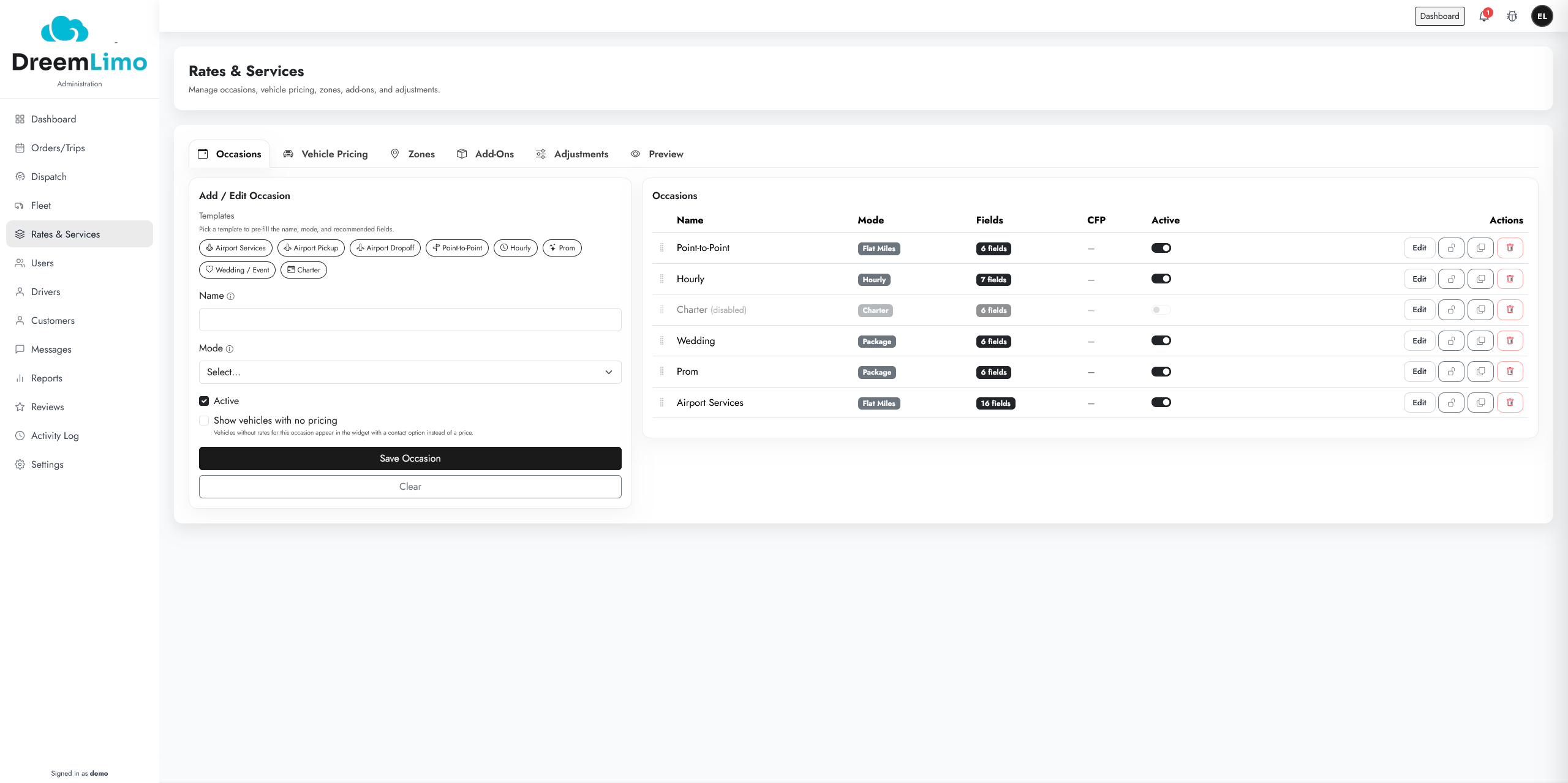
| Dreem Limo Platform | Yes — branded, 24/7 | Yes — real-time | Yes — PCI-compliant | Yes — with full paper trail | Any fleet size in the local area, from solo operators to multi-vehicle companies |
What Mistakes Should You Avoid When Choosing Limo Apps or Software?
The most expensive mistake is choosing software based on monthly price alone, then losing 3 to 5 bookings a month because the tool cannot capture jobs automatically. Here are the most common errors operators make during this purchase decision.
- Buying for today’s fleet size only: If you plan to add a vehicle within 18 months, pick software that handles the larger fleet now. Migrating data mid-season costs more in time than the price difference.
- Ignoring mobile performance: More than 70% of limo booking searches happen on a mobile device, according to Google’s consumer research. If the booking flow is clunky on a phone, you lose the job before the customer even calls.
- Skipping the payment integration test: Run a real $1 test transaction before going live. Payment failures at checkout are the single fastest way to lose a confirmed booking.
- Choosing software with no flight-tracking module: Airport transfers are too high-value to manage manually. Missing a flight change costs you a driver’s time and a customer’s trust in the same moment.
- Not asking about chargeback dispute support: Some platforms provide transaction records and trip logs that help you win chargeback disputes. Others give you nothing. Ask before you sign up.
- Overlooking review automation: In the local area, a 4.8-star Google rating versus a 4.2-star rating can be the difference between a customer clicking your listing or your competitor’s. Manual review requests get skipped 80% of the time when you are busy.
- Assuming all software handles zone pricing: Many generic tools require manual price overrides for every airport run. That is 5 to 10 minutes per quote that adds up to hours per week during peak season.
Which Features Matter Most for Your Fleet Size and Use Case?
The right starting point depends on your current volume, your primary job types, and how many hours per week you are spending on admin instead of driving or selling. Here is a practical breakdown by operator profile.
For Solo Operators Running 1 to 3 Vehicles
Prioritize features 1, 3, and 6 first: 24/7 online booking, card-on-file capture, and flight tracking. These three eliminate the highest-cost manual tasks for a single-operator business. Across our service calls in the local area, we see solo operators recover an average of 6 to 8 missed bookings per month within the first 60 days of adding automated online booking alone.
Wedding and prom season (April through June in most of the local area) is when solo operators feel the squeeze hardest. Having zone-based pricing rules set up before March saves hours of manual quoting during the busiest 10 weeks of the year.
For Growing Fleets Running 4 to 10 Vehicles
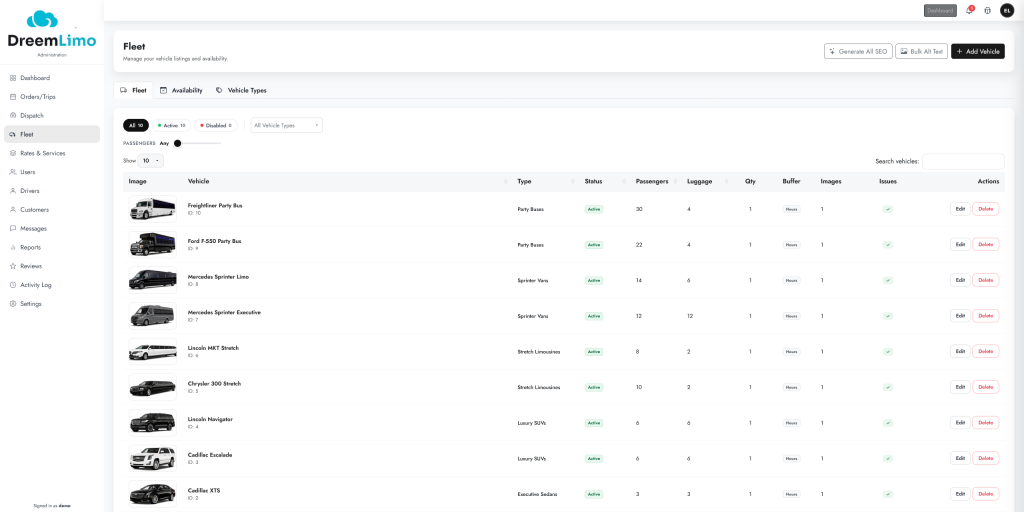
At this size, the dispatch board and farm-out support become critical. Without a real-time dispatch board, a 6-vehicle operation on a busy Saturday night is managed by memory and text threads — a setup that produces double-bookings at the worst possible moments. Farm-out support lets you say yes to overflow jobs and build affiliate relationships that generate referral income year-round.
For Established Operations Running 10 or More Vehicles
Revenue dashboards, CRM tools, and driver performance reporting become the differentiators at this scale. Knowing which driver has the highest on-time rate, which vehicle generates the most repeat bookings, and which months need promotional campaigns is how you run a profitable operation rather than just a busy one. The U.S. Department of Energy notes that fleet operators who track utilization data reduce idle vehicle costs by 10 to 15% — a principle that applies directly to limo fleet management as well.
As of 2026, the best limousine software platforms support fleets of any size under a single dashboard, so you are not forced to switch systems as you grow. That scalability is worth paying a modest premium for upfront.
Ready to Stop Losing Bookings in the Local Area?
Every week without the right features limo booking software 2026 demands is a week of missed airport runs, manual quote calls, and prom-night double-booking risk. The operators winning in the local area right now are not necessarily running more vehicles — they are capturing more of the demand that already exists.
Dreem Limo offers a branded booking platform built specifically for limo, black-car, and party-bus operators in the local area. It covers all 10 features in this guide, scales from a solo sedan to a multi-vehicle fleet, and gets you live faster than most operators expect.
Call Dreem Limo to schedule a walkthrough or launch your branded booking platform today. Reach the team directly at . Get a custom quote and see exactly which features fit your current operation before you commit to anything.
Frequently Asked Questions
How much does limo booking software usually cost in 2026?
Pricing in the regional market typically ranges from $80 to $400 per month depending on fleet size, feature set, and whether payment processing is bundled. Basic booking widgets cost less but lack dispatch and CRM tools. Full-featured platforms with flight tracking and farm-out support sit at the higher end of that range. Contact Dreem Limo for a custom quote matched to your specific fleet and volume.
Can limo software handle both hourly and point-to-point pricing at the same time?
Yes, the best limousine software platforms support both pricing models simultaneously. You can set zone-based flat rates for airport transfers and apply hourly minimums for weddings or proms within the same system. This eliminates manual quoting for the most common job types in the local area.
What is farm-out and do I really need it in my limo software?
Farm-out is when you send a job you cannot cover to a trusted affiliate operator, or accept overflow jobs from another company. If you run fewer than 5 vehicles, you will eventually hit a weekend where demand exceeds your capacity. Software with built-in farm-out support keeps those jobs documented with confirmed rates and passenger notifications, so nothing falls through the cracks.
How does limo software help me compete against Uber Black in the local area?
Uber Black wins on app convenience and instant booking. Independent operators win on relationship, vehicle quality, and local knowledge. The right limo apps close the convenience gap with 24/7 online booking and instant confirmation, while your CRM and review tools build the reputation advantage that rideshare platforms cannot replicate. Combining both gives you a durable edge in the local market.
Do I need limo software if I only run one or two vehicles right now?
Even a one-vehicle operation loses money to missed overnight inquiries and manual payment collection. The three features with the fastest payback for solo operators are 24/7 online booking, card-on-file capture, and automated review requests. Most solo operators in the local area recover the monthly software cost within the first 2 to 3 bookings they would have otherwise missed.