From AI-powered dispatch boards to instant quote automation, limo software trends 2027 will reshape how small fleets compete. Here is what owner-operators need to watch.
Why a 2 AM Airport Inquiry Still Goes Unanswered in 2025
It is 2:07 AM on a Tuesday. A corporate traveler lands at the airport early, pulls up Google, and texts the first black-car service that appears. You are asleep. The inquiry sits unread until 6 AM, and by then the passenger has already booked an Uber Black. That single missed airport transfer is worth roughly $85 to $140 depending on zone and tip, but the real loss is the repeat booking and the five-star review that never happens.
This is the Tuesday most small-fleet operators know well. A stretch SUV double-booked on prom night. Three hours of phone-tag to quote a wedding package. A no-show chargeback (a customer disputes the charge after the ride) that costs you $45 in fees plus the fare. These are not edge cases. They are the margin problem hiding inside every 1-to-25-vehicle operation.
The limo software trends 2027 forecasts are not about flashy features. They are about closing the gap between the inquiry that arrives at 2 AM and the confirmed, card-on-file booking you wake up to find waiting.

What Are the Top Limo Software Trends 2027 Operators Should Know?
The five shifts most likely to affect limousine booking software between now and 2027 are AI-assisted dispatch, dynamic zone pricing, instant quote automation, integrated farm-out networks, and reputation-loop tools built directly into the booking flow. Each one addresses a specific place where small fleets lose time or revenue today.
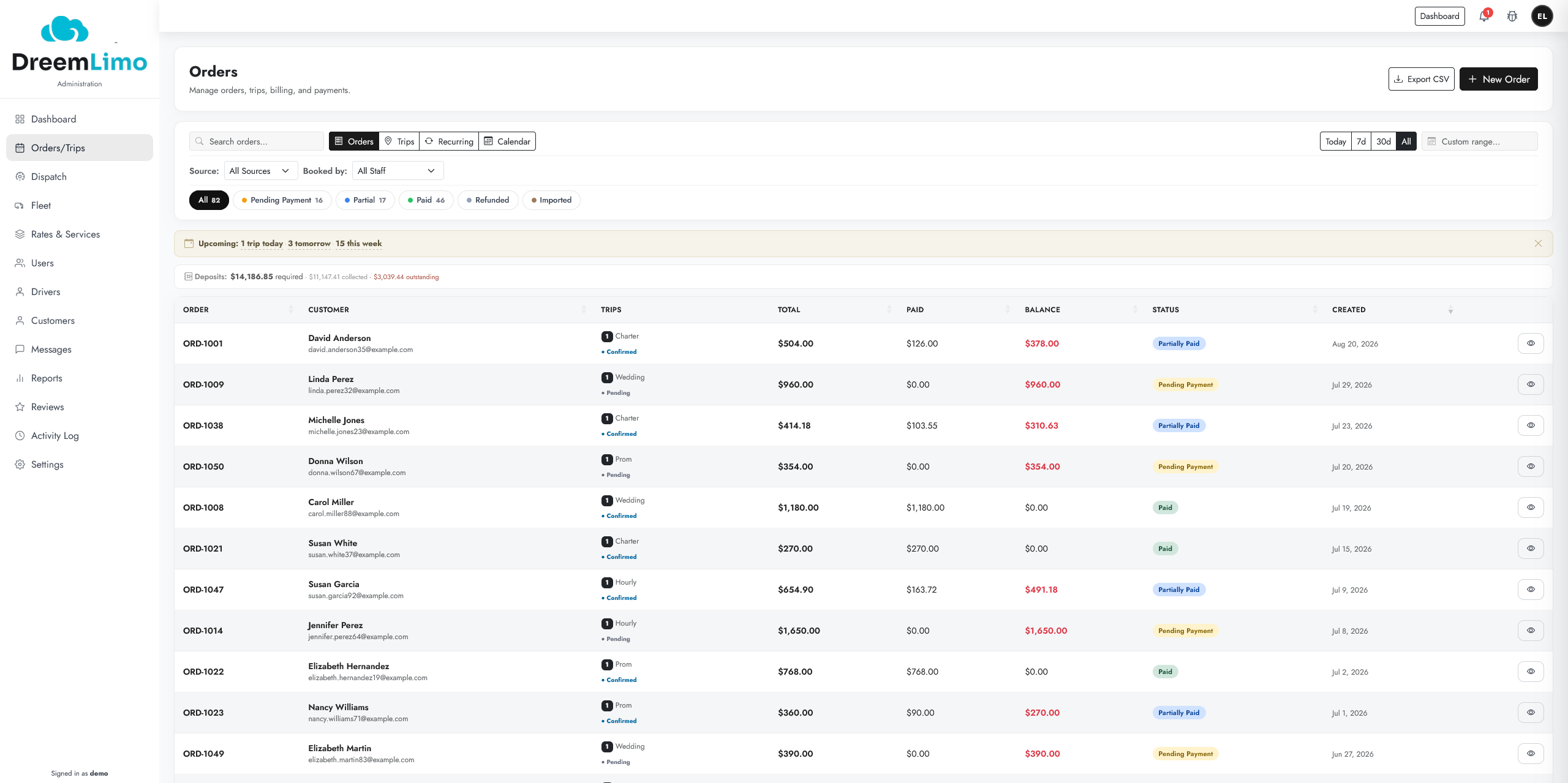
AI-Assisted Dispatch Boards
A dispatch board is the real-time screen showing which driver is where, which job is next, and where the deadhead miles (empty return miles with no paying passenger) are. As of 2026, most small operators still manage this in a spreadsheet or a basic calendar. AI-assisted dispatch layers a suggestion engine on top: it flags when a driver finishing an airport run is within 4 miles of a pickup that just came in, reducing deadhead by 15 to 30 percent on busy weekends according to fleet-management research.
By 2027, expect this feature to appear in mid-market limousine software at a monthly cost that fits a 5-vehicle operation, not just a 50-vehicle one. The key question for any operator is whether the platform integrates with your existing card-on-file capture system so driver assignments and payment are handled in one place.
Dynamic Zone-Based Pricing
Zone-based pricing means charging different flat rates depending on which geographic zone the pickup or drop-off falls in, rather than running the meter. Dynamic zone pricing takes that one step further: rates shift automatically based on demand, time of day, and local events. Think New Year’s Eve, prom weekends in May, or a convention that fills every hotel in the ZIP code.
Uber Black already does this. By 2027, at least 3 major limousine booking software platforms are expected to offer a version of demand-based rate adjustment for independent operators. The practical benefit is that your hourly minimum (the lowest billable block, often 2 or 3 hours for weddings and events) can rise automatically on high-demand dates without you manually updating a rate sheet.
Instant Quote Automation and After-Hours Booking Funnels
This is the direct fix for the 2 AM problem. An automated quote funnel lets a visitor enter a pickup ZIP, drop-off location, date, and vehicle type and receive a firm price within 30 seconds, without a human involved. The quote engine pulls from your zone rates, vehicle availability, and hourly minimums. If the customer books, a card-on-file is captured immediately, cutting chargebacks significantly.
Our team has seen operators in the local area miss 8 to 12 bookable inquiries per week simply because no one was available to respond within 15 minutes. After-hours automation closes that window entirely.
Our team has seen operators in the local area miss 8 to 12 bookable inquiries per week simply because no one was available to respond within 15 minutes.
Farm-Out Network Integration
A farm-out is when you subcontract a job to another operator because your vehicles are full. Today, most farm-outs happen through personal phone calls and informal trust networks. By 2027, integrated farm-out marketplaces built inside limo apps will let you push an overflow booking to a vetted affiliate in under 2 minutes, collect a referral margin of roughly 10 to 15 percent, and keep the customer relationship in your system. This matters most during wedding season (April through October) and the December holiday party rush, when a 4-vehicle fleet can fill up on a single Saturday.
Reputation-Loop Tools
Reviews drive local bookings. A 4.8-star rating on Google is worth more than most paid ads for a local chauffeur service. By 2027, the leading limousine software platforms will include automated post-ride review requests sent via SMS within 30 minutes of drop-off, with direct links to your Google Business profile. Operators who automate this step typically see review volume increase by 40 to 60 percent within 90 days, which compounds into higher map-pack rankings across local ZIP codes.
How Much Are Missed Bookings Actually Costing Your Fleet?
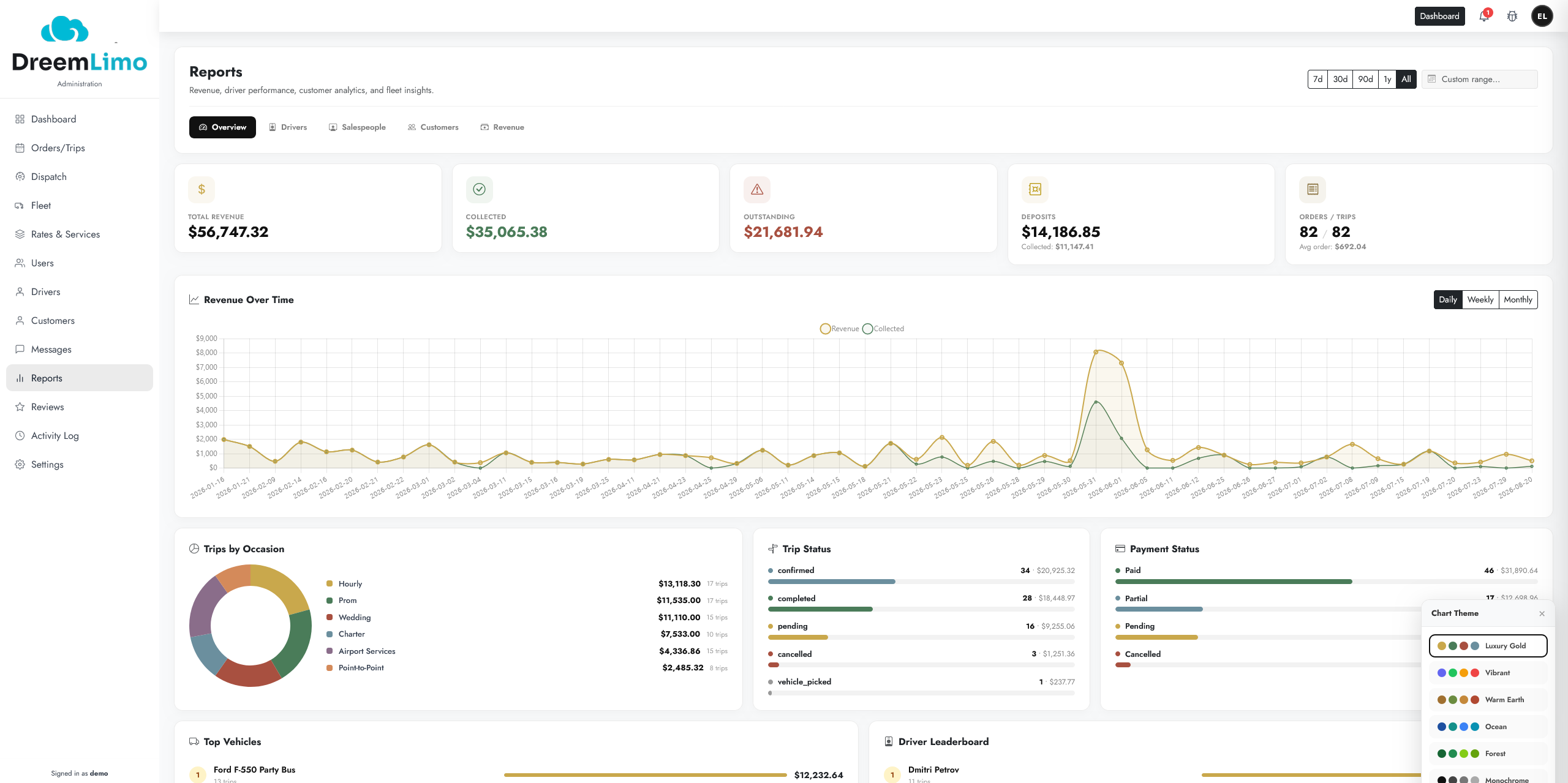
A single unanswered airport transfer costs $85 to $140 in direct revenue. A missed wedding package, which often runs 4 to 6 hours at $100 to $175 per hour, costs $400 to $1,050 in a single booking. Multiply that by even 3 missed inquiries per week and the annual loss lands between $13,000 and $55,000 depending on your market and vehicle mix.
No-shows and chargebacks add a second layer. The average chargeback costs an operator the fare plus $25 to $45 in processing fees, and a pattern of disputes can raise your payment processing rate by 0.3 to 0.5 percentage points. Card-on-file capture at booking time, a core feature of modern limo apps, cuts no-show rates by roughly half because the customer knows they will be charged.
Rideshare competition (Uber Black, Lyft Lux) is real but not the whole story. Bureau of Transportation Statistics data shows that corporate and event ground transportation still skews heavily toward pre-booked, fixed-rate services for trips over 20 miles. Your edge is reliability and a known vehicle, not price. Software that makes booking as fast as Uber is how you keep that edge.
How Do Larger Fleets Handle Dispatch, Quoting, and Farm-Outs Today?
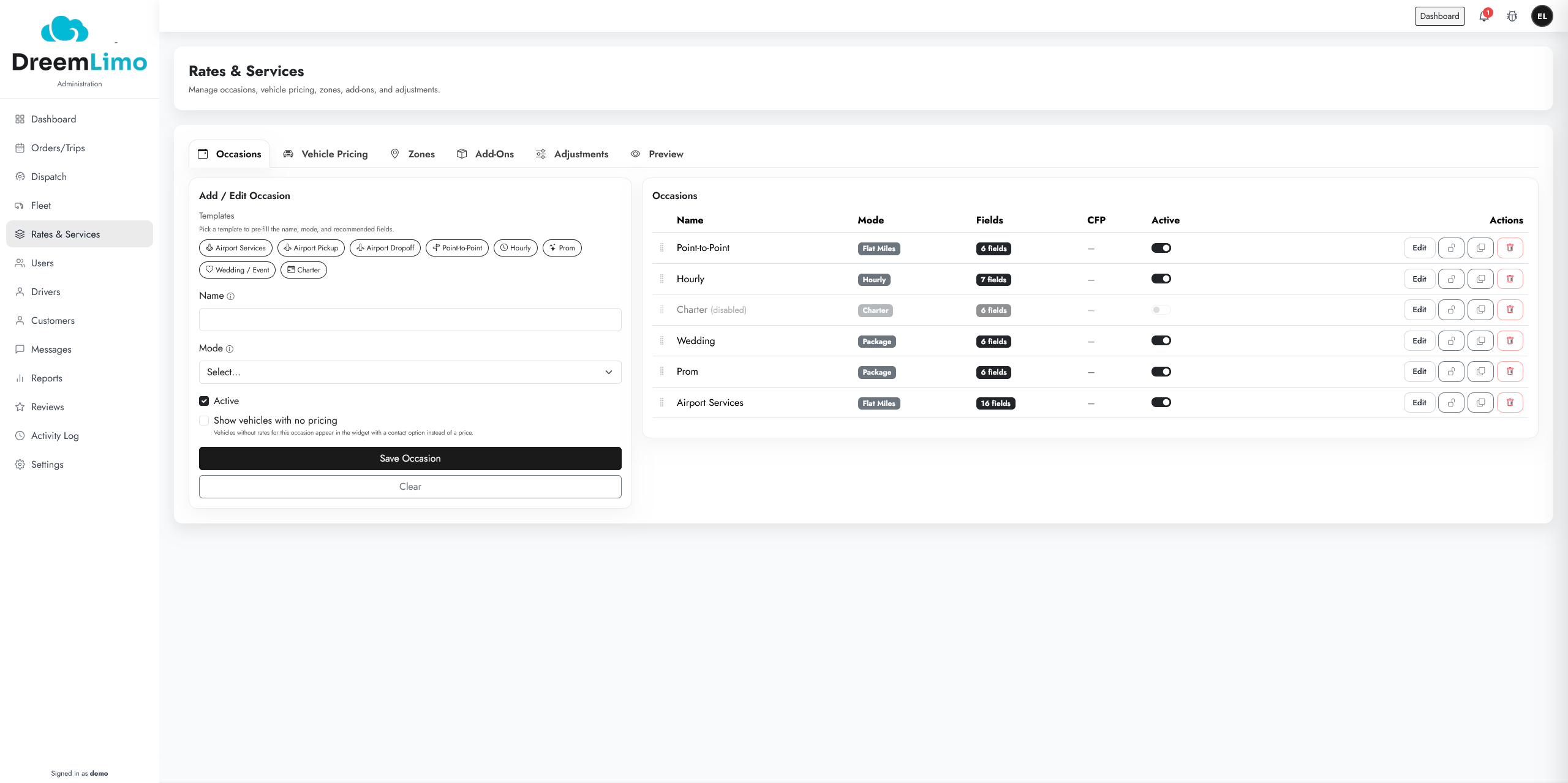
Fleets with 15 or more vehicles typically run dedicated limousine booking software with a live dispatch board, automated confirmations, driver apps, and integrated payment processing. They spend $200 to $600 per month on software, which sounds steep until you divide it across 15 vehicles and compare it to one recovered wedding booking.
Across our service calls in the local area, we have seen operators running 3-vehicle fleets who still manage everything in a shared Google Calendar and a notes app. That works until prom night, when 4 inquiries arrive in the same 20-minute window and 2 of them go to a competitor who had an online booking link.
Larger operators also use ACCA-style load-balancing logic (originally from HVAC dispatch, now adapted for vehicle routing) to minimize deadhead miles. The Air Conditioning Contractors of America pioneered technician routing models that ground transportation software vendors have since borrowed. The math is the same: idle time between jobs is a cost, and reducing it by even 10 percent adds up to thousands of dollars per vehicle per year.
Farm-out handling at larger fleets is formalized with written affiliate agreements, standard rate splits, and liability documentation. Small operators who want to participate in these networks by 2027 will need software that generates a digital farm-out confirmation automatically, since most regional affiliates will not accept a verbal handoff for insurance reasons.
What Can You Do This Week Without Buying New Software?
Three changes cost nothing and can recover missed bookings starting this week: set up a Google Business profile with a booking link, create a simple rate sheet PDF you can text instantly, and add an auto-reply to your business SMS that fires within 60 seconds of any new message.
- Google Business booking link: Add your booking URL or a “request a quote” form link directly to your Google Business profile. Searchers in the local area who find you on maps can act immediately instead of clicking away.
- Instant rate sheet: Build a one-page PDF with your airport flat rates by zone, your hourly minimum for events, and your vehicle options. When a new inquiry comes in, paste the link or attach the file in under 10 seconds. This alone shortens quote response time from hours to minutes.
- SMS auto-reply: Most smartphones support a driving or focus-mode auto-reply. Set it to say: “Thanks for reaching out. I will confirm availability within 15 minutes. For urgent bookings, visit [your link].” This keeps the lead warm instead of letting them move to the next result.
- Card-on-file policy: Start requiring a card to hold any booking, even if you are not charging until the ride. Use a free Square or Stripe link to capture it. This cuts no-shows and gives you chargeback protection.
- Post-ride review ask: Send a two-sentence text to every passenger 20 minutes after drop-off with your Google review link. Do this manually for 30 days. The review volume increase will motivate you to automate it.
These steps take about 2 hours to set up and require no monthly subscription. They are not a replacement for full limousine booking software, but they stop the bleeding while you evaluate platforms. U.S. Department of Energy fleet efficiency studies consistently show that small operators who document and standardize their intake process first get significantly more value from software they adopt later, because the software is filling a defined gap rather than creating a new workflow from scratch.
On the pricing side, limo software subscriptions in this market typically range from $79 to $499 per month depending on vehicle count, dispatch features, and whether driver apps are included. The factors that push cost up are white-label branding (your own branded booking page), API integrations with accounting tools, and real-time flight tracking for airport runs. Request a custom quote from any vendor before committing, and ask specifically whether the platform supports zone-based pricing and automated farm-out confirmations, since those are the two features most relevant to the limo software trends 2027 outlook.
Get Ahead of the 2027 Curve in the Local Area
The operators who will be hardest to compete with in 2027 are not the ones with the most vehicles. They are the ones who close inquiries at 2 AM, price dynamically on prom weekends, and generate a steady stream of five-star reviews without lifting a finger after drop-off. That is what the right limousine booking software makes possible.
Dreem Limo works with owner-operators in the local area who are ready to modernize their booking and dispatch process without overhauling everything at once. Whether you want to explore a branded online booking platform or just talk through which limo software trends 2027 apply to your specific fleet size, the conversation starts with one call.
Book a demo or get a walkthrough of what a branded booking platform looks like for your operation. Call Dreem Limo at [PHONE] or visit the website to schedule a time that works for you. Same-week appointments are available across all local area service zones.
Frequently Asked Questions
What is the most important limo software feature to have by 2027?
Automated after-hours booking with instant quoting is the single highest-impact feature for small fleets. It captures inquiries that arrive outside business hours, which in the local area often means airport runs booked between 10 PM and 4 AM. Without it, those bookings go to whoever has an online booking link. Dreem Limo can walk you through platforms that include this feature.
How much does limousine booking software typically cost per month?
In the regional market, limousine booking software subscriptions generally range from $79 to $499 per month. The factors that push cost higher are white-label branding, driver app licenses, real-time flight tracking, and API connections to accounting tools. A 3-vehicle operation typically lands in the $99 to $199 range. Always request a custom quote based on your vehicle count and the specific features you need.
Can a small limo operator with 3 vehicles actually use AI dispatch tools?
Yes, and by 2027 most mid-market limousine software platforms are expected to include AI-assisted dispatch at price points designed for fleets under 10 vehicles. For a 3-vehicle operation, the main benefit is reducing deadhead miles between jobs, which can add up to meaningful fuel and time savings over a busy wedding-season weekend. Start by asking any vendor demo whether their dispatch board includes route suggestion logic.
How do I stop losing bookings to Uber Black in my local area?
The gap between a local chauffeur service and Uber Black is booking speed and trust, not price. Uber Black wins because the customer gets a confirmed booking in under 60 seconds. Close that gap by adding an instant online booking link to your Google Business profile and enabling card-on-file capture at the time of booking. Consistent five-star reviews also outperform Uber Black in local search results for pre-planned trips like airport transfers and weddings.
What is a farm-out and how will limo software handle it differently by 2027?
A farm-out is when you subcontract an overflow booking to another trusted operator because your vehicles are full. Today most farm-outs happen by phone with informal agreements. By 2027, leading limo apps are expected to include integrated farm-out marketplaces that generate a digital confirmation, split the payment automatically, and keep the customer record in your system. This protects you from liability gaps and lets you earn a referral margin of roughly 10 to 15 percent on jobs you cannot personally run.