Choosing between Dreem Limo and Limo Anywhere as your limousine booking software? This operator-focused guide breaks down the real differences so you can stop losing bookings and start running a tighter operation.
It is 2:07 a.m. on a Tuesday and a corporate traveler just submitted a quote request for a 5 a.m. airport transfer. By 7 a.m., they booked an Uber Black instead. If that scenario sounds familiar, you already understand the core problem this article addresses. The debate around dreem limo vs limo anywhere is not really about software features on a spec sheet — it is about which limousine booking software actually prevents that 2 a.m. loss from happening again. For a deeper look at how these two platforms compare at the fleet-management level, see our full breakdown at Dreem Limo vs Limo Anywhere: Which Booking Software Wins for Small Fleet Operators in 2026? This article goes narrower: the day-to-day workflow fit for owner-operators running 1 to 25 vehicles in the local area.
What Does a Missed Booking Actually Cost You?
A single missed airport transfer in the local area typically represents $85 to $175 in net revenue. A missed wedding package or hourly prom booking can mean $400 to $900 gone in one unanswered text. Multiply that by the 3 to 5 inquiries a busy operator misses each week during peak season — wedding season runs April through October, holiday corporate parties cluster in November and December, and prom nights hit in May — and the annual bleed can reach $50,000 or more for a solo operator.
No-shows and chargebacks add another layer. Operators without a card-on-file capture system (a feature that stores a customer’s payment card at booking time, before the ride happens) absorb chargeback rates that can run 2% to 4% of gross revenue, according to industry payment processing data. That is real money on a $300,000 annual gross.
Our dispatchers see this pattern repeat across the local area: operators who rely on phone-tag quoting lose an estimated 30% of inbound leads before a price is even discussed. The fix is not hustle — it is the right limo software doing the follow-up automatically.

How Does Each Platform Handle the Core Operator Workflow?
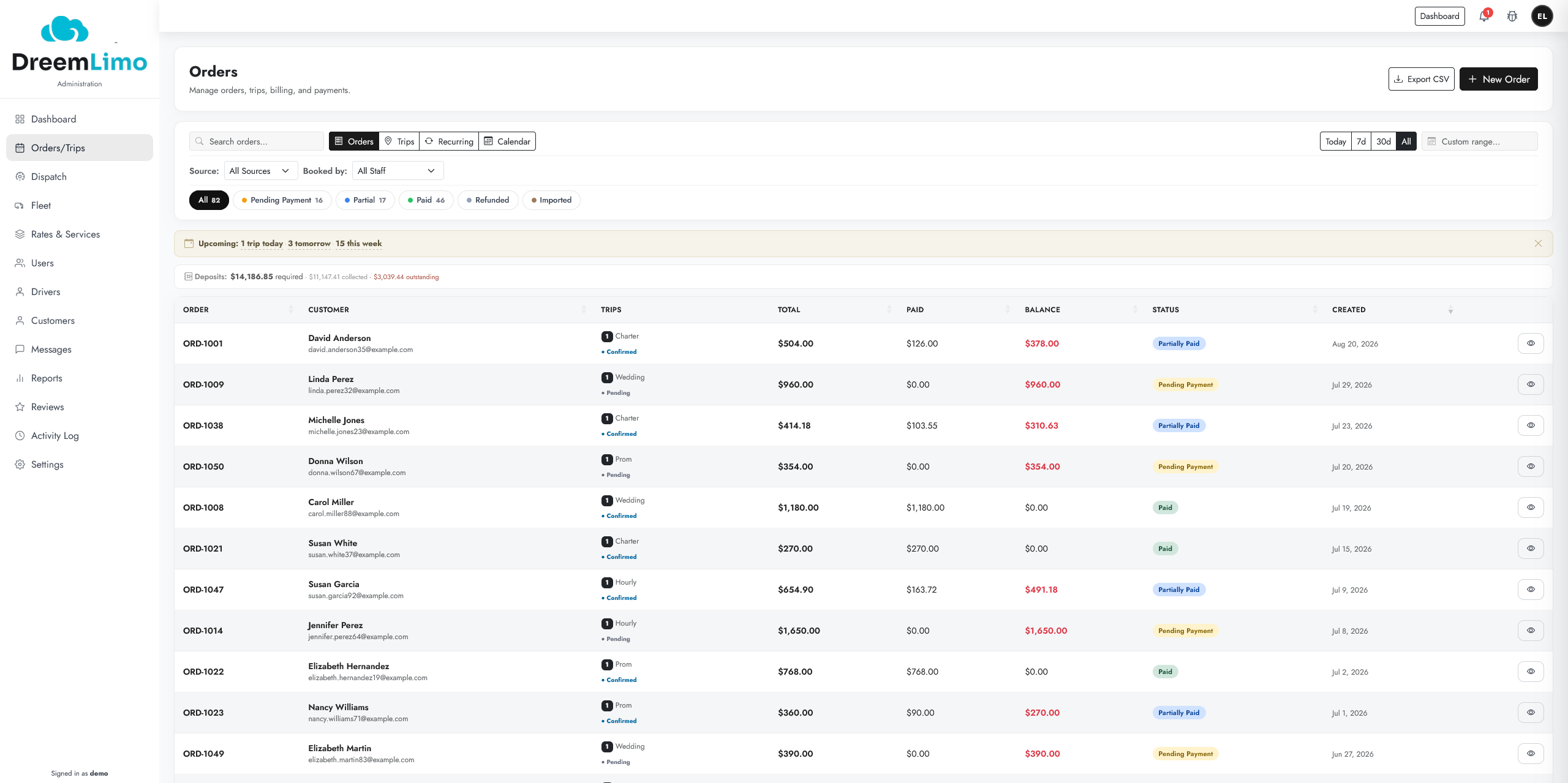
Limo Anywhere has been a fixture in limousine software since the early 2000s, and its dispatch board (the central screen showing all active and upcoming jobs) reflects that legacy architecture. Dreem Limo was built for the current environment: mobile-first quoting, instant online booking, and a customer-facing interface that does not require a phone call to complete a reservation.
Here is what that difference looks like at the workflow level for a typical owner-operator in the local area:
- Quote generation: Limo Anywhere requires the operator to build the quote inside the back end and email or call it out. Dreem Limo lets the customer self-quote and book in under 4 minutes from any device.
- Zone-based pricing: Zone-based pricing (flat-rate pricing tied to geographic pickup and drop-off zones rather than metered miles) is available on both platforms, but Dreem Limo’s setup takes under 30 minutes for a basic zone map versus a multi-hour configuration on Limo Anywhere’s legacy interface.
- Farm-out management: A farm-out is when you subcontract a job to another operator because your fleet is full. Limo Anywhere has a dedicated farm-out network. Dreem Limo handles farm-outs through its affiliate dispatch tools, which are simpler to use for operators who farm out fewer than 10 jobs per month.
- Deadhead tracking: Deadhead miles are miles driven without a paying passenger — going to pick up a client or returning to base. Both platforms log deadhead, but Dreem Limo surfaces it on the job summary screen without a custom report pull.
- Hourly minimum enforcement: An hourly minimum is the smallest number of billed hours on a time-based booking (commonly 3 hours for a wedding, 2 hours for a corporate charter). Dreem Limo enforces hourly minimums automatically at booking; Limo Anywhere requires a manual rate rule setup that newer operators frequently misconfigure.
- Card-on-file capture: Dreem Limo captures payment at booking by default. Limo Anywhere supports it but the setup depends on which payment gateway the operator has integrated.
As of 2026, Limo Anywhere has announced updates to its mobile interface, but the core dispatch architecture has not changed significantly since its 2018 redesign. Dreem Limo’s platform reflects a more current approach to how customers actually book transportation today.
Dreem Limo vs Limo Anywhere: A Side-by-Side Look for Small Fleet Owners
When you compare dreem limo vs limo anywhere specifically for operators running fewer than 25 vehicles, the differences in setup time, customer experience, and ongoing cost-of-ownership shift the math clearly toward Dreem Limo. The table below covers the factors that matter most to an owner-operator who is also the driver, dispatcher, and bookkeeper.
| Factor | Dreem Limo | Limo Anywhere |
|---|---|---|
| Setup time for a 5-vehicle fleet | 1 to 3 days | 1 to 3 weeks (configuration-heavy) |
| Customer self-booking (no phone call needed) | Yes, mobile-optimized | Partial; many operators still rely on phone quotes |
| Card-on-file capture at booking | Yes, default | Yes, requires gateway setup |
| Hourly minimum auto-enforcement | Yes | Manual rule configuration required |
| Zone-based pricing setup | Under 30 minutes | Multi-hour configuration |
| Dispatch board for multi-vehicle days | Clean, mobile-accessible | Functional; desktop-optimized legacy UI |
| Rideshare (Uber Black) competitive positioning | Branded booking page differentiates your service | Generic back-end; branding depends on operator effort |
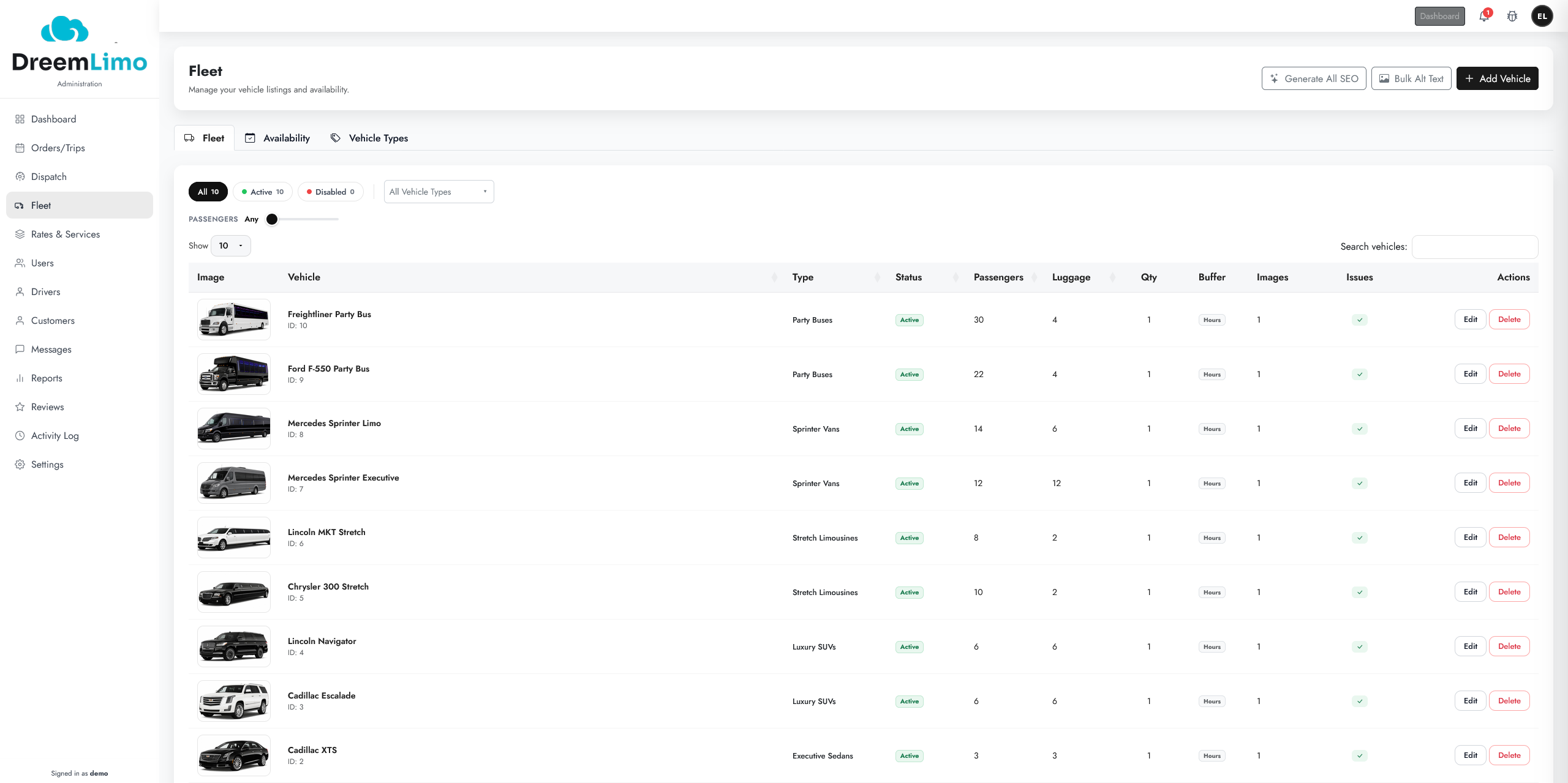
| Best fit fleet size | Any size, from a solo operator to a large multi-vehicle fleet | Geared to large fleets; heavier setup for small operators |
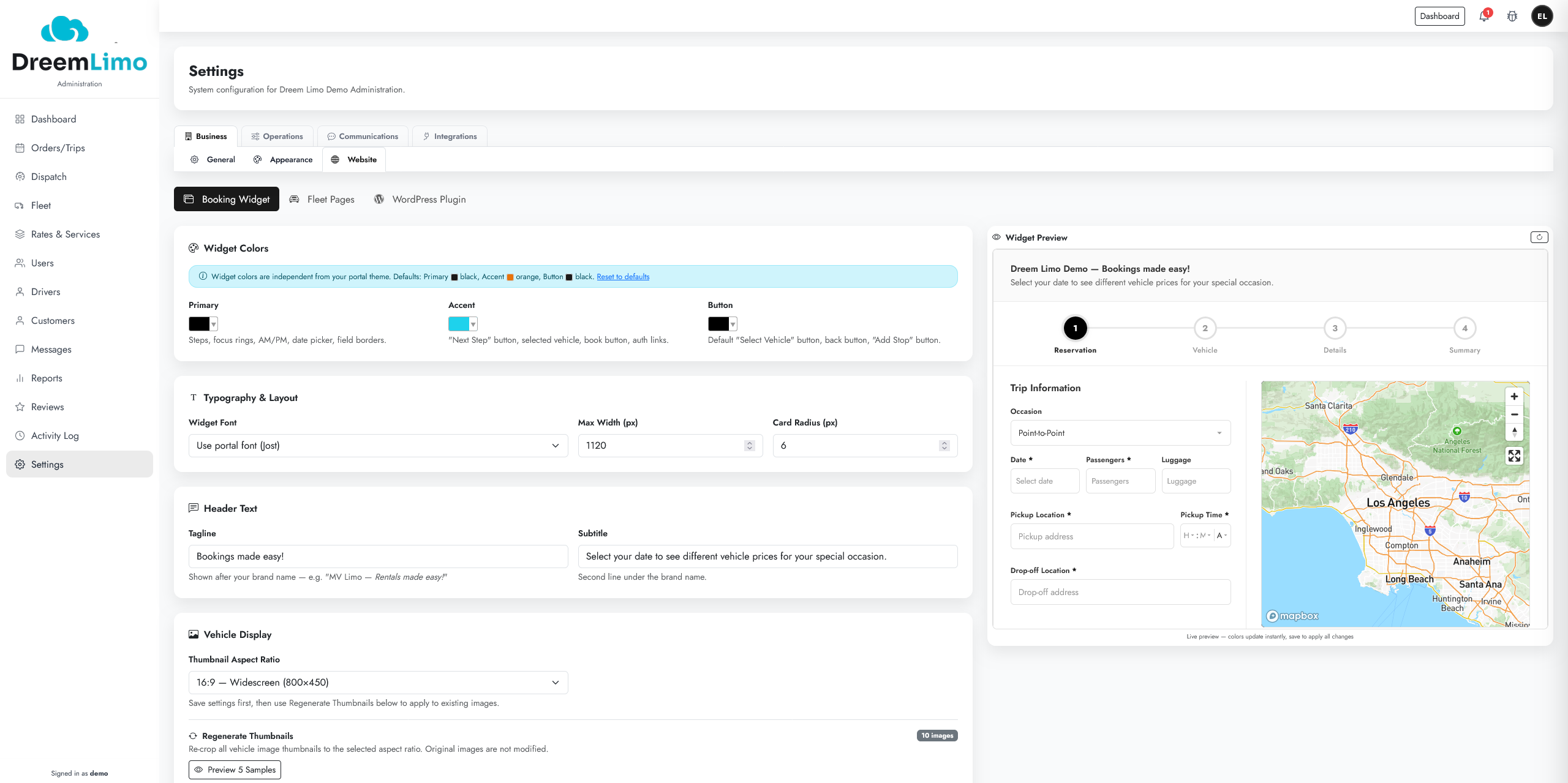
Rideshare competition from Uber Black is real in the local area. According to U.S. Department of Energy transportation data, app-based ride services have taken measurable share from traditional car services in metro markets since 2019. The way a limo operator wins that business back is not on price — it is on the branded, professional booking experience that Uber Black cannot replicate for a wedding party or a corporate account that needs invoicing. Dreem Limo’s customer-facing booking page is built to look like your business, not a generic dispatch portal.
What Can You Do This Week Without Switching Software?
Three operational fixes take less than 4 hours total and reduce missed bookings right now, regardless of which limo apps you currently use.
- Set up an auto-reply for after-hours inquiries. A text or email that fires within 90 seconds of a quote request — even if it just says “Got your request, quote coming in the morning” — cuts abandonment by a meaningful margin. Most operators lose the lead because silence reads as unavailability.
- Add a booking link to your Google Business Profile. The local area’s population has grown steadily, and more first-time customers search for local transportation on mobile before ever calling. A direct booking link in your profile captures that traffic without a phone call.
- Document your hourly minimums and zone rates in writing. Paste them into your quote email template so every customer sees the same numbers. This alone reduces chargeback disputes, which average $25 to $75 in processing fees per incident on top of the lost revenue.
These steps are platform-agnostic. They work whether you are on Limo Anywhere, Dreem Limo, or a spreadsheet. But they also reveal quickly where manual workflows break down at volume — which is the real argument for purpose-built limousine software.
Where Does Online Booking Automation Change the Math for Local Operators?
An operator who converts from phone-tag quoting to online self-booking typically recovers 8 to 12 hours per week in owner time — hours that currently go to answering the same four questions: price, availability, vehicle type, and deposit amount. At a conservative $50 per hour of owner labor, that is $400 to $600 per week in recovered capacity, or roughly $20,000 per year.
An operator who converts from phone-tag quoting to online self-booking typically recovers 8 to 12 hours per week in owner time.
Across our service calls in the local area, we see operators with 3 to 6 vehicles spending more than 15 hours per week on manual quoting and follow-up during peak wedding and prom season — time that directly competes with their driving shifts.
The math shifts again when you factor in review velocity. In a local market, online reviews drive a disproportionate share of new bookings because the customer pool is smaller and word-of-mouth travels faster. Operators who automate post-ride review requests collect 3 to 5 times more reviews per month than those who ask manually. More reviews mean higher placement in local search — which means fewer dollars spent on paid ads to fill the calendar.
Operators who automate post-ride review requests collect 3 to 5 times more reviews per month than those who ask manually.
Limo Anywhere does support automated review requests, but the feature requires setup inside a third-party CRM integration. Dreem Limo builds post-ride follow-up into the standard booking flow, so it runs without additional configuration.
On the cost side, limousine software in this category typically ranges from $150 to $500 per month in the regional market, depending on fleet size, feature tier, and whether the platform charges per-booking transaction fees. Factors that move the number include the number of active vehicles, SMS automation volume, and white-label branding options. Request a custom quote from Dreem Limo to see the exact fit for your fleet size and booking volume.
Get Your Fleet Running on the Right Platform in the Local Area
Schedule a live walkthrough of the Dreem Limo booking platform built for operators like you — 1 to 25 vehicles, real margins, no IT department. See how zone pricing, card-on-file capture, and automated follow-up work together in a single dashboard before you commit to anything.
Call Dreem Limo directly or book a demo online. The comparison between dreem limo vs limo anywhere comes down to one question: do you want a platform sized for enterprise fleets, or one built for the way you actually run your business today in the local area?
Frequently Asked Questions
Is Dreem Limo easier to set up than Limo Anywhere for a small fleet?
Yes. Operators running 1 to 25 vehicles in the local area typically get Dreem Limo configured and live in 1 to 3 days. Limo Anywhere's legacy platform has more configuration steps that can stretch setup to 1 to 3 weeks, especially for zone-based pricing and payment gateway integration. If you are a solo owner-operator without an IT background, Dreem Limo's setup process is significantly more straightforward.
Can I take online bookings without a phone call using either platform?
Dreem Limo is built for customer self-booking from a mobile device — customers can get a quote and complete a reservation in under 4 minutes without calling you. Limo Anywhere supports online booking, but many operators on that platform still rely on phone quotes because the customer-facing interface requires more configuration to work smoothly. For operators who want to stop losing 2 a.m. airport inquiries, Dreem Limo's default setup is the faster path.
How does limo software help me compete with Uber Black in the local area?
Uber Black wins on convenience and app familiarity. A branded booking page from Dreem Limo gives your business a professional, direct-booking experience that positions you as the premium alternative — not a phone-tag operation. Customers booking weddings, corporate accounts, or prom packages want a service that looks established and handles payment securely at booking. Dreem Limo's customer-facing platform is built to deliver that impression.
What is a card-on-file capture and why does it matter for limo operators?
A card-on-file capture stores the customer's payment card at the time of booking, before the ride happens. This reduces no-shows because customers know their card is already on file, and it cuts chargeback risk because payment is authorized in advance. Dreem Limo captures the card by default at booking. Operators without this feature absorb chargeback rates that can run 2% to 4% of gross revenue annually.
How much does limousine booking software typically cost per month?
In the regional market, limousine software typically ranges from $150 to $500 per month depending on fleet size, feature tier, and per-booking transaction fees. Factors that move the cost include the number of active vehicles, SMS automation volume, and white-label branding. Contact Dreem Limo for a custom quote based on your specific fleet size and booking volume in the local area.