If you're still taking corporate travel bookings by phone and email, you're losing accounts to operators who aren't. This guide breaks down what manual booking costs you and how the right limo software fixes it.
The Tuesday Night Problem Every Operator Knows
It’s 11:47 p.m. A corporate travel manager at a regional firm needs a black car for a 5:15 a.m. airport run — three executives, two bags each, heading to SFO. She fills out your website contact form and moves on to the next vendor. By 7 a.m. Wednesday, when you finally see the message, she’s already confirmed with someone else. That account books 40 to 60 trips a year.
This is not a rare situation. In the local area, corporate travel demand peaks hard in Q1 and Q4, with a secondary surge around major industry conferences. If your booking process depends on you being awake and available, you will lose those accounts — not because your service is worse, but because your response was slower.
This guide is written for operators who run real vehicles on real margins and want a straight answer on how limo booking software for corporate travel actually changes the numbers.

What Does Losing a Corporate Account Actually Cost You?
A single missed corporate inquiry can represent $8,000 to $20,000 in annual recurring revenue, depending on the company’s travel volume and your local market rates. Airport transfers in the local area typically range from $75 to $180 per leg in the regional market. A mid-size company running 4 to 6 executive trips per month adds up fast.
A single missed corporate inquiry can represent $8,000 to $20,000 in annual recurring revenue, depending on the company's travel volume and your local market rates.
Here’s how the math breaks down for a typical corporate account:
| Trip Type | Typical Market Range | Frequency (Monthly) | Est. Annual Value |
|---|---|---|---|
| Airport transfer (sedan) | $85 – $160 | 8 – 12 legs | $8,160 – $23,040 |
| Hourly corporate event (4-hr min) | $320 – $600 | 1 – 2 events | $3,840 – $14,400 |
| Group shuttle (SUV or van) | $180 – $350/run | 2 – 4 runs | $4,320 – $16,800 |
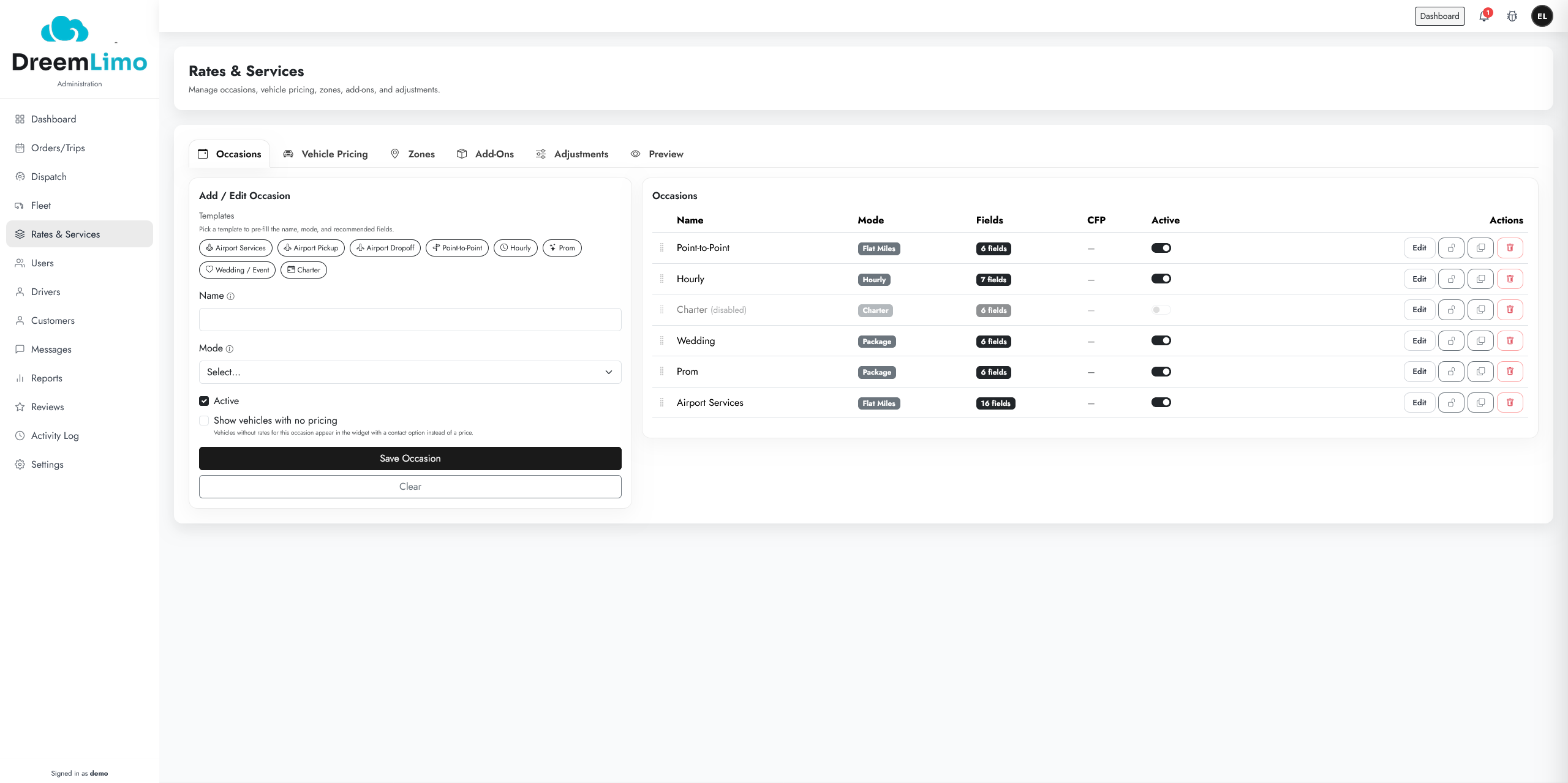
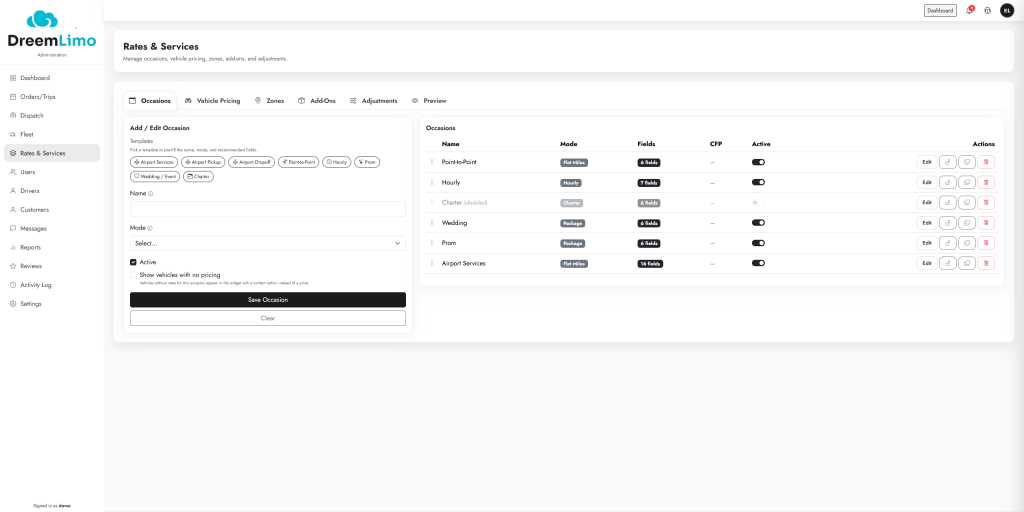
These are market-context ranges only. Your actual rates depend on vehicle type, zone-based pricing (flat rates tied to geographic zones rather than metered mileage), and any negotiated corporate account terms. Always request a custom quote for specific account structures.
Beyond missed bookings, there’s the hidden cost of owner hours. Phone-tag quotes — the back-and-forth of calling, leaving voicemails, and waiting — can eat 8 to 12 hours a week for a solo operator managing 6 to 10 vehicles. That’s time not spent on vehicle maintenance, driver management, or landing the next account.
No-shows and chargebacks are a separate line item. Corporate clients with card-on-file capture (storing a payment method at booking rather than at pickup) have no-show rates under 5%, compared to 12 to 18% for cash or invoice-later arrangements. Without software enforcing that policy automatically, you’re enforcing it manually — or not at all.
Rideshare competition from Uber Black is real in the local area, but corporate travel managers don’t actually want Uber Black for executive clients. They want a named driver, a confirmed vehicle, and an invoice they can submit to accounting. That’s a service gap you can own — if your booking process is as frictionless as an app.
How Do Larger Fleets Handle Corporate Booking Volume?
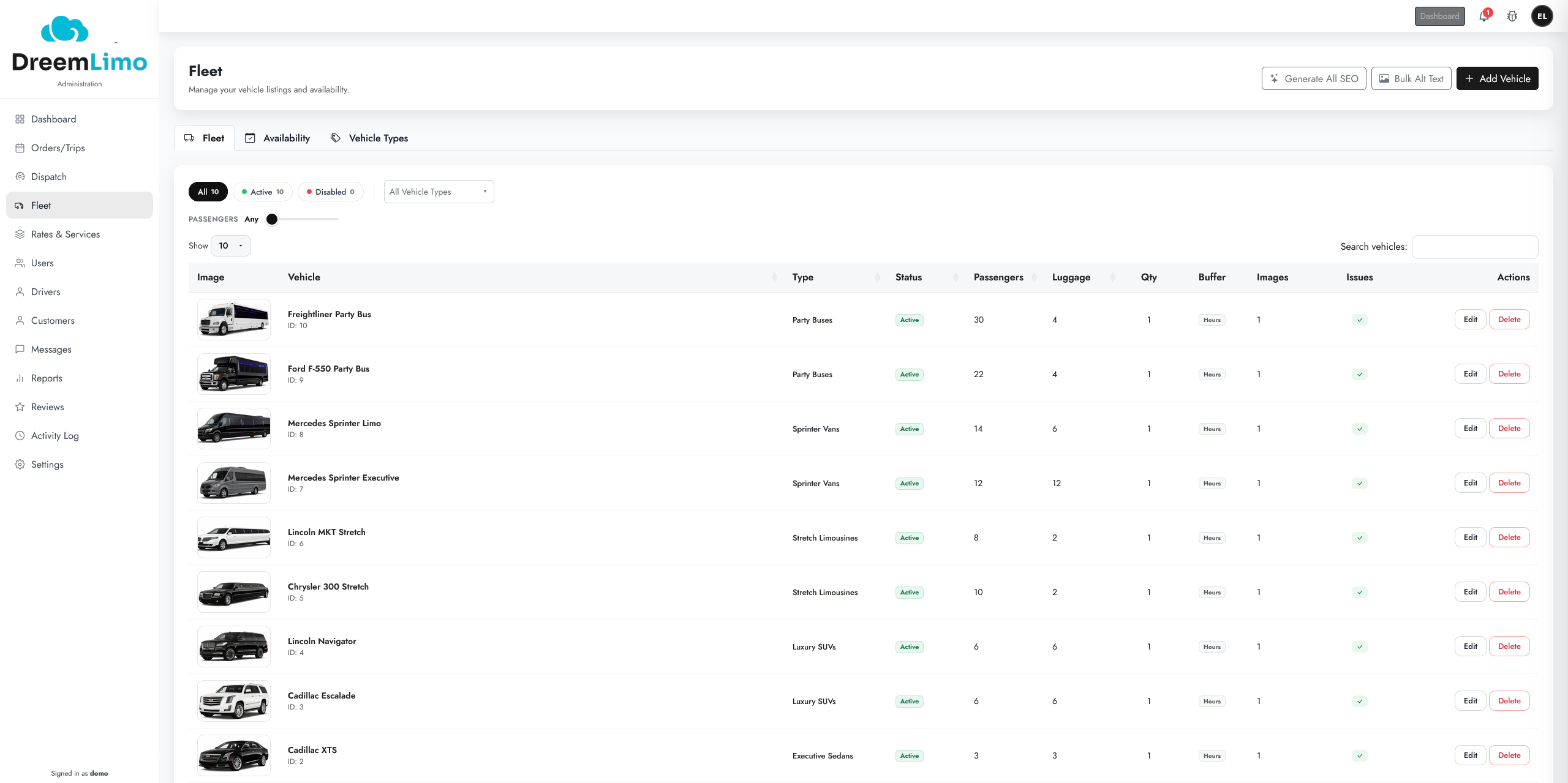
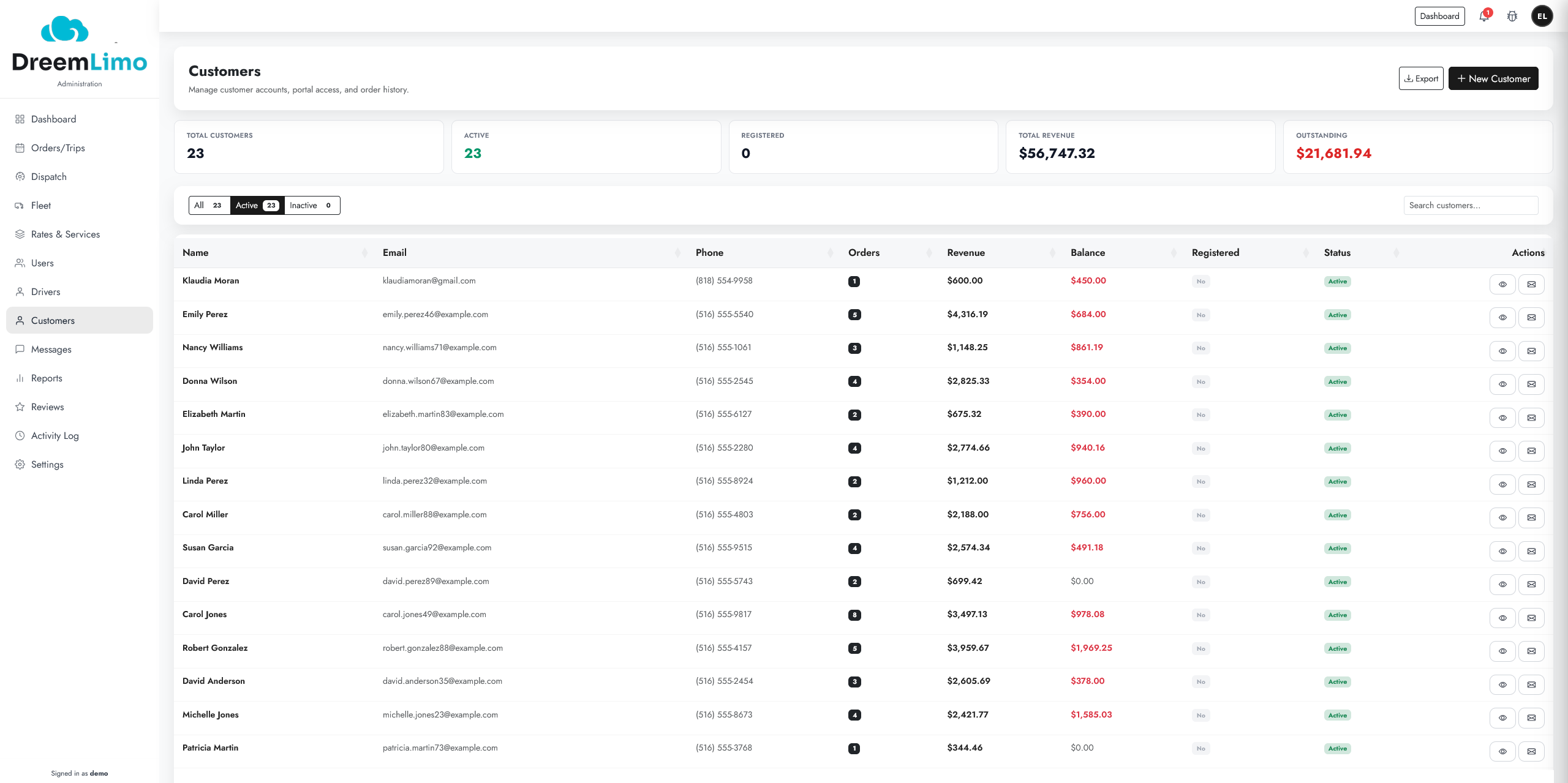
Fleets running 15 or more vehicles typically use a centralized dispatch board — a live screen showing every vehicle, driver, and job in real time — paired with a client portal where corporate accounts can book, modify, and pull invoices without calling anyone. The operator’s phone stops being the bottleneck.
Larger operators also use farm-out agreements (sending overflow work to a trusted partner operator when your own fleet is full) coordinated through their limousine software. Without that integration, a farm-out means a phone call, a manual confirmation, and a margin split tracked on a spreadsheet. With it, the job routes automatically and the billing follows.
Our dispatch team in the local area handles roughly 3 times more corporate requests in January and September than in any other two-month window — those are the peak conference and fiscal-year-start periods when travel managers are placing the most bookings. Operators without automated confirmation and real-time availability lose the most ground during exactly those windows.
Seasonal demand spikes matter too. Prom and wedding season (April through June) fills vehicles that corporate clients might otherwise use. Holiday party season (November and December) does the same. A dispatch board with live availability prevents double-booking a stretch SUV on prom night — a mistake that costs you the prom client, the corporate client, and the Google review from both.
Larger fleets also enforce hourly minimums (the fewest billable hours per booking, typically 2 to 3 for sedans and 4 to 5 for larger vehicles) automatically through their limo apps. Manual operators negotiate this per call and often lose the argument.
What Can You Do This Week Without Buying New Software?
Three changes you can make in the next 5 business days will recover some of the revenue you’re losing to slow response times, even before you implement any new platform.
- Set a 15-minute response rule: Corporate travel managers often send inquiries to 2 or 3 vendors simultaneously. The first confirmed response wins. Set a phone alert for every contact form submission and commit to a reply within 15 minutes during business hours.
- Build a rate sheet PDF: Create a one-page document with your zone-based pricing, vehicle options, hourly minimums, and cancellation policy. Send it instantly with every first reply. This eliminates one full round of phone tag.
- Add card-on-file capture to your confirmation process: Even if you’re using Square or Stripe manually, capturing a card at booking — not at pickup — cuts no-shows significantly. Put it in your confirmation email as a required step.
- Create a simple corporate account application: A one-page Google Form asking for company name, billing contact, monthly trip estimate, and preferred vehicle type signals to travel managers that you handle business accounts seriously. It also gives you the data to quote accurately.
- Ask every satisfied corporate client for a Google review: In the local area, reviews drive referrals more than any other marketing channel. One corporate client who reviews you can influence 5 to 10 colleagues at the same firm.
These steps cost nothing but time. They won’t replace automation, but they will stop the most obvious revenue leaks while you evaluate your longer-term software options.
How Does Limo Booking Software for Corporate Travel Change the Math?
The core shift is simple: limo booking software for corporate travel moves your availability, pricing, and confirmation process online so it works at 11:47 p.m. without you. That 5:15 a.m. airport run gets booked, confirmed, and assigned to a driver before you wake up.
Modern limousine software platforms handle several functions that manual operators piece together across phone calls, texts, and spreadsheets:
- Branded online booking: A booking widget on your own website, not a third-party marketplace, so the client stays in your brand ecosystem and you keep the full margin.
- Automated quotes and confirmations: Zone-based pricing rules generate instant quotes. Confirmation emails and driver details go out automatically. No manual steps required.
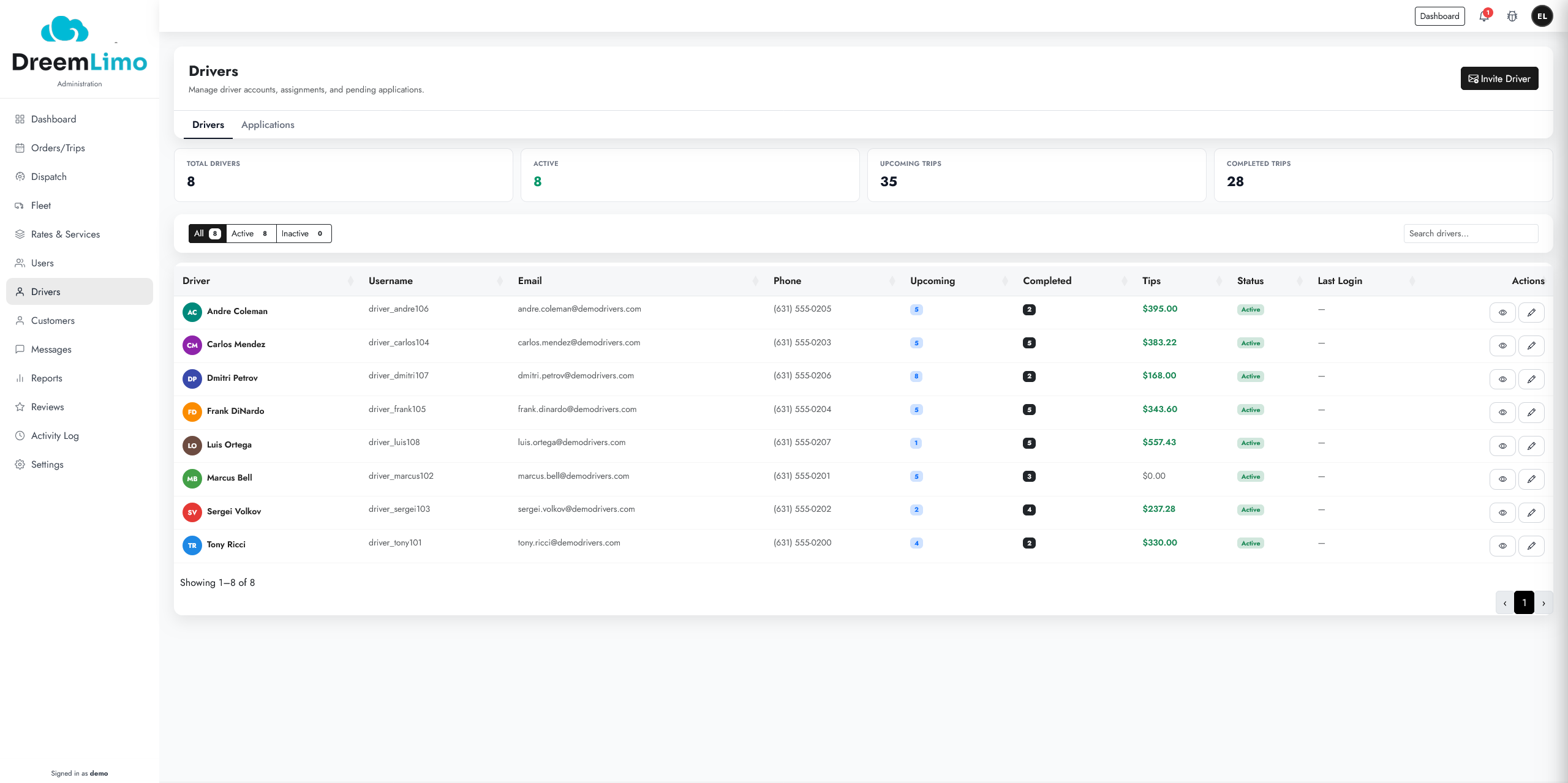
- Corporate account portals: Travel managers log in, see their company’s booking history, download invoices, and place new reservations without calling your cell.
- Dispatch board integration: Every confirmed booking populates the live dispatch board. Drivers get assignments and updates through a driver app. You see everything in one place.
- Automated payment processing: Card-on-file capture, invoicing on net-30 terms for approved accounts, and chargeback documentation all handled inside the platform.
- Farm-out coordination: When your fleet is full, overflow jobs route to partner operators with margin splits tracked automatically.
As of 2026, the leading limousine software platforms integrate directly with corporate travel management systems like Concur and TripActions, which is how Fortune 500 travel managers actually place bookings. If your system can’t receive those requests automatically, you’re invisible to that segment.
As of 2026, the leading limousine software platforms integrate directly with corporate travel management systems like Concur and TripActions, which is how Fortune 500 travel managers actually place bookings.
According to the U.S. Department of Energy, corporate fleet electrification is accelerating — and corporate travel managers increasingly ask vendors about EV and hybrid vehicle availability as part of their sustainability reporting. Limo apps that let you flag vehicle types (EV, hybrid, ADA-accessible) in real time give you a competitive edge when a travel manager is comparing vendors side by side.
Across our service calls in the local area, we’ve seen corporate accounts that previously booked 2 to 3 trips per month increase to 6 to 8 trips per month within 90 days of being given access to a self-service booking portal — the friction of calling was suppressing demand they already had.
The U.S. Department of Transportation tracks ground transportation demand trends that consistently show corporate ground travel recovering faster than leisure travel post-disruption. That means the corporate segment is the most reliable revenue base for a local chauffeur fleet — and the one most worth investing in systems to capture.
For operators concerned about the investment, limo software platforms in this market typically range from $150 to $600 per month depending on fleet size, feature set, and whether white-label branding is included. The breakeven on a single recovered corporate account is often less than 30 days. Request a custom quote from any platform vendor to get numbers specific to your fleet size and booking volume.
One more factor worth naming: ENERGY STAR-rated data centers now host most major SaaS platforms, which matters to corporate clients with vendor sustainability requirements. It’s a minor point, but it’s the kind of detail that shows up in corporate vendor questionnaires.
Get Your Corporate Booking System Set Up in the Local Area
Corporate travel accounts are the highest-value, most repeatable segment in the local area ground transportation market. They book often, pay reliably, and refer colleagues. The operators capturing that business in 2026 are the ones whose booking process works around the clock.
Dreem Limo works with operators in the local area who want to build a real corporate book of business — not just take one-off rides. Whether you need a branded booking platform, a dispatch board that handles your whole fleet, or help structuring corporate account terms, the conversation starts with one call.
Call Dreem Limo at to schedule a walkthrough of how our platform handles limo booking software for corporate travel in your market. Bring your current booking volume and fleet size — we’ll show you exactly where the math changes.
Frequently Asked Questions
What is limo booking software for corporate travel and do I really need it?
Limo booking software for corporate travel is a platform that lets corporate clients book, confirm, and pay for rides online without calling your office. If you're handling more than 20 bookings a month or trying to land recurring corporate accounts, manual booking by phone costs you real money in missed late-night inquiries and owner hours. In the local area, corporate travel managers typically choose the first vendor who confirms — automation gives you that speed without adding staff.
How much does limousine software typically cost for a small fleet?
In the regional market, limousine software platforms typically range from $150 to $600 per month depending on fleet size, features, and whether white-label branding is included. Factors that move the price include the number of vehicles, dispatch board complexity, and corporate portal features. Contact Dreem Limo for a custom quote based on your specific fleet and booking volume.
How do I compete with Uber Black for corporate accounts in the local area?
Corporate travel managers prefer chauffeur services over Uber Black for executive clients because they need a named driver, a confirmed vehicle, and an invoice for accounting — none of which Uber Black reliably provides. Your advantage is reliability and billing structure. The gap closes when your booking process is as fast as an app, which is what limo apps and online booking platforms deliver.
What is a dispatch board and why does it matter for corporate bookings?
A dispatch board is a live screen showing every vehicle, driver, and active job in real time. For corporate bookings, it prevents double-booking during peak periods like prom season or holiday parties, and it lets you assign drivers to confirmed bookings instantly. Without one, you're managing availability in your head or on a spreadsheet, which breaks down fast when volume increases.
How do I get corporate travel managers to book with me instead of a larger competitor?
Corporate travel managers prioritize speed of confirmation, reliable invoicing, and vehicle consistency over brand size. A branded online booking portal, card-on-file capture at booking, and a corporate account application signal that you handle business accounts professionally. In the local area, operators who respond within 15 minutes and offer self-service invoicing win accounts that larger competitors take for granted. Dreem Limo can walk you through setting up that system — call us to get started.