Wondering what limo booking software actually costs in 2026? This full pricing breakdown covers market ranges, hidden fees, and what to have ready before you request a quote.
It is 2:07 AM on a Tuesday. A bride’s mother just submitted a quote request for a 6-hour wedding package in the local area. Your phone is on silent. By 7 AM, she has already booked with a competitor who had an online booking link. That one job was worth $650 to $900 depending on your vehicle and hourly minimum (the lowest number of hours you charge for any booking). If that happens twice a month, you are leaving $15,000 to $20,000 a year on the table — not because your service is worse, but because no one answered. That is the real argument for limousine booking software, and it is also why understanding the limo booking software pricing breakdown 2026 matters before you sign anything.
What Does Limo Booking Software Actually Cost in 2026?
Limo booking software in the regional market typically ranges from about $50 per month on the low end to $500 or more per month for full-featured platforms with dispatch boards, driver apps, and farm-out integrations. Most owner-operators running 1 to 10 vehicles land somewhere between $75 and $250 per month after setup.
As of 2026, the market has shifted heavily toward subscription (SaaS) pricing rather than one-time license fees. That means lower upfront costs but ongoing monthly commitments. A few platforms still charge a flat annual fee ranging from $900 to $3,000, which can work out cheaper if you plan to stay on the same system for 3 or more years.
Our team sees operators in the local area frequently underestimate total first-year cost by 30 to 40 percent because they focus only on the monthly subscription and miss setup fees, per-booking transaction charges, and SMS notification costs. We will break all of those out below.

What Factors Drive the Price Up or Down?
Six main factors move the price of limo apps and limousine software up or down. Understanding each one before you compare platforms will save you from a surprise invoice in month three.
- Fleet size: Most platforms tier pricing by the number of active vehicles. A 3-vehicle black-car operation pays far less than a 20-vehicle fleet with multiple vehicle classes. Some charge per vehicle (often $10 to $30 per vehicle per month), so a 15-vehicle fleet can hit $300 to $450 per month from that line alone.
- Dispatch board complexity: A dispatch board is the live view of all active runs, driver locations, and open jobs. Basic boards are included in most mid-tier plans. Real-time GPS overlays, automated driver assignment, and deadhead tracking (deadhead means driving without a paying passenger) cost more.
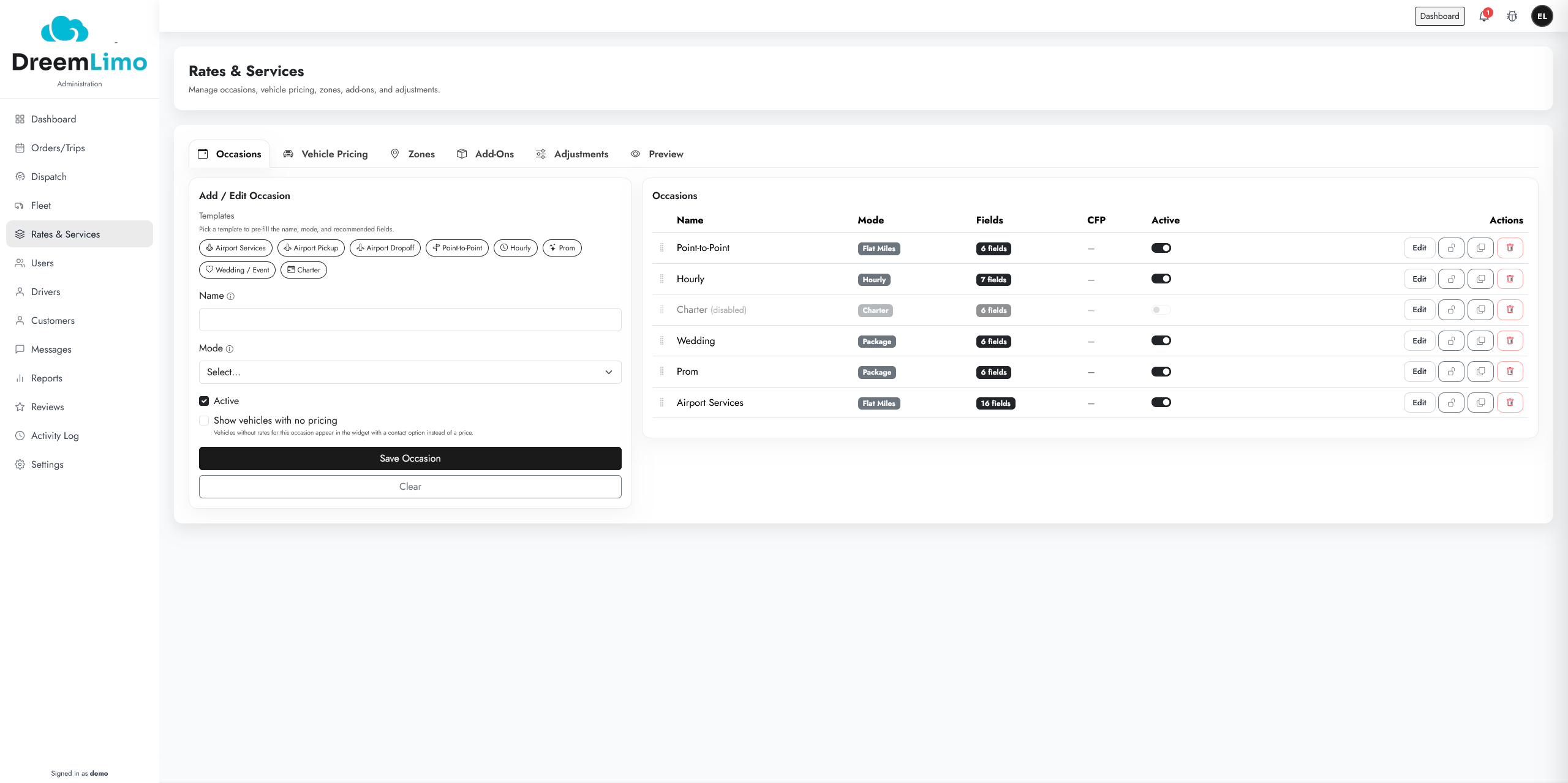
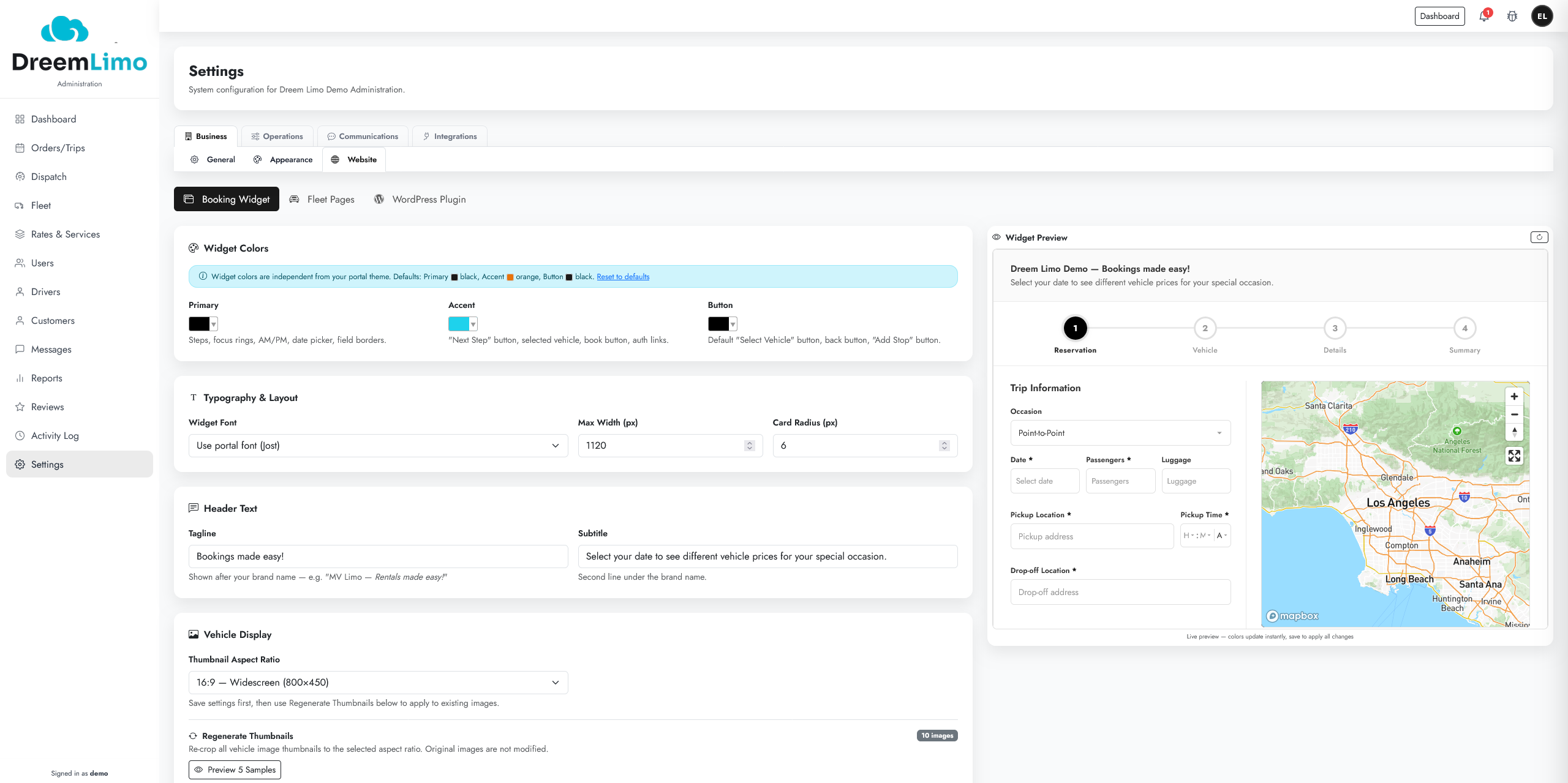
- Online booking and quoting engine: A branded booking page that lets customers self-quote, enter card-on-file (a stored payment method captured at booking), and confirm a reservation without calling you is often a premium add-on. Expect $30 to $80 per month more if it is not in the base plan.
- Farm-out and affiliate network access: Farm-out means you subcontract a job to another operator when you are at capacity. Platforms with built-in farm-out networks or affiliate dispatch charge a per-job fee of $2 to $8 or a monthly access fee.
- Payment processing rates: Most limo software platforms process payments through a built-in gateway and charge 2.5 to 3.5 percent per transaction. On a $700 wedding booking, that is $17.50 to $24.50. Those cents add up across a full wedding season or holiday party run.
- Integrations and API access: Connecting your limo software to QuickBooks, Google Calendar, or a corporate travel portal (for managed corporate accounts) typically requires a higher-tier plan or a one-time integration fee of $150 to $500.
How Does the Limo Booking Software Pricing Breakdown Look by Scenario?
The best way to understand the limo booking software pricing breakdown 2026 is to match it to real operator scenarios. The table below shows typical regional market ranges for common fleet profiles. These are market context ranges, not Dreem Limo’s rates.
| Operator Scenario | Typical Monthly Market Range | What’s Usually Included |
|---|---|---|
| Solo operator, 1 to 2 vehicles, airport transfers and local runs | $50 – $100/month | Basic booking form, calendar, invoicing, mobile driver app |
| Small fleet, 3 to 8 vehicles, mix of airport, weddings, and proms | $100 – $250/month | Online booking engine, dispatch board, card-on-file capture, SMS alerts |
| Mid-size operation, 9 to 15 vehicles, corporate accounts and events | $200 – $400/month | Multi-vehicle dispatch, corporate portal, zone-based pricing rules, reporting |
| Larger fleet, 16 to 25+ vehicles, farm-out and affiliate dispatch | $350 – $600+/month | Full dispatch suite, farm-out network, driver scoring, API integrations |
| Annual license (any size, no monthly fee) | $900 – $3,000/year | Varies widely; often lacks ongoing support and updates included in SaaS |
Zone-based pricing means your software charges different flat rates depending on which geographic zone the pickup or drop-off falls in — common for airport runs in the local area where distance to the terminal varies significantly by neighborhood or ZIP code. Getting this set up correctly at the start saves hours of manual quoting every week.
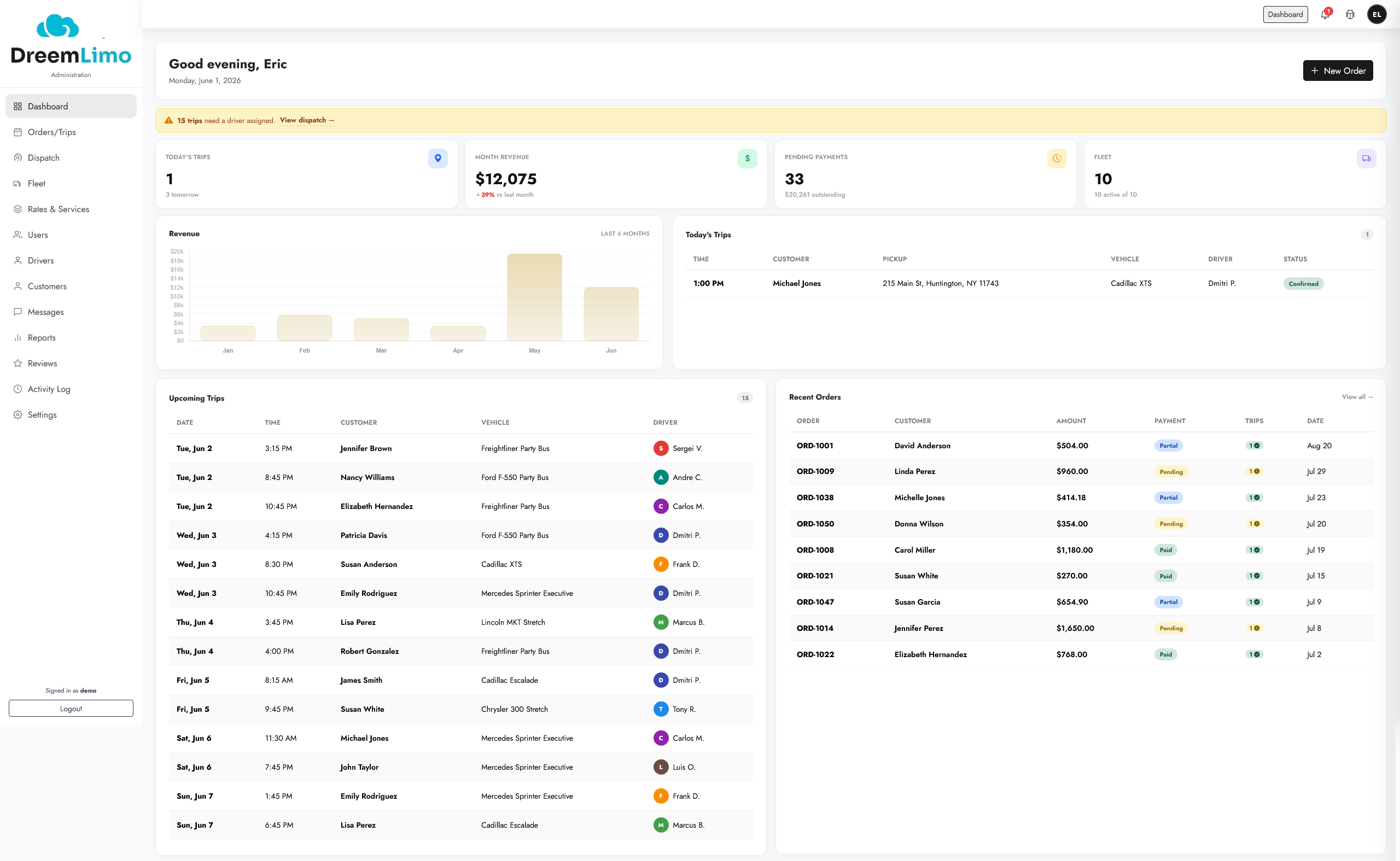
Across our service calls in the local area, operators running 5 to 8 vehicles who switch from manual quoting to an automated booking engine recover an average of 8 to 12 hours per week that was previously spent on phone-tag quotes and double-entry into spreadsheets.
What Is NOT Included in Most Base Pricing?
Most base plans for limousine software leave out several cost items that catch operators off guard in the first 90 days. Before you sign, ask specifically about each of the following.
- Onboarding and setup fees: A one-time fee of $99 to $500 is common to migrate your vehicle list, rate cards, and customer data into the new platform.
- SMS and email notification credits: Automated driver and passenger alerts are billed per message on many platforms — typically $0.01 to $0.05 per SMS. During a busy prom weekend with 40 runs, that adds up fast.
- Branded passenger app: A white-label app (your logo, your name, not the software company’s branding) is almost always a premium tier — often $100 to $200 per month more than the standard plan.
- Chargeback dispute support: Some platforms charge a flat fee of $15 to $25 per chargeback case. No-shows and disputed charges are a real part of prom and bachelorette season in any local market.
- Additional user seats: If you have a part-time dispatcher or a spouse handling bookings, a second login may cost $15 to $40 per month extra on entry-level plans.
- Annual price increases: As of 2026, most SaaS limo apps have escalation clauses of 5 to 10 percent per year built into their terms of service. Read the renewal language before you commit.
How Do You Get an Accurate Quote for Your Fleet?
Getting a real number from any limo booking software vendor requires you to walk in with your own data ready. Vendors price based on what your operation actually looks like, not a generic fleet size bucket.
Have the following ready before any demo or quote call:
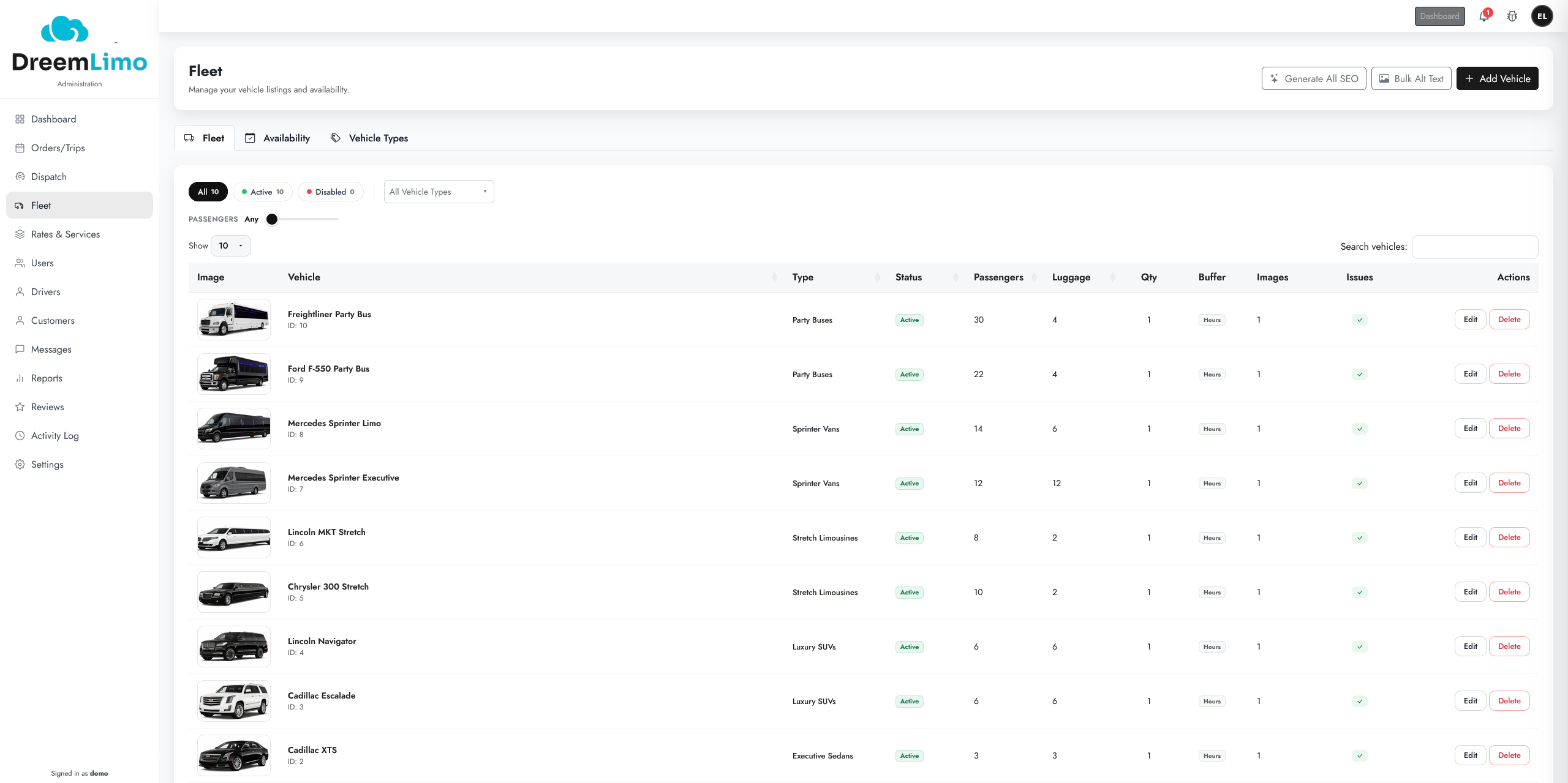
- Total number of active vehicles and vehicle types (sedan, SUV, stretch, party bus, sprinter).
- Average number of bookings per month — separate airport transfers from hourly packages if you can.
- Whether you use or plan to use farm-out or affiliate networks for overflow jobs.
- Your current payment processor and whether you want to keep it or switch.
- Any corporate accounts that need a portal or invoicing workflow separate from consumer bookings.
- Whether you need zone-based pricing, hourly minimums, or custom rate cards by vehicle class.
Operators who come to a quote call with this data typically get a final number in one conversation instead of three follow-up emails. It also makes it easier to compare two platforms on equal terms rather than comparing a stripped base price against a fully loaded quote.
It is also worth checking whether any platform you consider is built to meet ENERGY STAR-equivalent data security standards for card-on-file storage — payment card data handling matters any time you store customer card numbers for recurring corporate accounts. The FTC’s business privacy guidance outlines baseline expectations for small businesses that store customer payment data. For operators accepting corporate travel cards, the PCI Security Standards Council sets the compliance baseline your software vendor should meet.
On the competitive side, Uber Black and rideshare alternatives are a real factor in the local area market. They do not offer card-on-file corporate billing, fixed-rate wedding packages, or guaranteed vehicle class — three things your branded booking platform can offer that they cannot. That difference is worth communicating clearly on your booking page.
Request a Custom Quote in the Local Area
The market ranges in this article are regional context — your actual investment depends on your fleet size, booking volume, and the specific features your operation needs. A solo airport-transfer operator and a 20-vehicle corporate fleet have very different requirements, and the right platform for each looks completely different on paper.
Dreem Limo works with owner-operators across the local area to build and launch branded booking platforms sized to their actual fleet and workflow. Whether you run 2 vehicles or 25, the goal is the same: stop losing after-hours bookings, cut manual quote time, and give your customers a professional booking experience that holds up against any rideshare competitor.
To get a real number based on your specific operation — not a generic tier — call Dreem Limo or book a walkthrough. Bring your fleet count, your monthly booking volume, and your biggest current pain point, and you will leave with a clear picture of what the right limo booking software pricing breakdown 2026 looks like for your business specifically.
Frequently Asked Questions
How much does limo booking software cost per month in 2026?
Most limo booking software in 2026 runs between $75 and $250 per month for operators with 1 to 10 vehicles. Larger fleets with 15 or more vehicles and full dispatch features can pay $350 to $600 or more per month. The final number depends on fleet size, features like online booking and GPS dispatch, and whether you need corporate account portals. Contact Dreem Limo for a quote based on your specific fleet.
Is there a one-time fee option instead of a monthly subscription for limo software?
Yes, some limousine software vendors still offer annual license pricing ranging from about $900 to $3,000 per year. This can be cheaper over 3 or more years if the platform fits your needs long-term. The tradeoff is that annual licenses often include less ongoing support and fewer automatic updates than monthly SaaS plans. Ask any vendor specifically what is included in support and updates before choosing this route.
What hidden fees should I watch for when buying limo apps?
The most common surprise costs in limo apps are setup and onboarding fees ($99 to $500), per-SMS notification charges, chargeback dispute fees ($15 to $25 each), and extra charges for a second dispatcher login. Payment processing rates of 2.5 to 3.5 percent per transaction also add up fast during busy wedding and prom seasons. Always ask for a full fee schedule, not just the monthly subscription price.
Can limo booking software really help me compete with Uber Black in the local area?
Yes, because Uber Black cannot offer fixed-rate wedding packages, card-on-file corporate billing, or a guaranteed vehicle class the way a branded booking platform can. In the local area market, corporate clients and event customers specifically want a confirmed vehicle and a professional invoice — things rideshare cannot reliably provide. A good booking platform lets you capture and convert those customers before they default to a rideshare option.
How do I know which limousine software tier is right for my fleet size?
Start by counting your active vehicles, your average monthly bookings, and whether you handle corporate accounts separately from consumer bookings. Operators with 1 to 5 vehicles and mostly airport transfers can usually get by on a $50 to $100 per month plan. If you run weddings, proms, and corporate events with 6 or more vehicles, expect to need the $150 to $300 range to get the dispatch and quoting tools that actually save time. Dreem Limo can walk you through the right fit for your operation.