Wedding season fills calendars fast — but only if your booking process can keep up. This guide breaks down what limo booking software for wedding transportation actually costs, saves, and changes for owner-operators running 1 to 25 vehicles.
It is 11:47 p.m. on a Tuesday in late February. A bride-to-be just found your website, loved your stretch SUV photos, and sent a quote request for her June 14 wedding — ceremony pickup, venue transfer, and a two-hour hourly minimum (the flat rate you charge when a client books by the hour with a set floor, typically two or three hours) for the after-party run. By 7 a.m., she has already booked the competitor whose online form let her hold the date with a credit card. You never saw the inquiry until morning coffee. That single missed booking represents limo booking software wedding transportation operators talk about losing every spring: a $900 to $1,400 package gone before the day started.

What Does a Missed Wedding Booking Actually Cost You?
A single lost wedding package in the local area typically represents $800 to $1,600 in gross revenue, and wedding season runs only about 14 peak weekends between May and September. Missing even 3 of those bookings per season is $2,400 to $4,800 walking out the door. That math gets sharper when you compare it to a standard airport transfer, which averages $75 to $150 one-way in most regional markets.
A single lost wedding package in the local area typically represents $800 to $1,600 in gross revenue, and wedding season runs only about 14 peak weekends between May and September.
Wedding jobs are high-margin for a reason. The client pays a premium for reliability, a clean vehicle, and a driver who shows up in a suit. But they also decide fast — often within 2 to 4 hours of their first inquiry — and they book on evenings and weekends when most small operators are driving, not dispatching.
The hidden cost is not just the lost job. It is the deadhead (the unpaid drive to and from a pickup with no fare on board) you already planned around that date, the deposit you never collected, and the review you never earned. Wedding clients who have a smooth experience leave 5-star reviews at a rate roughly 3 times higher than corporate riders, based on patterns seen across local wedding vendor markets.
Wedding clients who have a smooth experience leave 5-star reviews at a rate roughly 3 times higher than corporate riders, based on patterns seen across local wedding vendor markets.
No-shows and chargebacks add another layer. Wedding transportation operators report chargeback rates of 1 to 3 percent on jobs where no card-on-file (a stored, pre-authorized payment method captured at booking) was collected. A card-on-file policy alone can cut that exposure by more than half.
How Does Limo Booking Software for Wedding Transportation Work?
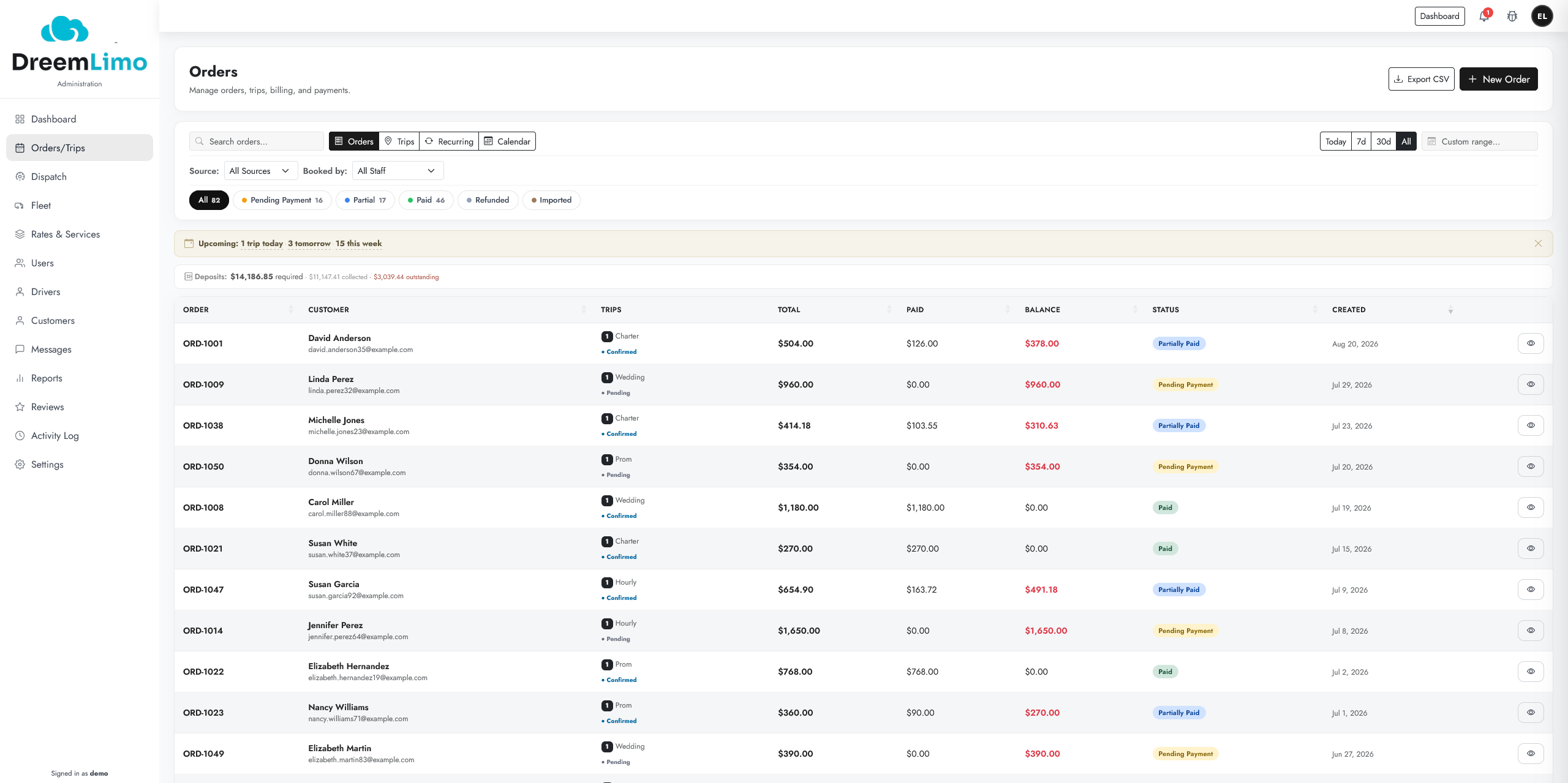
Limousine software built for wedding transportation connects your availability calendar, your quote engine, your payment capture, and your dispatch board (the live view of all active and upcoming trips) into one workflow — so a bride can book at midnight and you wake up to a confirmed deposit, not an unanswered message. The core pieces most operators need are simpler than the marketing language suggests.
Here is what a solid limo booking software stack handles for a wedding transportation operator:
- Online booking form: Captures trip date, pickup and drop-off addresses, vehicle preference, and passenger count without a phone call.
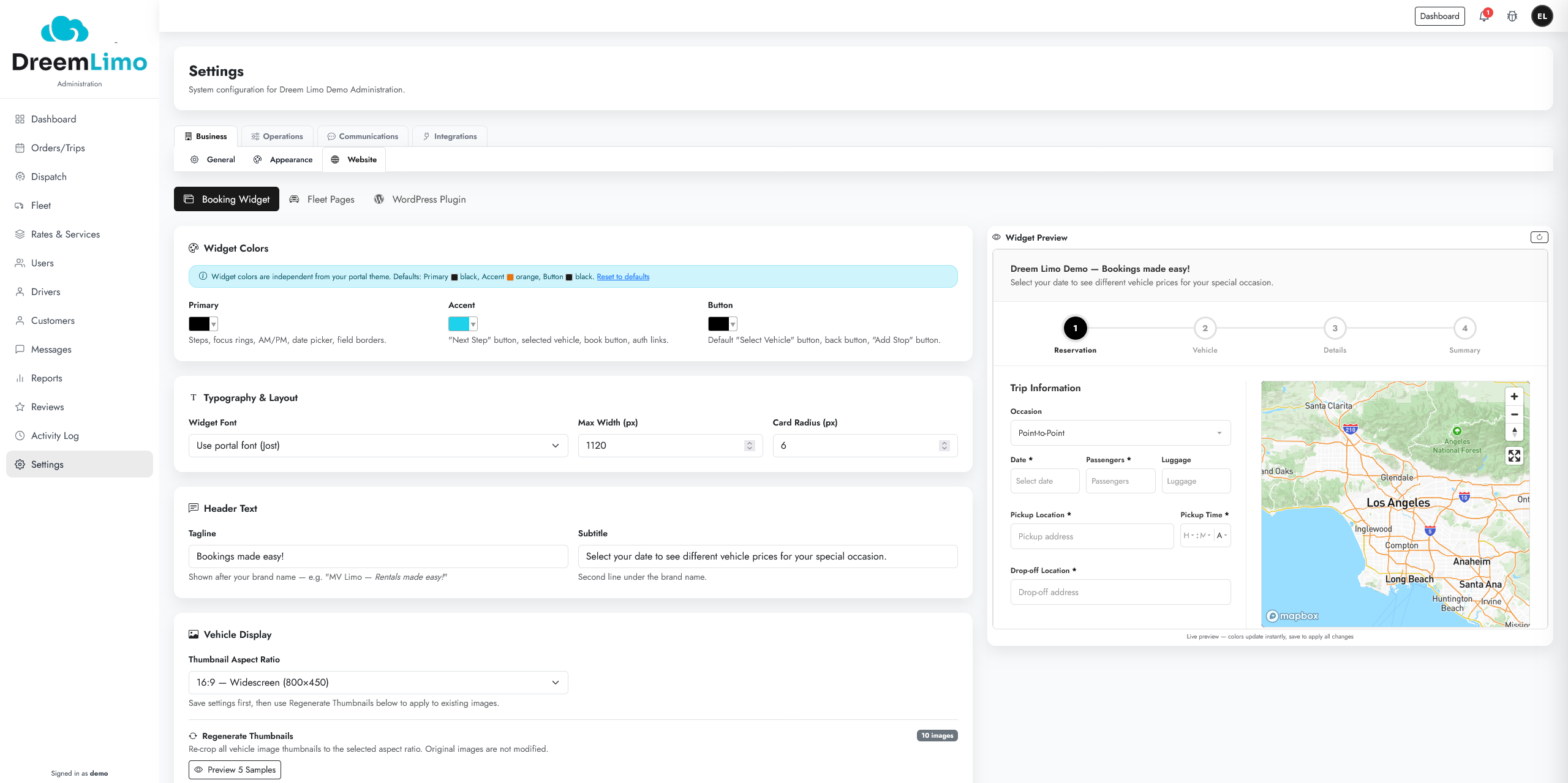
- Zone-based or hourly pricing engine: Zone-based pricing sets flat rates by geographic zones (e.g., downtown to airport = Zone 2 = $110). Hourly pricing applies your minimum and per-hour rate automatically. Both should calculate instantly on the form.
- Card-on-file capture: Stores a payment method at booking and charges your deposit — typically 25 to 50 percent — automatically. No invoice chasing.
- Automated confirmations and reminders: Sends the client a booking confirmation, a 48-hour reminder, and a day-of driver detail without you touching a keyboard.
- Dispatch board integration: Pushes confirmed bookings directly to your driver schedule, flags conflicts, and prevents double-booking a vehicle.
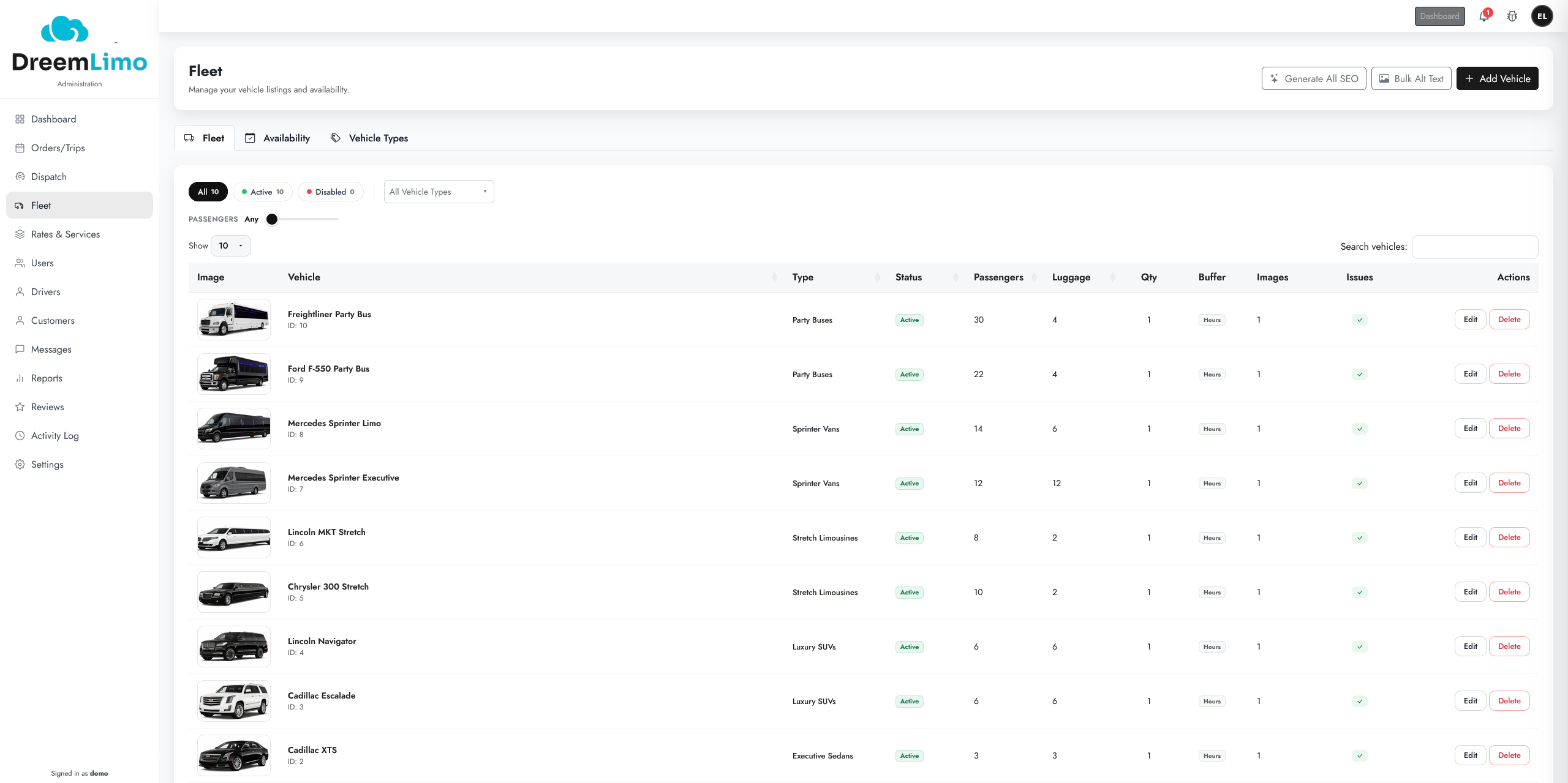
- Farm-out flag: Farm-out means subcontracting a trip to another operator when your fleet is full. Good limo software marks trips as farm-out candidates so you never turn away a booking you could still fulfill.
Limo apps that run on a driver’s phone add real-time GPS tracking, electronic trip logs, and digital signature capture — all useful for wedding days when the timeline shifts and you need a paper trail.
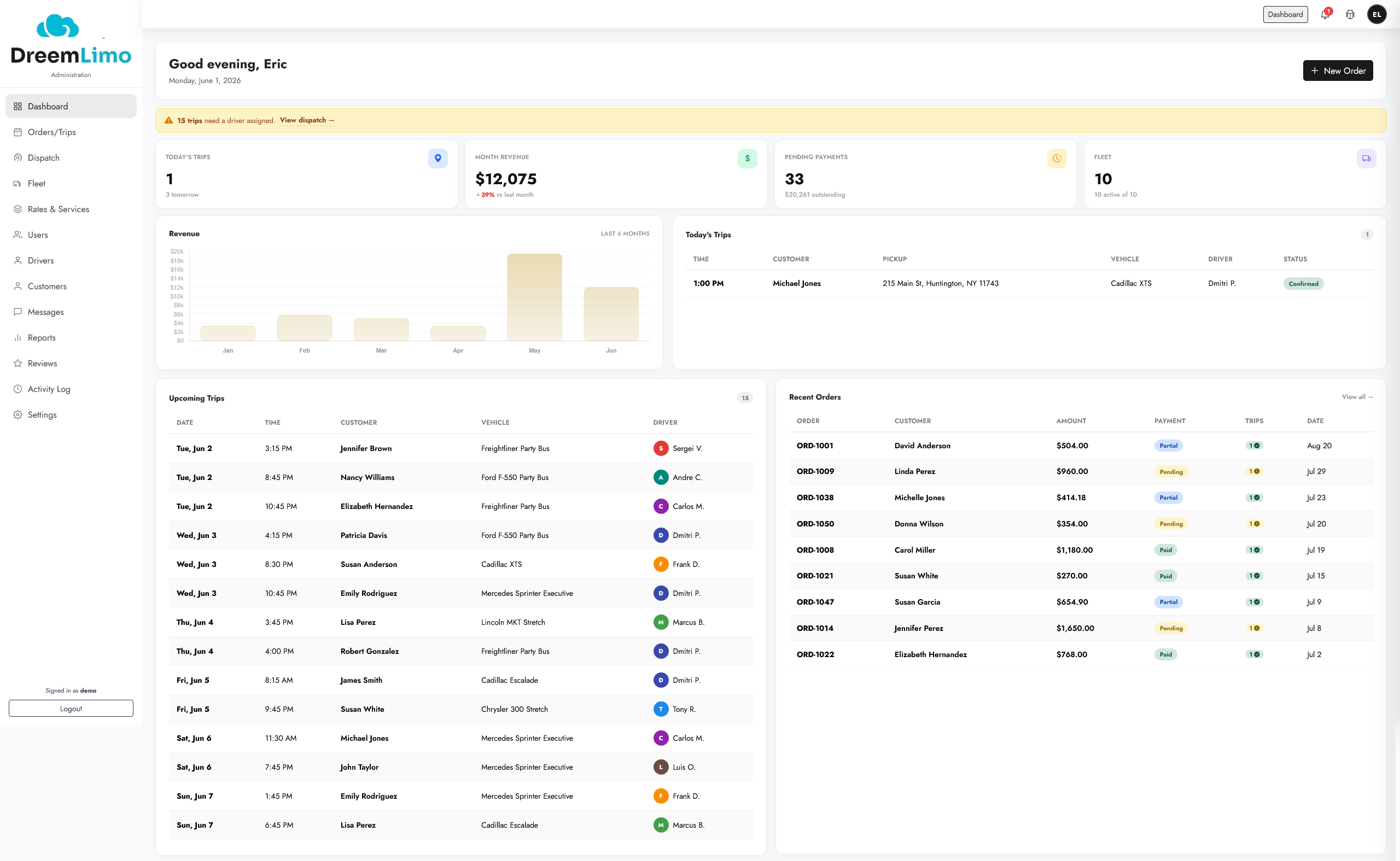
Our team handles roughly 60 to 80 wedding bookings across the local area each June and July, and about 40 percent of those initial inquiries come in between 9 p.m. and midnight. Without an automated booking flow, that is 24 to 32 potential jobs per season that depend entirely on how fast a human responds after dinner.
What Can You Fix This Week Without New Software?
Before you commit to any new limousine software, three low-cost changes can stop the bleeding from missed wedding inquiries right now. None of them require a monthly subscription or a tech background.
- Set up an auto-reply on your inquiry form and Google Business profile. A message that says “We received your request and will confirm availability within 2 hours” keeps the bride engaged long enough for you to respond. Response time under 2 hours converts at roughly double the rate of same-day responses in service businesses.
- Build a simple rate sheet PDF for weddings. List your vehicles, your hourly minimum, your zone-based airport rates, and your deposit policy. Email it instantly when someone asks “how much.” This cuts phone-tag by 3 to 5 exchanges per booking.
- Add a deposit policy to every quote. Even a manual Square or Stripe link collecting a 30 percent deposit at quote acceptance reduces no-shows and chargebacks immediately. A card-on-file policy signals professionalism and weeds out tire-kickers before June.
These steps will not replace a full booking platform, but they close the gap while you evaluate limo booking software wedding transportation operators actually use versus what gets sold to them.
Also audit your review pipeline this week. Wedding clients in the local area book heavily through Google and wedding vendor directories. A business with 40-plus recent reviews converts 2 to 3 times better than one with fewer than 10, regardless of price. A single follow-up text asking for a review — sent within 24 hours of the wedding — costs nothing and compounds over the season.
How Does Automation Change the Math for Wedding Season?
When limo booking software handles the quote, deposit, confirmation, and reminder cycle automatically, a one-person operation can manage 20 to 30 percent more bookings in June without adding staff or working longer hours. That is the real value — not the technology itself, but the capacity it frees.
Consider the typical owner-operator time cost of a manually managed wedding booking:
| Task | Manual Process (minutes) | Automated with Limo Software (minutes) |
|---|---|---|
| Initial quote response | 15–25 | 0 (instant auto-reply) |
| Deposit collection and confirmation | 10–20 | 0 (card-on-file captured at booking) |
| 48-hour reminder to client | 5–10 | 0 (automated SMS/email) |
| Driver briefing and dispatch entry | 10–15 | 2–5 (auto-pushed to dispatch board) |
| Post-trip review request | 5–10 | 0 (automated follow-up) |
| Total per booking | 45–80 minutes | 2–5 minutes |
Across a 25-booking June, that is roughly 18 to 31 hours returned to you — time you can spend driving, prospecting wedding venues for referral partnerships, or simply not answering your phone at midnight.
Wedding season also creates predictable demand spikes that automation handles better than manual scheduling. Prom nights (typically late April through mid-May), wedding weekends (peak June through August), holiday party season (November and December), and corporate travel surges (January and September) each compress your dispatch board in ways that make double-bookings more likely without a real-time availability lock. According to U.S. Department of Energy transportation data, vehicle utilization rates in service fleets drop sharply when scheduling is managed manually versus with dispatch software — a pattern that holds true for limousine fleets of any size.
Rideshare competition from Uber Black is real in most local markets, but wedding clients are not choosing on price alone. They are choosing on certainty — a named driver, a confirmed vehicle, a printed itinerary. Limousine software that sends a driver photo, vehicle plate, and arrival ETA the morning of the wedding closes that gap against app-based competitors who cannot offer the same white-glove confirmation flow.
As of 2026, the Inflation Reduction Act federal tax credit framework also includes provisions relevant to fleet operators investing in software and operational infrastructure — worth reviewing with your accountant before the end of the tax year. Separately, operators with vehicles subject to EPA refrigerant regulations (Section 608) should confirm their maintenance logs are software-accessible for compliance audits, a feature better limo platforms now include as a standard module.
Across our bookings in the local area, we see wedding packages that include a ceremony vehicle, a venue shuttle run, and an after-party transfer average 2.8 trips per event — which means one wedding client generates nearly three dispatch entries. Manual operators frequently miscount this load and understaff or double-book a vehicle for the return leg.
Get Your Wedding Calendar Booked Solid in the Local Area
Wedding season in the local area moves fast, and the operators who fill their June calendars first are the ones whose booking process works while they sleep. Dreem Limo gives wedding transportation companies a branded online booking platform that captures deposits, locks availability, and sends automated confirmations — without requiring you to hire a dispatcher or stay glued to your phone.
Whether you run 2 vehicles or 20, the platform scales to your fleet and your pricing structure. Set your hourly minimums, your zone-based rates, your deposit percentage, and your vehicle list once — and let the system handle the rest from first inquiry to post-trip review request.
Call Dreem Limo now to book a platform demo or get your branded booking page live before peak wedding season hits. Reach us at . Spots for June onboarding fill up — confirm yours this week.
Frequently Asked Questions
How much does limo booking software for wedding transportation usually cost per month?
Most limousine software platforms in the regional market run between $80 and $300 per month depending on fleet size, the number of automated features included, and whether payment processing is built in or billed separately. Operators with 1 to 5 vehicles typically start at the lower end of that range. The best way to know what fits your operation is to request a custom demo — Dreem Limo can walk you through the options that match your wedding season volume.
Can I use limo software to handle both wedding bookings and airport transfers in the same system?
Yes — most modern limousine software handles multiple trip types within one dispatch board. You can set separate pricing rules for zone-based airport transfers and hourly wedding packages, and the system applies the right rate automatically at booking. This matters most during peak season when your fleet is handling corporate runs on weekdays and wedding packages on weekends simultaneously.
How do I stop double-booking a vehicle on a busy wedding weekend?
Real-time availability locking is the core fix. When a client completes an online booking and pays a deposit, the software immediately removes that vehicle from the available inventory for that time window. Without this feature, any operator taking bookings by phone, text, and email simultaneously is one distracted afternoon away from a double-booking. Dreem Limo's platform includes availability locking as a standard part of the booking flow.
Is it worth switching to limo apps and software if I only have two or three vehicles?
For wedding transportation specifically, yes — even a two-vehicle operation can lose $3,000 to $6,000 in a single June from slow quote responses and missed overnight inquiries. The automation pays for itself quickly when the alternative is losing even one or two high-value wedding packages per season. Small fleets also benefit from the card-on-file deposit capture, which reduces no-shows that hit smaller operators proportionally harder.
How do I compete with Uber Black for wedding clients in the local area?
Wedding clients book Uber Black when they cannot find a local operator who responds quickly and shows professionalism in the booking process. A branded booking page, automated confirmation with driver details, and a clear deposit policy signal reliability that rideshare apps cannot match for a curated wedding day. In the local area, couples planning June weddings typically start researching transportation 4 to 6 months out — operators who show up in local search and respond within the hour win that business before Uber Black is ever considered.