Still answering quote requests at midnight and chasing deposits by phone? This guide walks limo and black-car operators through the real cost of manual booking and exactly how automation changes the math.
The 2 AM Inquiry That Booked Your Competitor Instead
It’s 2:17 AM on a Tuesday. A bride-to-be just locked in her wedding date and is pricing limo packages on her phone. She fills out your contact form, then fills out two competitors’ forms. By 8 AM, one of them has already sent a quote with a payment link. You’re still asleep. That booking is gone before your coffee brews.
This is not a rare edge case. It is a Tuesday. Airport transfer requests come in at midnight from travelers confirming early-morning pickups. Corporate clients book last-minute executive runs during their lunch break. Prom parents start calling in January for May dates. If your answer to every one of those moments is a voicemail box or an email that sits until morning, you are handing revenue to whoever responds first.
The fix is not hiring a night dispatcher. The fix is using automate limo business booking software to handle the intake, quote, and deposit capture while you sleep.
What Does Manual Booking Actually Cost You Each Month?
A single missed airport transfer in the local area typically represents $85 to $160 in lost revenue. A missed wedding package runs $400 to $1,200 or more depending on vehicle and hours. Lose three wedding inquiries a month to slow response and you could be leaving $1,500 or more on the table every 30 days.
That math does not count your time. Most owner-operators spend 2 to 4 hours a day on booking-related tasks: answering calls, texting quotes, chasing deposits, confirming run sheets, and updating a dispatch board (the live schedule that shows which vehicle and driver are assigned to which job). At even a conservative $40 per hour value on your time, that is $2,400 to $4,800 a month in owner labor that could be automated.
There are also hidden costs most operators do not track:
- Double bookings: A stretch SUV promised to a prom group and a corporate client on the same night forces a farm-out (subcontracting the job to another operator), which cuts your margin by 20 to 40 percent or kills the relationship entirely.
- No-shows and chargebacks: Without a card-on-file capture (storing a client’s payment method at booking), collecting a cancellation fee becomes a confrontation. Operators without automated billing lose an average of 1 to 3 deposits per month to disputes.
- Phone-tag quotes: A quote that takes 3 calls and 2 texts to confirm has a much lower close rate than an instant online quote with a book-now button. Rideshare competitors like Uber Black close in under 60 seconds. Every minute of friction costs you conversions.
- Deadhead miles: Without route optimization built into your dispatch software, drivers log unnecessary deadhead miles (driving empty between jobs), which adds fuel cost and driver hours with zero revenue attached.
Our team handles dispatch across dozens of runs per week in the local area, and we see the same pattern repeatedly: operators running 3 to 8 vehicles on manual systems spend roughly 35 to 40 percent of their working hours on admin that software handles in seconds.
How Do Larger Fleets Handle Dispatch and Scheduling?
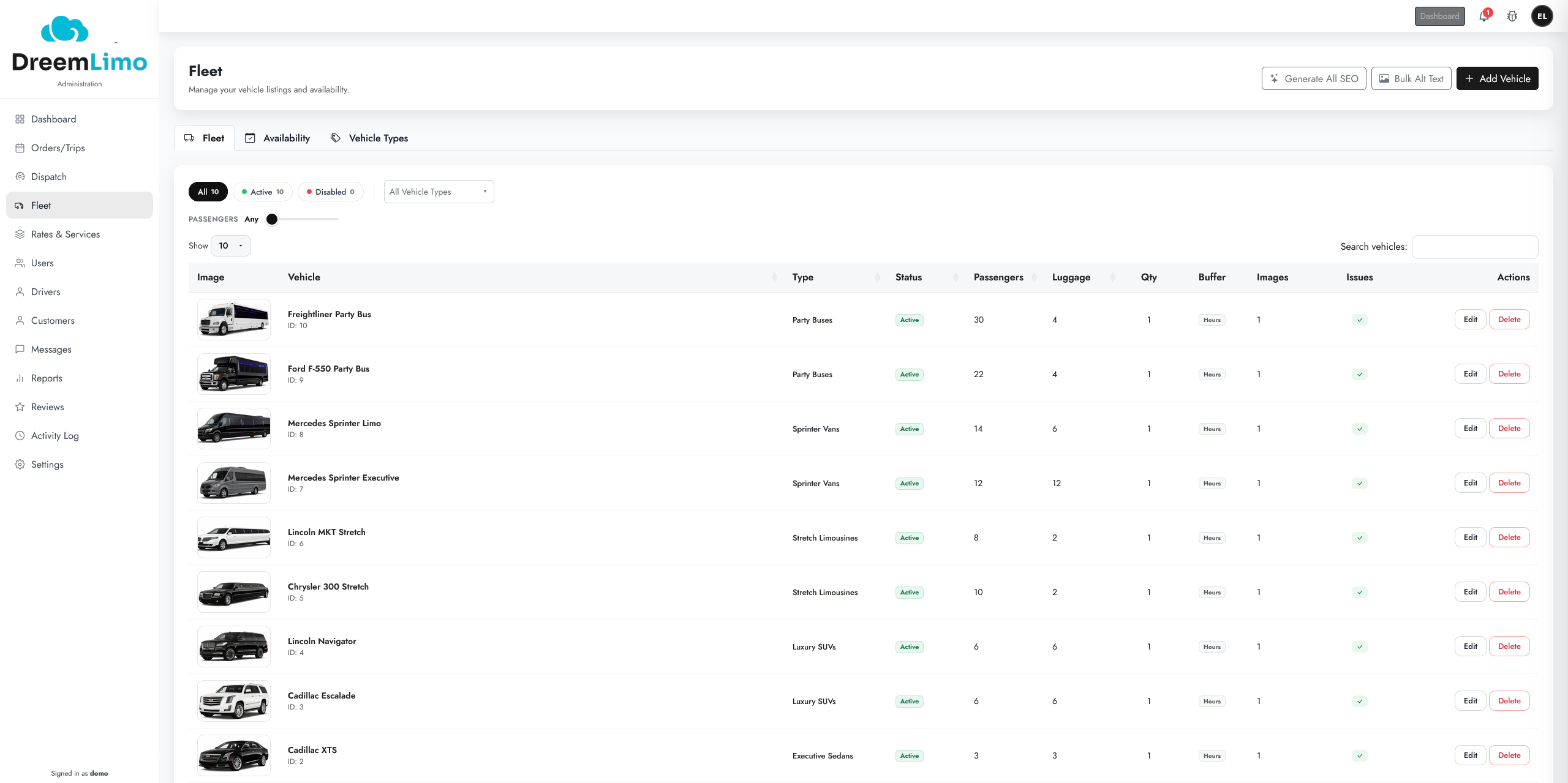
Fleets running 15 or more vehicles almost universally use dedicated limousine software that connects online booking, dispatch, driver apps, and billing into a single system. The reason is simple: at that volume, a single scheduling error costs more than a month of software fees.
The core tools larger operators use include:
- Zone-based pricing: Rates that adjust automatically based on pickup and drop-off zones, so a quote from the airport to downtown generates instantly without a human doing the math.
- Hourly minimums: Rules baked into the booking engine that enforce a 3-hour minimum on wedding bookings or a 2-hour minimum on hourly charters, protecting margin without a sales conversation.
- Driver mobile apps: Drivers get run sheets, GPS navigation, and passenger contact info pushed to their phone. No paper manifests, no morning dispatch calls.
- Automated confirmations and reminders: Clients get a booking confirmation immediately, a reminder 48 hours out, and a driver-on-the-way notification. This alone cuts no-shows by roughly 30 percent, according to operators who have made the switch.
- Farm-out management: When a job exceeds your fleet capacity, the system can flag it for subcontracting and track the margin impact automatically.
Small and mid-size operators in the local area can access these same tools. The limo apps and platforms available as of 2026 are priced for fleets of any size, not just large corporations. You do not need 20 vehicles to justify the investment.
What Can You Fix This Week Without New Software?
Before you commit to a full limousine software platform, three low-cost changes can stop the bleeding immediately. None of them require a contract or a learning curve.
- Set up an auto-reply on every inquiry channel. Your contact form, Facebook page, and Google Business Profile should all send an instant response with your rate sheet, vehicle list, and a link to call or text. This buys you time without losing the lead.
- Build a quote template. A single Google Doc or PDF with your standard rates for airport transfers, hourly packages, and wedding runs cuts quote-writing from 15 minutes to 2 minutes. Attach it to every auto-reply.
- Start collecting card-on-file at booking. Even a basic Square or Stripe link in your confirmation email lets you charge a deposit automatically. This reduces no-shows and gives you leverage on cancellations. The FTC’s guidance on recurring billing is worth a quick read before you set cancellation policy language.
These steps typically take 3 to 4 hours to set up once and save 30 to 60 minutes a day going forward. They are not a permanent solution, but they stop the immediate revenue leaks while you evaluate a full limo software platform.
Reviews and referrals are also a lever you can pull this week. In a local market like the one Dreem Limo serves, a single 5-star Google review from a wedding client is worth more than most paid ads. Send a review request text within 2 hours of every completed run. Operators who do this consistently see their review count double within 90 days, which directly improves organic search ranking and word-of-mouth conversion.
How Does Automate Limo Business Booking Software Change the Math?
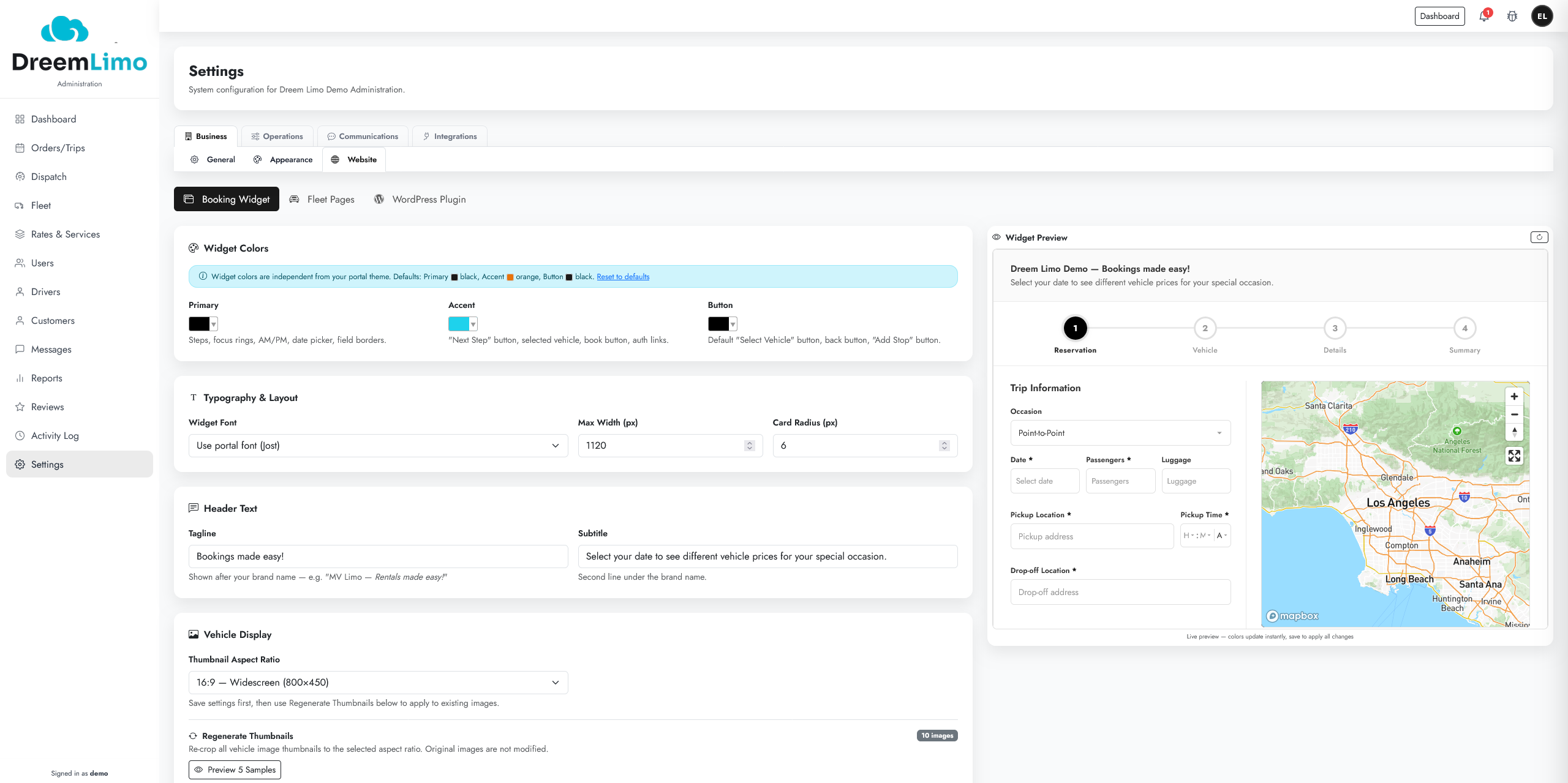
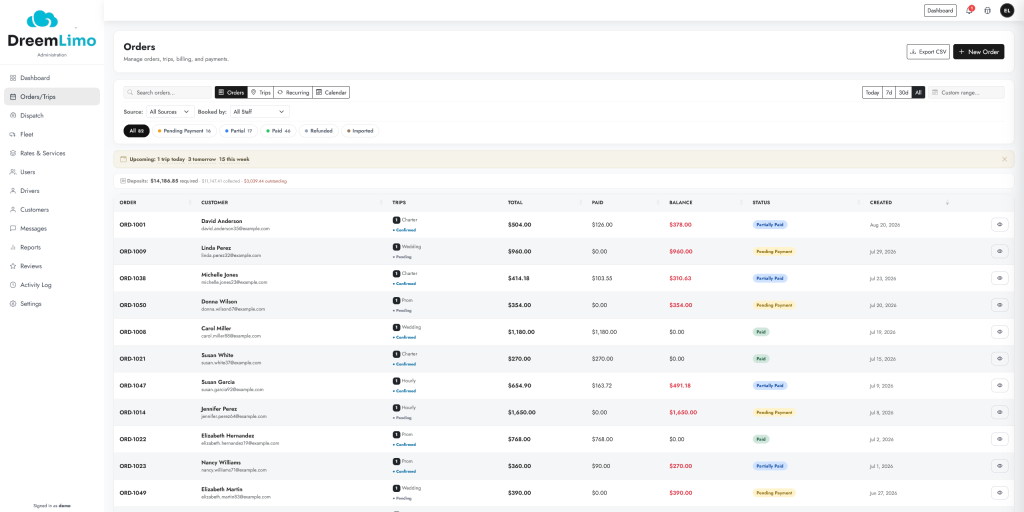
When you automate limo business booking software handles intake, pricing, payment, and dispatch in a connected system, the average operator recovers 5 to 10 hours of admin time per week and closes 20 to 35 percent more inquiries simply by responding faster. Here is what the shift looks like across a typical week:
| Task | Manual Process | Automated with Booking Software |
|---|---|---|
| Responding to an inquiry | 15–30 min per lead (call, text, email) | Instant auto-quote and booking link |
| Collecting a deposit | 2–4 follow-up contacts per booking | Card captured at checkout, automatically |
| Building a dispatch board | 30–60 min daily (spreadsheet or whiteboard) | Auto-populated from confirmed bookings |
| Sending driver run sheets | Morning call or printed manifest | Pushed to driver app at booking confirmation |
| Handling a cancellation | Manual charge attempt, often disputed | Policy enforced automatically via card-on-file |
| Sending client reminders | Manual call or text day-before | Automated 48-hour and 2-hour SMS/email |
Seasonal demand swings hit hardest when you are running manually. Prom season (April through June), wedding season (May through October), and holiday corporate party runs (November and December) can triple your inquiry volume in a 6-week window. A limousine booking software platform handles that spike without you adding staff or working 16-hour days.
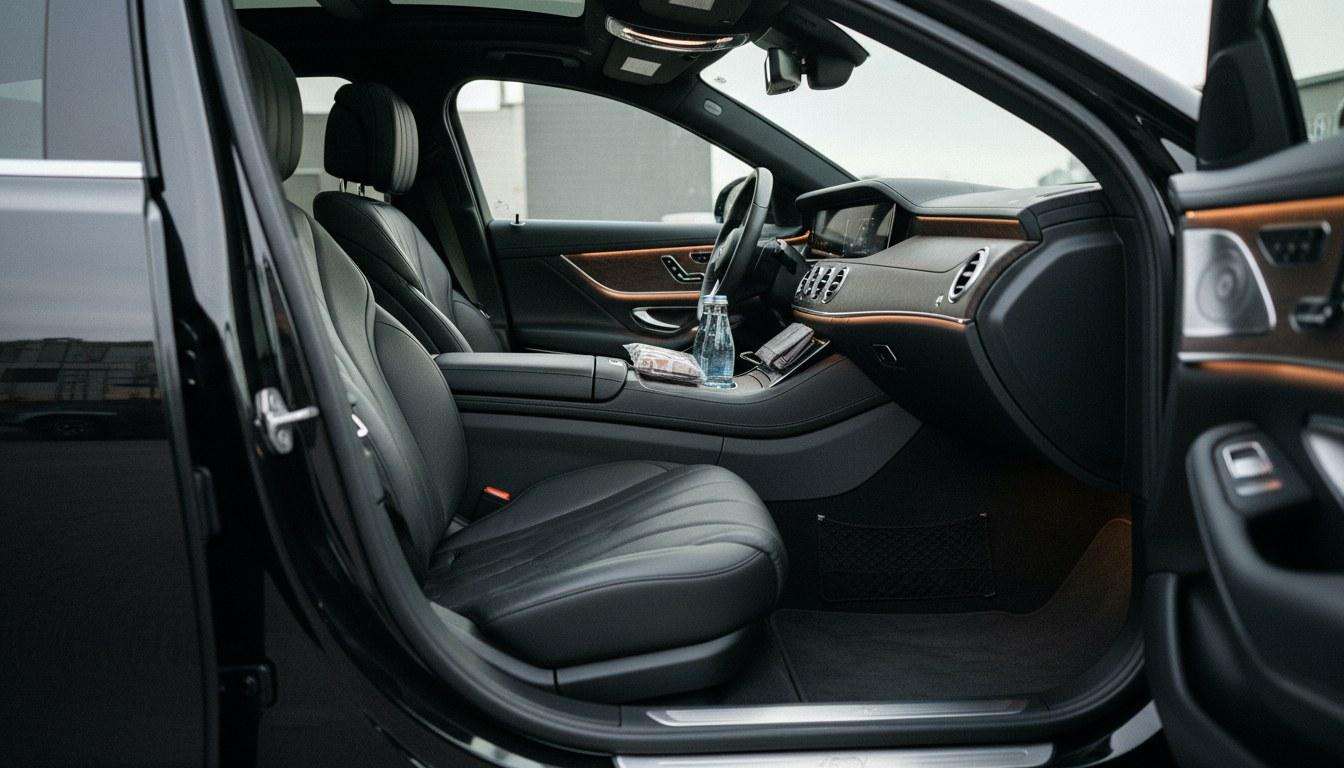
Rideshare competition is real in the local area. Uber Black closes a booking in under 60 seconds with no phone call required. The only way a local limo operator competes on speed is with an equally fast online booking experience. Limo apps that offer a branded booking page let you match that experience while keeping the premium service and personal touch that rideshare cannot replicate.
As of 2026, most limousine software platforms also integrate with ENERGY STAR-rated fleet management tools and connect to accounting software like QuickBooks, so your revenue data flows without manual entry. Since the Inflation Reduction Act expanded Section 179 deductions for business software purchases, the cost of a limousine software subscription may also qualify as a deductible business expense — confirm with your accountant. The U.S. Small Business Administration offers plain-language guidance on deducting software as a business tool.
Across our dispatch records in the local area, runs booked through an automated platform have a rebooking rate roughly 2x higher than runs booked by phone, largely because the confirmation email and post-run review request keep the operator top of mind for the client’s next event.
Runs booked through an automated platform have a rebooking rate roughly 2x higher than runs booked by phone, largely because the confirmation email and post-run review request keep the operator top of mind.
Get Your Booking System Set Up in the Local Area
If you are ready to stop losing jobs to unanswered inquiries and double-booked vehicles, the next step is getting a booking system that fits your fleet and your market. Dreem Limo works with operators across the local area to build and launch branded booking platforms built for limo, black-car, and party-bus operations of any size.
Whether you run 2 vehicles or 20, the right setup handles your quotes, deposits, dispatch board, and driver communications automatically. You stay focused on the road and the client experience.
Call Dreem Limo today to schedule a walkthrough of how automate limo business booking software works for your specific fleet and route mix. Reach us directly at or book a demo online. Setup for local-area operators typically takes less than one week from first call to first live booking.
Frequently Asked Questions
How much does limo booking software usually cost for a small fleet?
Most limousine software platforms charge a monthly subscription that typically ranges from $80 to $300 per month depending on the number of vehicles and features included. Some platforms also take a small per-booking fee instead of or in addition to a flat monthly rate. The cost usually pays for itself quickly when you factor in the bookings recovered from faster response times. Contact Dreem Limo in the local area to find out which setup fits your fleet size and budget.
Can I take online bookings for airport transfers and hourly packages at the same time?
Yes. Most limousine booking software lets you set up separate booking flows for point-to-point airport transfers and hourly charter packages, each with their own pricing rules and minimums. Zone-based pricing handles airport runs automatically, while hourly packages can enforce a minimum booking window — say, 3 hours for weddings. A single platform can manage both job types without any manual quoting.
What happens if a client books online and I don't have a vehicle available?
A properly configured limo booking platform only shows availability based on your real-time dispatch board, so clients cannot book a vehicle that is already assigned. If your fleet is full, the system can display a waitlist option or direct the client to contact you for a farm-out arrangement. This eliminates double-booking entirely when the software is set up correctly.
How do I handle no-shows and cancellations through booking software?
Booking software captures a card on file at the time of reservation and enforces your cancellation policy automatically. If a client cancels within your no-refund window, the system charges the fee without you having to make a confrontational phone call. Automated reminders sent 48 hours and 2 hours before the run also reduce no-shows significantly — typically by around 30 percent for operators who use them consistently.
Is limo booking software worth it if I only run 2 or 3 vehicles in the local area?
For a small fleet, the math often works out even faster than for a large one. With 2 or 3 vehicles, every missed booking is a larger percentage of your monthly revenue, and your time is already stretched thin. Automating intake, quotes, and deposits can recover 5 or more hours a week that you can put toward driving, marketing, or simply not working at midnight. Dreem Limo can walk you through a setup designed specifically for small fleets in the local area — call us at to get started.