Prom and graduation season is the highest-stakes stretch of the year for limo operators. This playbook walks you through what limo booking software for prom and graduation summer actually changes — and what you can do this week without spending a dollar.

It is 11:47 p.m. on a Tuesday in late April. A parent in your local area just Googled “prom limo near me,” landed on your website, and filled out your contact form. By the time you see it the next morning, they have already booked with the operator who had an instant-quote link. That one job — a 4-hour prom package for a group of 8 — was worth somewhere between $480 and $750 depending on your hourly minimum (the lowest number of hours you will accept on a booking). This is the core problem that limo booking software for prom and graduation summer is designed to solve.
Prom and graduation season runs roughly from early May through late June each year. In 2026, that window is about 7 weeks long. For a 1-to-5 vehicle operation, those 7 weeks can represent 20–35% of your annual revenue. Every unanswered inquiry, every double-booked stretch SUV, and every deposit collected via Venmo with no signed contract is money at risk.

What does a missed prom booking actually cost your operation?
A single missed prom or graduation inquiry typically costs between $400 and $900 in lost revenue, and the referral ripple from that group of students can be worth 2–4 additional bookings. That math changes how you think about after-hours response time.
A single missed prom or graduation inquiry typically costs between $400 and $900 in lost revenue, and the referral ripple from that group of students can be worth 2–4 additional bookings.
Here is how the numbers stack up across common job types in this market:
| Job Type | Typical Market Range | Key Risk Factor |
|---|---|---|
| Prom group (4–5 hours) | $450–$850 | Double-booking, late deposit |
| Graduation transfer (point-to-point) | $120–$250 | No-show, last-minute cancel |
| Airport transfer (sedan) | $75–$160 | Flight delay, no card on file |
| Hourly wedding package (6–8 hours) | $900–$1,800 | Chargeback without signed contract |
| Corporate hourly (as-directed) | $85–$150/hr | Rideshare substitution (Uber Black) |
No-shows on prom night are rare — families have skin in the game — but chargebacks (when a customer disputes a credit card charge) on informal bookings are not. If you collected a deposit through a peer-to-peer payment app with no written agreement, you have almost no recourse. A proper limousine software platform captures a card-on-file and generates a signed digital contract at the time of booking, which is your best protection.
Our dispatchers have seen 3 or more double-booking conflicts surface in a single May weekend when operators were managing prom reservations by text thread and paper calendar — each conflict requiring at least one emergency farm-out (subcontracting the job to another operator, usually at a cost of 20–30% of the fare).
How do larger fleets handle limo booking software for prom and graduation summer?
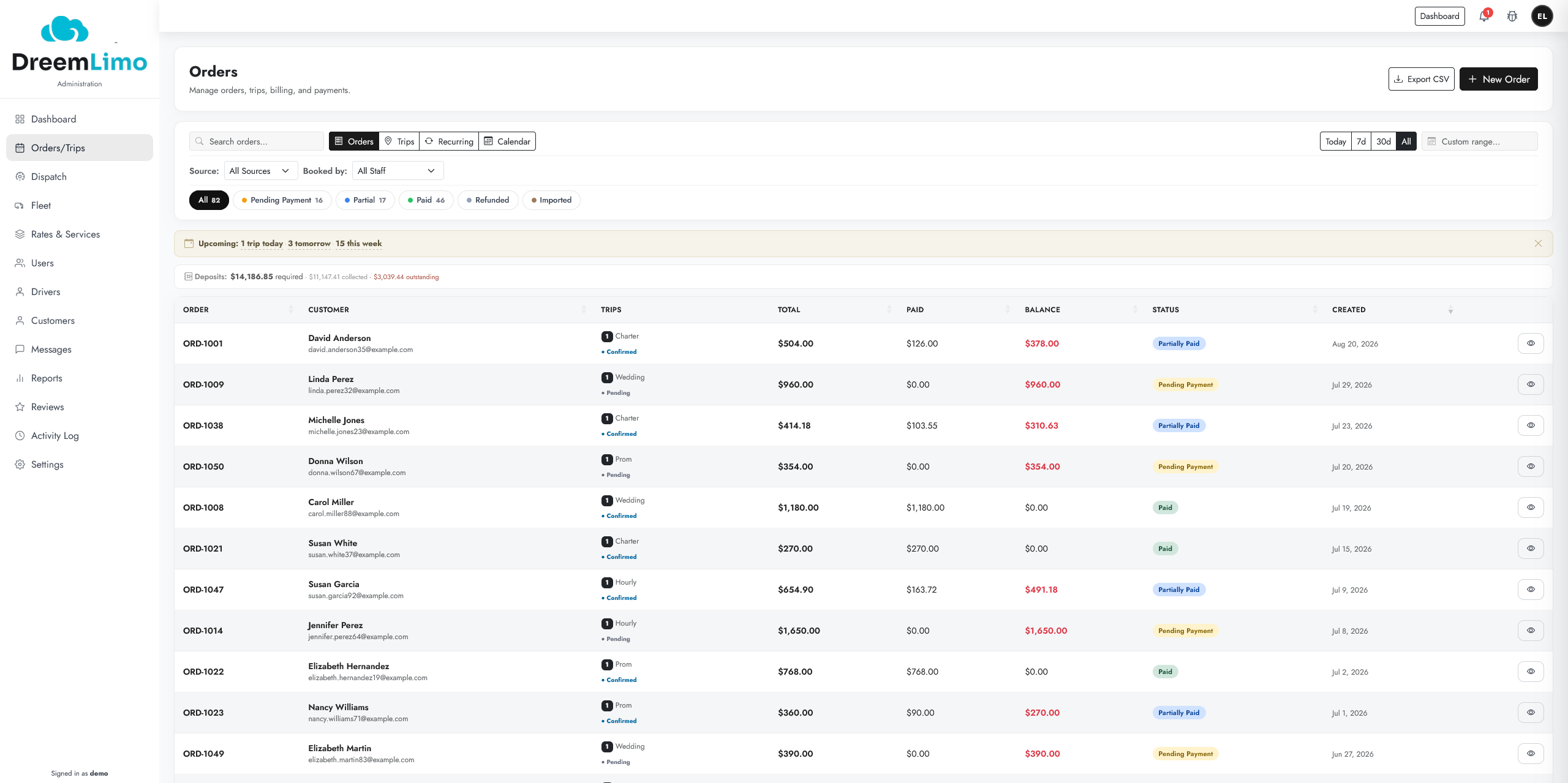
Fleets running 10 or more vehicles typically use a dedicated dispatch board — a real-time visual grid showing every vehicle, driver, and job — connected to automated quote and confirmation workflows. The good news is that the same tools are now available to single-vehicle operators at a fraction of what they cost 5 years ago.
Platforms built specifically as limousine software (examples include Limo Anywhere, Arro, and LimoLink) are designed around the industry’s specific needs: zone-based pricing (flat rates by pickup and drop-off zone rather than per-mile metering), deadhead tracking (miles driven with no passenger, which eat into margin), and affiliate network connections for farm-in and farm-out jobs.
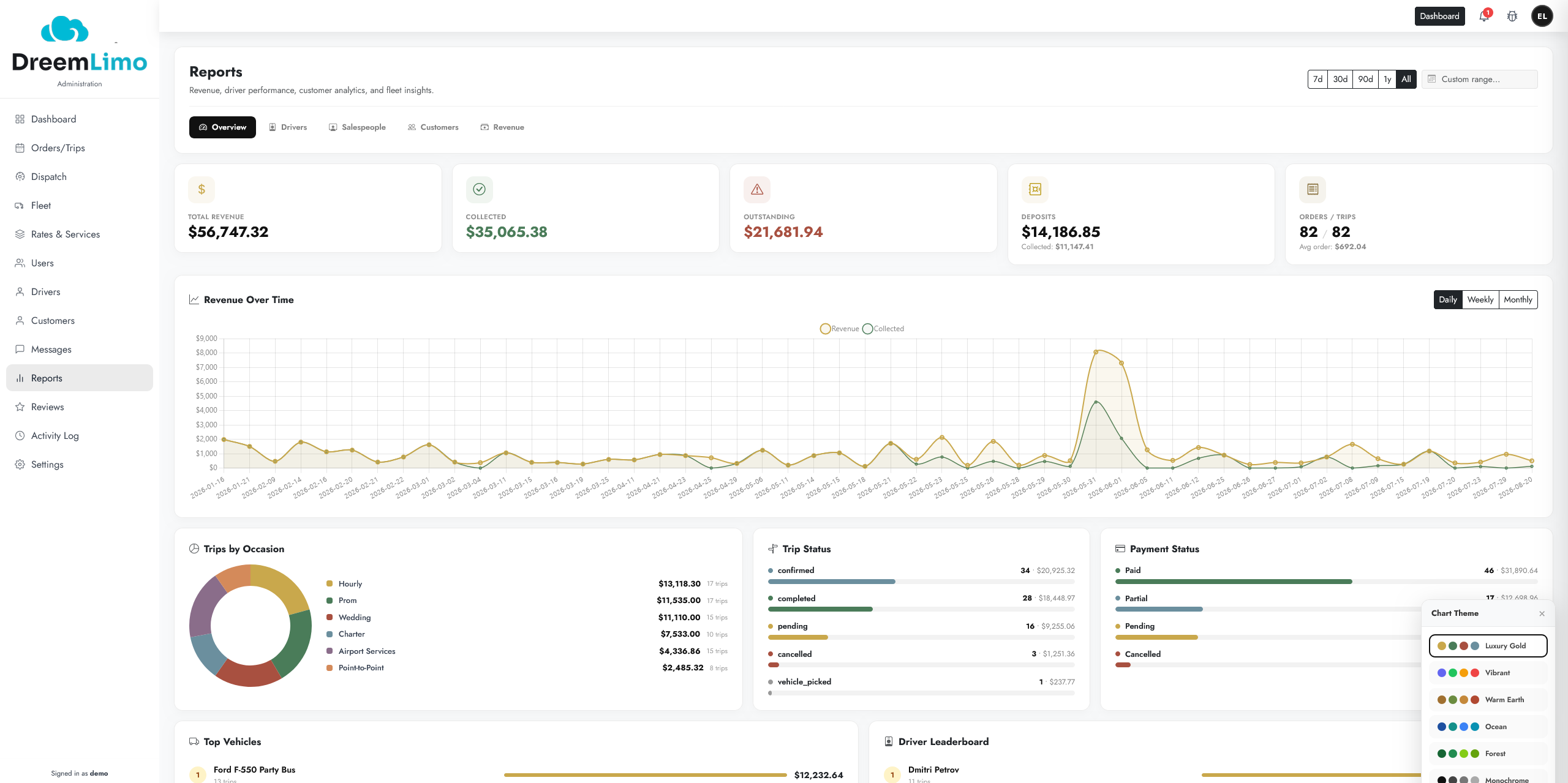
Larger operators also use automated SMS and email sequences. A booking confirmation goes out immediately. A reminder fires 48 hours before the job. A gratuity and review request sends 2 hours after drop-off. That sequence, run automatically, generates the review volume that drives local search rankings — critical in a market where a parent searching “prom limo” in your ZIP code sees 3–5 competitors on Google Maps before they see your website.
According to industry scheduling research, operators who automate booking confirmations see cancellation rates drop by roughly 15–20% compared to manually confirmed bookings, largely because customers feel locked in once they have a digital confirmation and a contract reference number. (Note: specific figures vary by market and platform.)
Operators who automate booking confirmations see cancellation rates drop by roughly 15–20% compared to manually confirmed bookings, largely because customers feel locked in once they have a digital confirmation and a contract reference number.
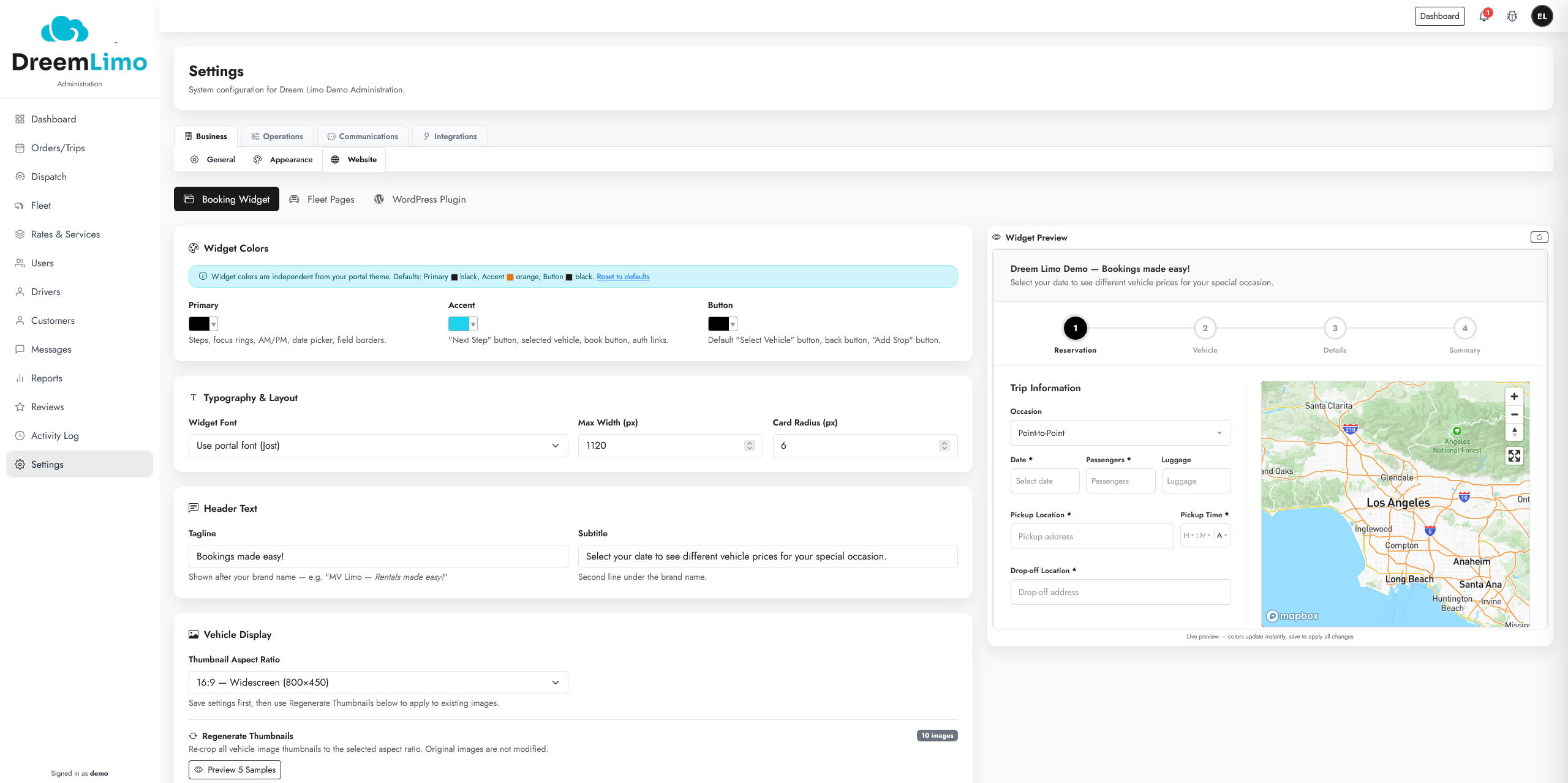
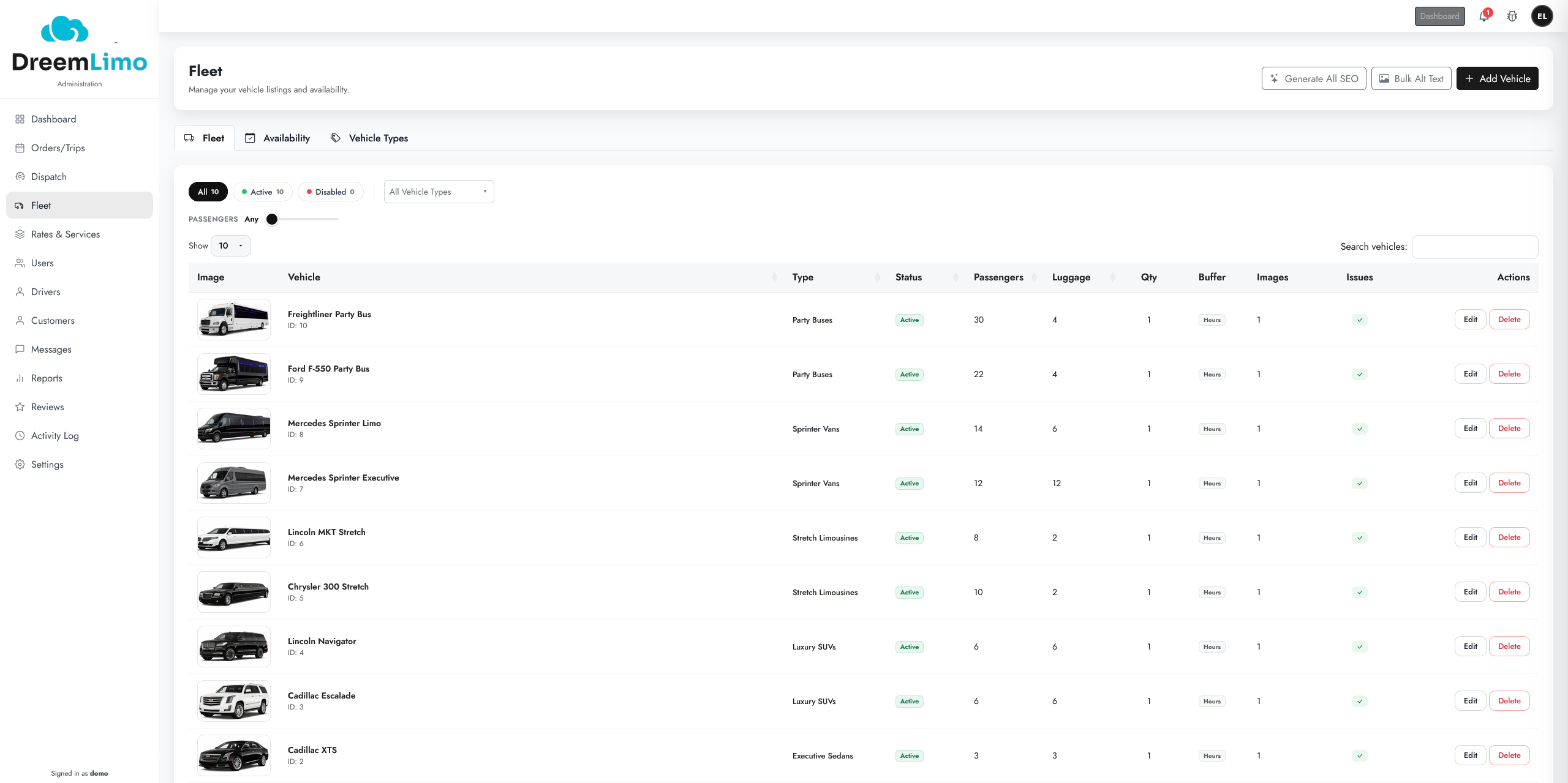
The competitive pressure from Uber Black is real but limited for prom. Uber Black cannot guarantee a specific vehicle, a named driver, or a decorated interior for a group of 10. That differentiation is your margin. Limo apps that let customers choose their vehicle, see the driver’s photo, and add custom requests (champagne setup, decorations, specific music) convert at a higher rate than a generic quote email.
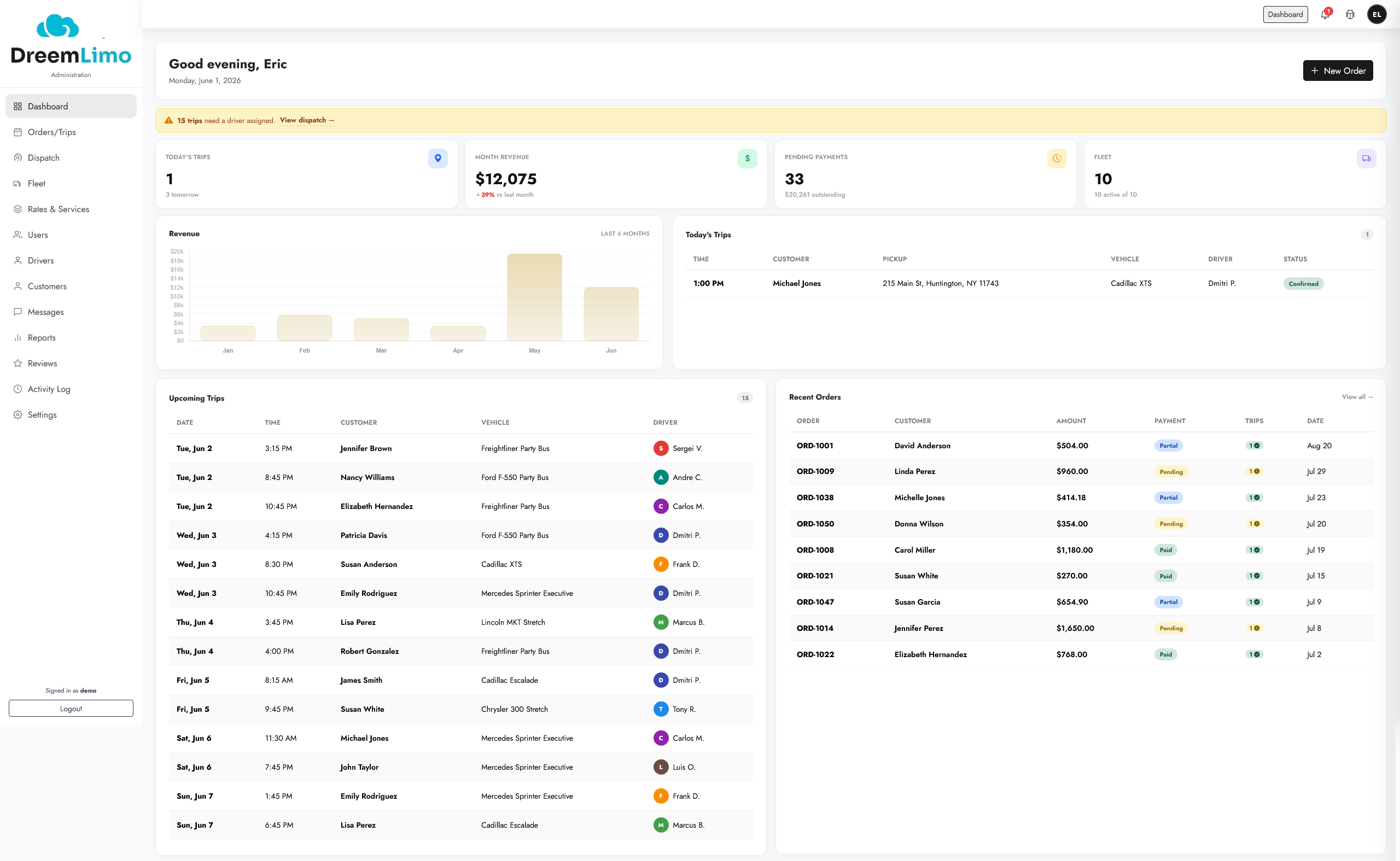
What can you do this week without buying new limo software?
Three changes you can make in under 4 hours this week will reduce missed bookings and protect your deposits before prom season peaks. None of them require a software subscription.
- Set up a Google Business auto-reply: In your Google Business Profile, enable the messaging feature and set an auto-reply that gives your direct booking phone number and states your hourly minimum. This catches after-hours inquiries before they bounce to a competitor.
- Create a PDF quote template with a payment link: Use Square, Stripe, or PayPal to generate a deposit link. Attach it to every quote. Require a 25–50% deposit to hold the date. No deposit, no hold — enforce it.
- Build a shared Google Calendar with color codes: Each vehicle gets a color. Each confirmed booking gets an entry with the customer name, pickup address, drop-off, and job value. Share it with any driver or co-dispatcher. This eliminates the most common double-booking scenario.
- Draft a one-page digital contract: Use DocuSign’s free tier or HelloSign for up to 3 documents per month. Include your cancellation policy (typically 50% non-refundable within 14 days of the event), your no-show policy, and a clause covering overtime (what you charge per 15 minutes beyond the booked window).
- Set a phone alarm for 9 a.m. and 8 p.m. daily: Check your inquiry channels at both times through prom season. Response time under 2 hours is the threshold that keeps most customers from moving on.
These steps do not replace a proper dispatch and booking platform, but they will stop the most common leaks during a 7-week window when you cannot afford to lose jobs.
Where does online booking automation change the math for local operators?
When a customer can get an instant quote, choose a vehicle, sign a contract, and pay a deposit at 11 p.m. on a Tuesday — without you touching the phone — your effective booking hours go from 10 to 24. For prom season, that matters more than almost any other operational change you can make.
Dedicated limo booking software for prom and graduation summer demand typically includes several features that manual systems cannot replicate at scale:
- Real-time availability calendars: Customers see only open slots, eliminating the back-and-forth that kills conversions.
- Zone-based and hourly pricing rules: You set your minimums and zone rates once. The software quotes them automatically, removing human error from the quote process.
- Card-on-file capture at booking: The deposit is charged the moment the contract is signed. No chasing payments.
- Driver assignment and dispatch notifications: Once a job is confirmed, the platform can notify your driver automatically — no dispatcher required for routine jobs.
- Post-trip review requests: Automated messages sent after drop-off generate the 4- and 5-star reviews that move your Google Maps ranking over a season.
In the local area, prom dates cluster around specific high school calendars. Checking your local school district’s event calendar — most publish prom dates by February — lets you block those Saturdays in your booking software as “high demand” and apply a surge minimum (for example, a 5-hour minimum instead of 3 on peak prom Saturdays). That single rule, set in your limo software once, can add $200–$400 per vehicle to your revenue on those nights.
As of 2026, several platforms offer white-label booking portals — a page on your own domain where customers book directly, with your branding, rather than through a third-party marketplace that also lists your competitors. For local SEO, this matters: bookings made through your own site generate signals (page visits, form submissions, return visitors) that improve your local search ranking over time, as outlined in Google’s search fundamentals documentation.
Since California’s CPUC transportation regulations require TCP (Transportation Charter-Party) carriers to maintain specific records for each trip, a software platform that auto-generates trip manifests and stores them digitally also keeps you compliant without extra paperwork. That is a real operational benefit beyond just booking convenience.
Across our service calls in the local area during May and June, we see inquiry volume spike roughly 3x compared to a typical February week — and the operators who capture the most of that volume are the ones who can respond with a quote link in under 15 minutes, any hour of the day.
Get Your Fleet Ready for Summer 2026 in the Local Area
Prom and graduation season does not wait for you to get organized. The families booking in the local area right now are comparing 3–5 operators side by side, and the one with the fastest, clearest booking process wins the deposit — regardless of who has the nicest vehicle.
If you are running a limo, black-car, or party-bus operation and want to see how a branded booking platform can handle your prom and graduation summer volume without adding hours to your week, contact Dreem Limo. The team can walk you through how operators in the local area are setting up their dispatch boards, deposit rules, and automated confirmation sequences before the May rush hits.
Call Dreem Limo at or reach out online to schedule a walkthrough. Do it before the prom calendar fills up — because once those Saturdays are gone, they are gone.
Frequently Asked Questions
How early should I start taking prom limo bookings for summer 2026?
Most families in the local area start locking in prom transportation 8–12 weeks before the event, which means inquiries typically begin arriving in February and March for May prom dates. Opening your booking calendar by mid-February and promoting it through your Google Business Profile gives you the best shot at capturing early deposits. Dreem Limo can help you set up an online booking page before that window opens — call to get started.
What deposit should I require to hold a prom or graduation booking?
A deposit of 25–50% of the total fare is standard practice in this market for event bookings. Requiring the deposit at the time of signing — not after a phone confirmation — is what actually holds the date. Limo booking software that captures a card-on-file and charges the deposit automatically at contract signing removes the most common source of lost prom bookings.
Can I use regular scheduling apps like Google Calendar for prom dispatch?
Google Calendar works as a stopgap for 1–2 vehicles, but it has no zone-based pricing, no automated quotes, no digital contracts, and no card-on-file capture. During a high-volume prom and graduation summer window with multiple vehicles and drivers, the risk of double-booking and missed deposits makes a dedicated limousine software platform worth the cost for most operators.
How do I handle a customer who cancels a prom booking last minute?
Your best protection is a written cancellation policy signed at the time of booking. A common structure in this market is: full refund more than 30 days out, 50% refund 14–30 days out, and no refund within 14 days of the event. Without a signed contract, you have very limited recourse if a customer disputes the charge. Limo software platforms generate and store these contracts automatically at the point of booking.
Is limo booking software worth the cost for a one- or two-vehicle operation?
For most single-vehicle operators in the local area, the software pays for itself if it captures even one additional prom or graduation booking per month during peak season — typically a $450–$850 job. The bigger value is the hours saved on phone-tag quotes and manual follow-ups, which for an owner-operator running every hat can easily add up to 5–8 hours per week during May and June.