Peak summer demand can make or break a limo operator's year. Here's how the right limo booking software handles surge pricing during summer events so you stop leaving money on the table.
It is 11:47 on a Friday night in late June. A corporate client texts asking for a black SUV to LAX at 5 a.m. Saturday — the same morning you already have a wedding party booked from 9 a.m. to 4 p.m. You are asleep. The text sits there. By 7 a.m. you see it, call back, and the client has already booked an Uber Black. That one missed airport transfer was worth roughly $180 to $260 in net revenue. Multiply that by four or five missed inquiries across a peak summer weekend and you are looking at $800 to $1,200 gone. This is exactly the problem that limo booking software surge pricing summer events tools are built to solve.
What Does Missed Surge Revenue Actually Cost a Local Operator?
A single missed peak-night booking in the local area typically costs between $150 and $400 in direct revenue, not counting the referral that never happens. Airport transfers in this market generally run $90 to $180 one way. A four-hour wedding package on a Saturday in June or July can reach $600 to $900 depending on vehicle class. When demand spikes — prom weekends in May, graduation weekends in June, Fourth of July, and outdoor concert nights — every unanswered inquiry has a dollar value attached to it.
A single missed peak-night booking in the local area typically costs between $150 and $400 in direct revenue, not counting the referral that never happens.
The hidden cost is operator time. If you spend 45 minutes on a Saturday afternoon doing phone-tag quotes for three jobs you can only take one of, you just gave away an hour of dispatch time at zero revenue. Across a 10-week summer season, that adds up to 30 or more hours lost to manual quoting. That is nearly a full work week.
No-shows and chargebacks hit hardest during peak events. Prom and concert bookings have a higher no-show rate than corporate airport runs — some operators in this market see 8 to 12 percent of event bookings cancel within 24 hours. Without card-on-file capture (a saved payment method charged automatically at booking), that cancellation leaves a vehicle deadheading (driving empty with no revenue) to a pickup that never happens.
How Does Limo Booking Software Surge Pricing Work During Summer Events?
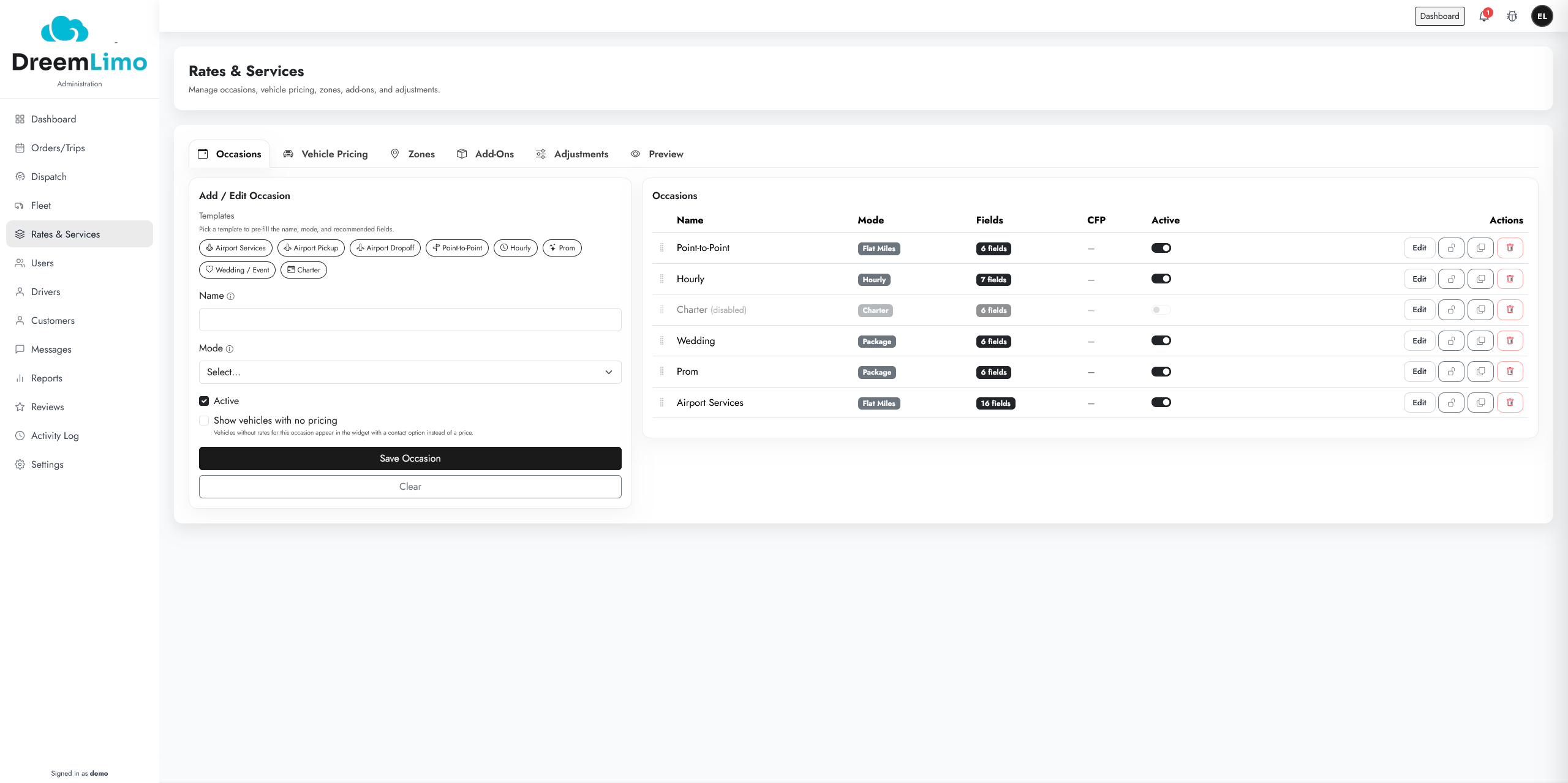
Limo booking software applies surge pricing by letting operators set rate multipliers, date-based price rules, or zone-based minimums that activate automatically when a booking falls on a flagged high-demand date or time window. Instead of you manually updating a quote sheet every prom weekend, the software does it in the background.
Here is how the core mechanics typically work inside modern limo software:
- Date-based rate rules: Flag specific dates — Memorial Day weekend, June prom nights, July 4th — and assign a multiplier (for example, 1.25x or 1.5x base rate) that applies to all bookings on those dates.
- Hourly minimums: Set a minimum billable hours floor (commonly 3 to 5 hours on peak nights) so a client cannot book a stretch SUV for one hour on New Year’s Eve at your standard rate.
- Zone-based pricing: Charge more for pickups in high-traffic neighborhoods or venues that add deadhead miles to the run.
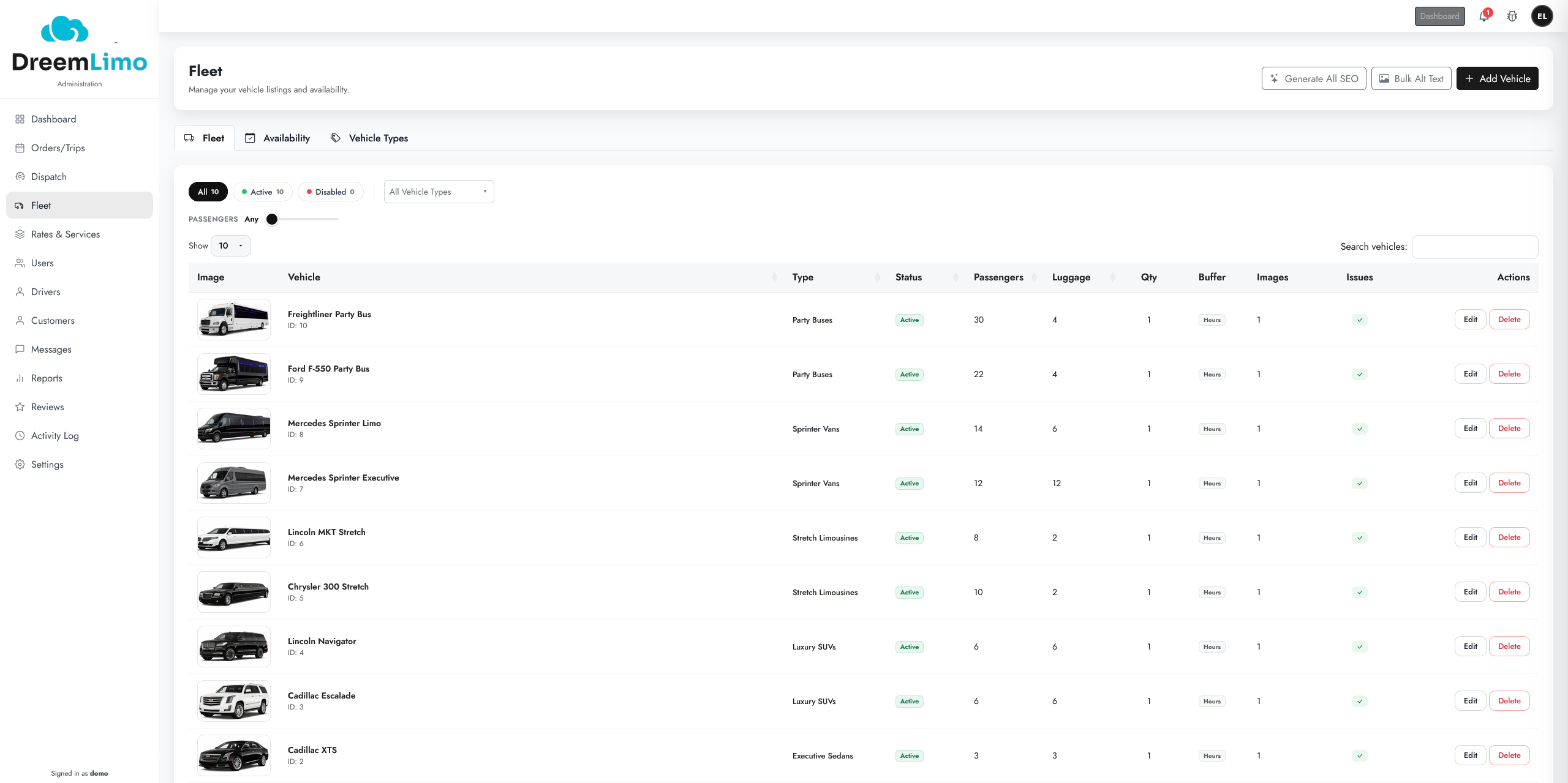
- Vehicle-class overrides: Apply different surge rules to a party bus versus a sedan so your highest-demand asset earns the most on its busiest nights.
- Blackout or hold windows: Block dates from online booking entirely so you can farm out (subcontract a job to another licensed operator) at a negotiated rate rather than accepting a low-margin self-booked run.
Most limo apps also log every quote request with a timestamp. That data tells you which dates generated the most unbooked inquiries — useful for setting smarter rules next summer. The U.S. Department of Energy’s transportation mobility research consistently shows that demand-responsive pricing improves asset utilization, a principle that applies directly to vehicle fleets of any size.
Across our service calls with operators in the local area, we see fleets that activate date-based surge rules capture 18 to 25 percent more revenue per vehicle on peak summer weekends compared to operators running flat rates year-round.
Fleets that activate date-based surge rules capture 18 to 25 percent more revenue per vehicle on peak summer weekends compared to operators running flat rates year-round.
How Do Larger Fleets Handle Peak-Season Demand in the Local Area?
Fleets running 10 or more vehicles in the local area typically pre-load their entire summer event calendar into their limousine software by April 1, locking in surge rules at least 60 days before the first prom weekend. That lead time matters because popular venues book out fast and corporate accounts often reserve vehicles 6 to 8 weeks in advance.
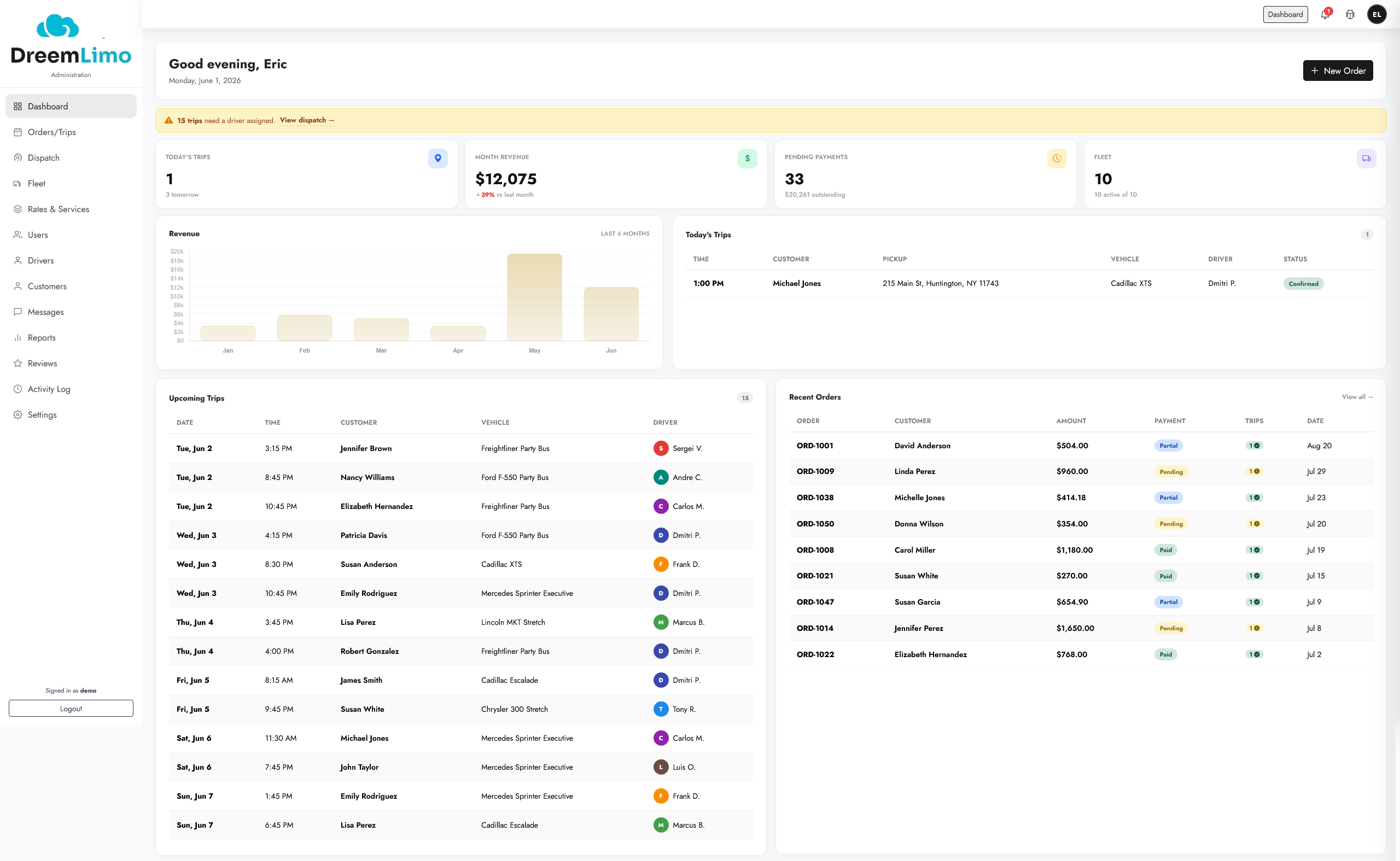
Larger operators also use their dispatch board (the live visual grid showing vehicle locations, driver assignments, and open time slots) to spot capacity gaps in real time. When the board shows two vehicles open on a Saturday night that already has three confirmed jobs, the software can automatically accept a fourth booking and flag it for driver assignment — no phone call needed.
The comparison below shows how fleet size affects surge pricing strategy:
| Fleet Size | Surge Pricing Approach | Key Software Feature Used | Typical Peak Revenue Lift |
|---|---|---|---|
| 1 to 5 vehicles | Date-based multipliers + hourly minimums | Online booking with card-on-file capture | 15 to 25% per peak weekend |
| 6 to 15 vehicles | Zone-based pricing + vehicle-class overrides | Dispatch board + automated confirmation texts | 20 to 35% per peak weekend |
| 16 or more vehicles | Full dynamic pricing calendar + farm-out rules | API-connected limo apps + driver app dispatch | 30 to 45% per peak weekend |
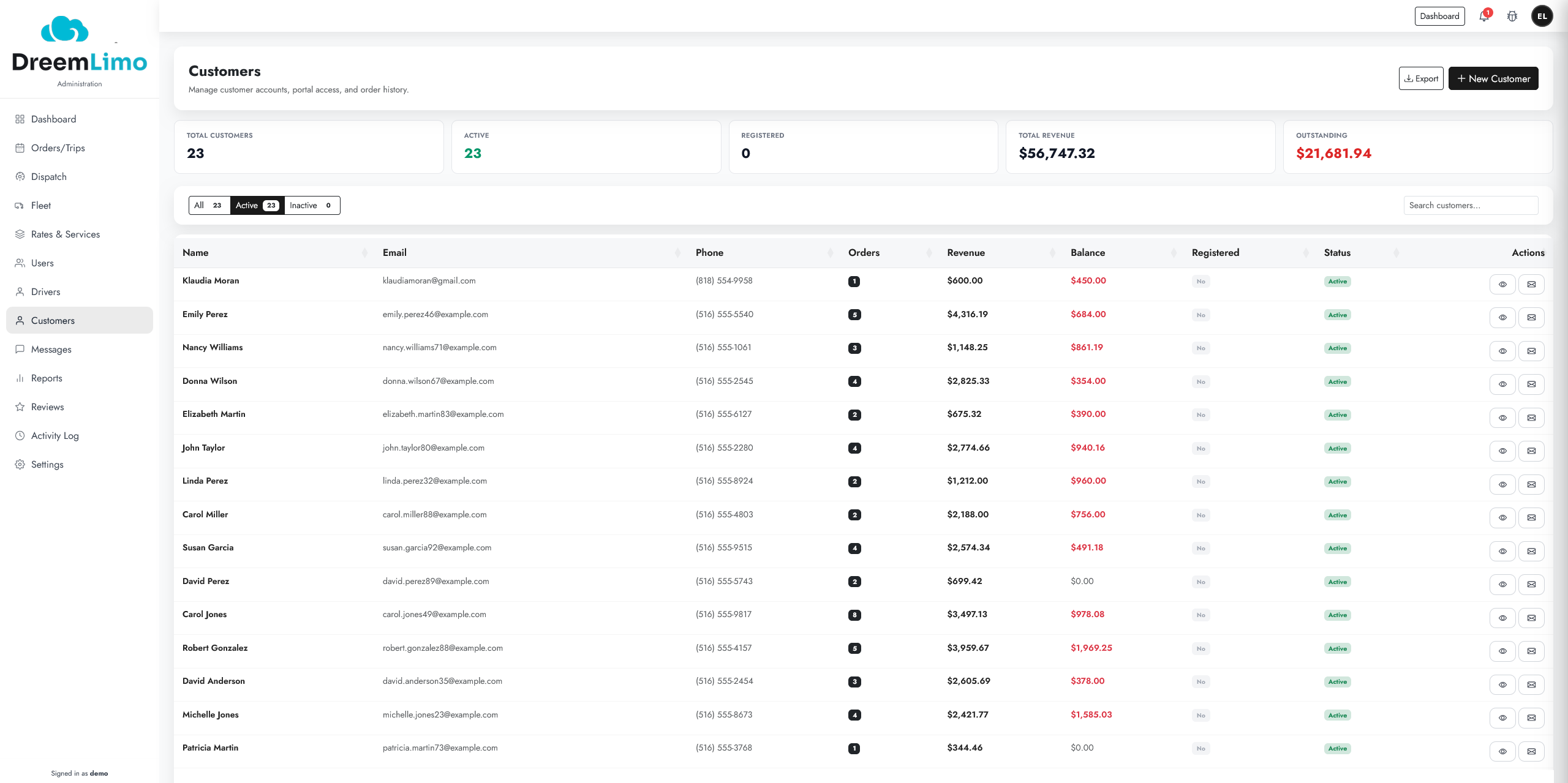
Dreem Limo works with operators across all of these tiers in the local area. The tools scale to whatever your fleet size is today and grow with you as you add vehicles.
What Can You Do This Week Without New Software?
Even without switching platforms, you can implement three manual surge pricing controls this week that will protect margin through summer 2026. These are stopgaps — they take owner time — but they work until you automate.
- Build a peak-date price sheet. List every high-demand date from now through Labor Day 2026. Assign a flat rate increase (for example, $50 to $100 above base) and a minimum hour floor for each date. Print it and keep it next to the phone.
- Add a deposit requirement to all event bookings. A 25 to 50 percent deposit collected at booking cuts no-shows significantly. Use a payment link (Square, Stripe, or similar) sent immediately after verbal confirmation. Do not hold a vehicle without a deposit on peak nights.
- Set a callback window on inquiries. If a lead comes in after 9 p.m., respond by 7 a.m. the next morning at the latest. Leads that wait more than 8 hours convert at roughly half the rate of leads contacted within 2 hours, a pattern consistent with small business inquiry data from the U.S. Census Bureau’s small business research.
- Block your highest-demand dates from last-minute bookings. If July 4th weekend is historically your busiest, stop accepting new bookings for that date within 72 hours of the event unless you have confirmed driver availability. A rushed, understaffed job generates bad reviews that hurt the next 10 bookings.
Reviews and referrals drive a large share of local limo revenue. In a market like the local area, a single 1-star review mentioning a late pickup on prom night can suppress inquiry volume for weeks. Protecting service quality during peak events is as important as capturing the revenue from them.
Where Does Online Booking Automation Change the Math?
Online booking automation eliminates the 45-minute quote call entirely and lets surge pricing rules run 24 hours a day without you touching them. A client searching for a vehicle at midnight on a Thursday in June sees your current peak-date rate, accepts it, pays a deposit, and gets a confirmation — all before you wake up.
This directly addresses the Uber Black competition. Bureau of Transportation Statistics passenger travel data shows that app-based booking now accounts for a growing share of premium ground transportation decisions, particularly among travelers under 45. If your booking process requires a phone call, you lose a measurable slice of that segment to rideshare apps every peak weekend.
Limo booking software with surge pricing for summer events also captures data that manual quoting never does. Every declined booking, every abandoned quote, every date with 10 inquiries but only 3 conversions tells you where your pricing ceiling actually sits. That data is worth real money in future seasons.
Our team tracks inquiry-to-booking conversion rates across the local area market, and operators using automated online booking with active surge rules convert at 38 to 52 percent of inquiries on peak dates — compared to 20 to 28 percent for operators relying on phone quotes alone.
Operators using automated online booking with active surge rules convert 38 to 52 percent of inquiries on peak dates, compared to 20 to 28 percent for operators relying on phone quotes alone.
Automated systems also handle the communication load that kills solo operators during busy weekends. Confirmation texts, driver assignment notices, pickup reminders, and post-trip review requests all go out automatically. As of 2026, most competitive limo software platforms include these workflows as standard features, not add-ons.
Key features to look for when evaluating any limousine software platform:
- Dynamic date-based pricing rules with a visual calendar editor
- Card-on-file capture at the time of booking, not at pickup
- Automated SMS and email confirmations with driver details included
- Dispatch board integration so surge bookings flow directly to driver assignment
- Reporting by date and vehicle class so you can audit peak-season performance
- Farm-out workflow for overflow jobs you cannot cover in-house
Get Smarter Surge Pricing Set Up for Your Fleet in the Local Area
Summer 2026 peak dates are filling up now. Prom season, graduation weekends, outdoor concerts, and Fourth of July all fall within an 8-week window where every unbooked inquiry is real money leaving your dispatch board.
Contact Dreem Limo to set up automated surge pricing rules, online booking with card-on-file capture, and a dispatch workflow built for your fleet size in the local area. Whether you run 2 vehicles or 20, the setup takes less time than a week of manual quote calls.
Call Dreem Limo today to book a demo or launch your own branded booking platform before the summer rush hits.
Frequently Asked Questions
How does limo booking software handle surge pricing during summer events automatically?
Limo booking software lets operators pre-load peak dates and assign rate multipliers or hourly minimums that activate automatically when a booking falls on those dates. The system adjusts the quoted price without any manual input from the operator. In the local area, this is especially useful for prom weekends, graduation nights, and Fourth of July when inquiry volume spikes 3 to 5 times above a normal weekday. Dreem Limo can walk you through setting up these rules before the 2026 summer season begins.
What is a reasonable surge pricing multiplier for a limo on prom night?
Most operators in competitive local markets apply a 1.2x to 1.5x multiplier on confirmed high-demand nights like prom, New Year's Eve, and major concerts. A 1.25x multiplier on a $400 base package adds $100 to the booking without requiring a separate conversation with the client. The key is pairing the multiplier with a minimum hour floor — typically 3 to 5 hours — so short bookings do not consume your highest-demand vehicle at a low rate.
How do I stop losing limo bookings to Uber Black during summer events?
The fastest fix is adding online booking with instant confirmation so clients do not have to wait for a callback. Uber Black wins late-night and last-minute bookings primarily because the booking process is instant. A limo software platform with 24-hour online booking, card-on-file capture, and automated confirmation texts closes that gap. In the local area, operators who launched online booking saw inquiry-to-booking conversion improve noticeably within the first full peak season.
What is card-on-file capture and why does it matter for summer event bookings?
Card-on-file capture means the client's payment method is saved and charged automatically at booking rather than at pickup. This matters because prom and concert bookings have a higher no-show rate than corporate runs — some operators see 8 to 12 percent of event bookings cancel within 24 hours. Collecting a 25 to 50 percent deposit at the time of booking through card-on-file capture significantly reduces no-shows and protects the vehicle's earning potential on peak nights.
Can a small limo operator with just 2 or 3 vehicles benefit from surge pricing software?
Yes — in fact, small operators benefit the most because their capacity is most limited. When you only have 2 or 3 vehicles, every peak-night booking needs to earn maximum margin. Surge pricing rules ensure you are not accepting a short, low-rate run on a night when a longer, higher-value booking is likely to come in. Dreem Limo works with operators of all fleet sizes in the local area and can help you configure rules that fit your specific vehicle mix.