Limo booking software cost in 2026 ranges from free entry-level tools to enterprise platforms charging hundreds per month. This guide breaks down what you actually pay and what you get.
It is 2:17 a.m. on a Tuesday. A corporate traveler lands at the airport, pulls up your website on their phone, and wants to book a black-car pickup for 6 a.m. Your contact form just sits there. No instant quote, no booking widget, no confirmation. By 2:19 a.m. they have already booked through a competitor. That one missed airport transfer — typically worth $85 to $150 in the regional market — just paid for a month of mid-tier limo apps. That is the real math behind the limo booking software cost in 2026 conversation.
This guide is written for owner-operators running 1 to 25 vehicles: sedans, stretch SUVs, party buses, sprinter vans. You dispatch, you quote, you drive, you invoice. This is about whether the right limousine software saves you more than it costs.
What Does It Actually Cost You to Run Without Limo Software?
Every unanswered inquiry after business hours is a booking you are likely losing to a competitor or to Uber Black. For most small fleets, that adds up to 3–8 missed bookings per week during peak season. The math is straightforward once you assign a dollar value to each job type.
Consider a typical week during wedding season (April through June) or prom season (May). A single 4-hour wedding package in most regional markets runs $400 to $800. An airport transfer runs $85 to $175 depending on distance and vehicle class. A corporate hourly minimum (the minimum number of billable hours a client must book, usually 2–3 hours) runs $120 to $300. Miss two of those per week and you are leaving $1,000 or more on the table every seven days.
Beyond missed bookings, there is the hidden cost of owner hours. Operators who still quote by phone or text spend an average of 15 to 25 minutes per inquiry: answering questions, calculating deadhead (the unpaid miles your vehicle travels to reach a pickup), building a quote, following up, and collecting a card-on-file (a saved payment method that reduces no-shows and chargebacks). At 10 inquiries per day during holiday party season, that is 2.5 to 4 hours of your time — time you could spend driving or managing your fleet.
Our dispatchers see roughly 40% of inbound booking requests arrive between 9 p.m. and 8 a.m. — exactly the window when a solo operator is off the phone. Automation closes that gap directly.
No-shows and chargebacks are another real cost. Without a card-on-file capture system built into your limo software, disputing a chargeback means paperwork, a 30–90 day resolution window, and a fee from your payment processor. A single disputed $300 booking can cost you $50 to $75 in fees and 2 hours of admin time on top of the lost revenue.
What Does Limo Booking Software Cost in 2026?
In the regional market as of 2026, limousine software plans generally range from free (with per-booking fees) to $400 or more per month for full-featured enterprise platforms. Most small-fleet operators land in the $50–$150 per month tier for a solid mid-level limo booking platform.
Here is how the market breaks down by common operator scenarios:
| Operator Scenario | Typical Market Range (Monthly) | What’s Usually Included |
|---|---|---|
| Solo operator, 1–2 vehicles, entry-level | $0–$49/month (plus per-booking fee of 2–5%) | Basic online booking widget, quote form, calendar sync, email confirmations |
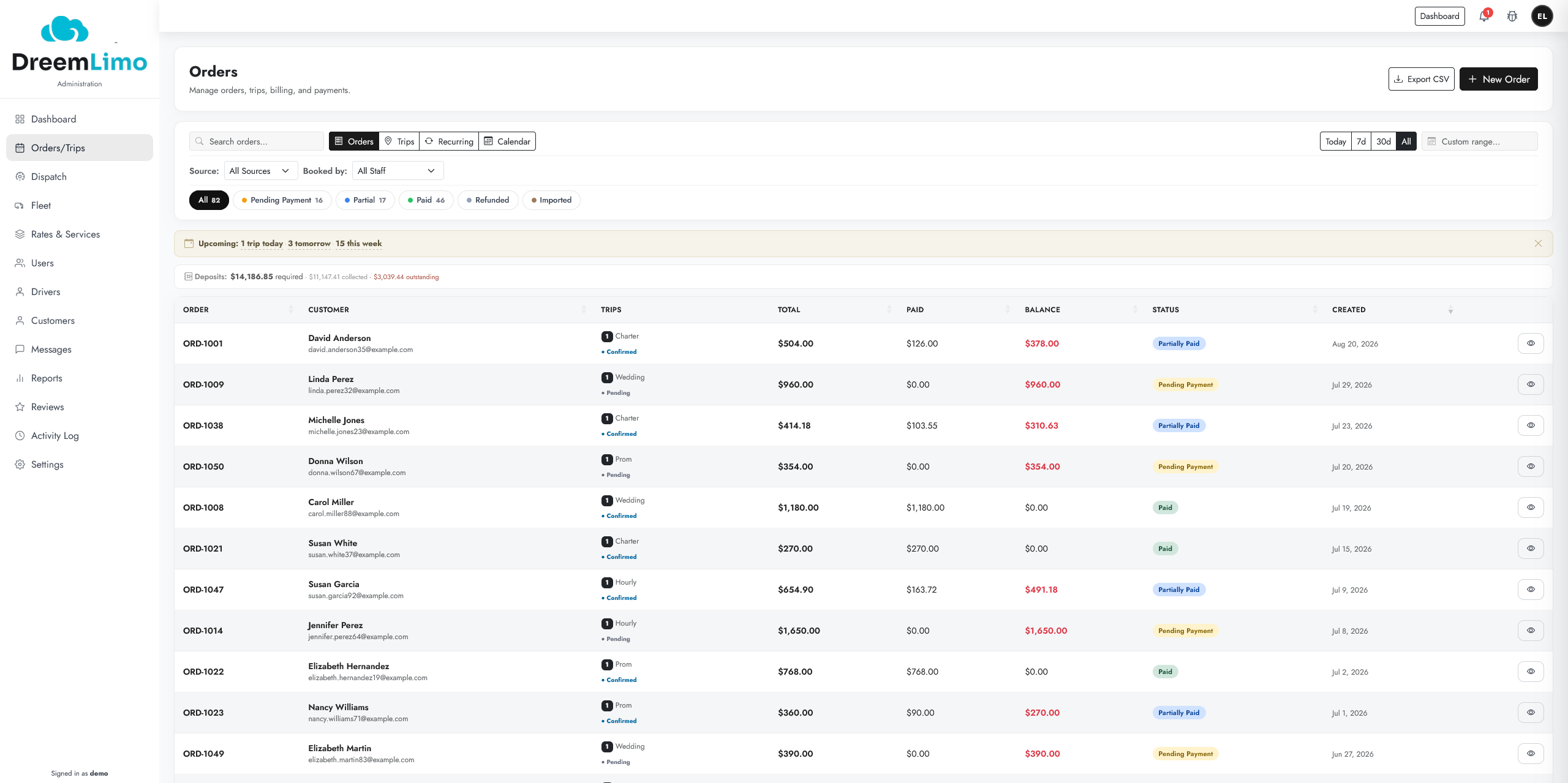
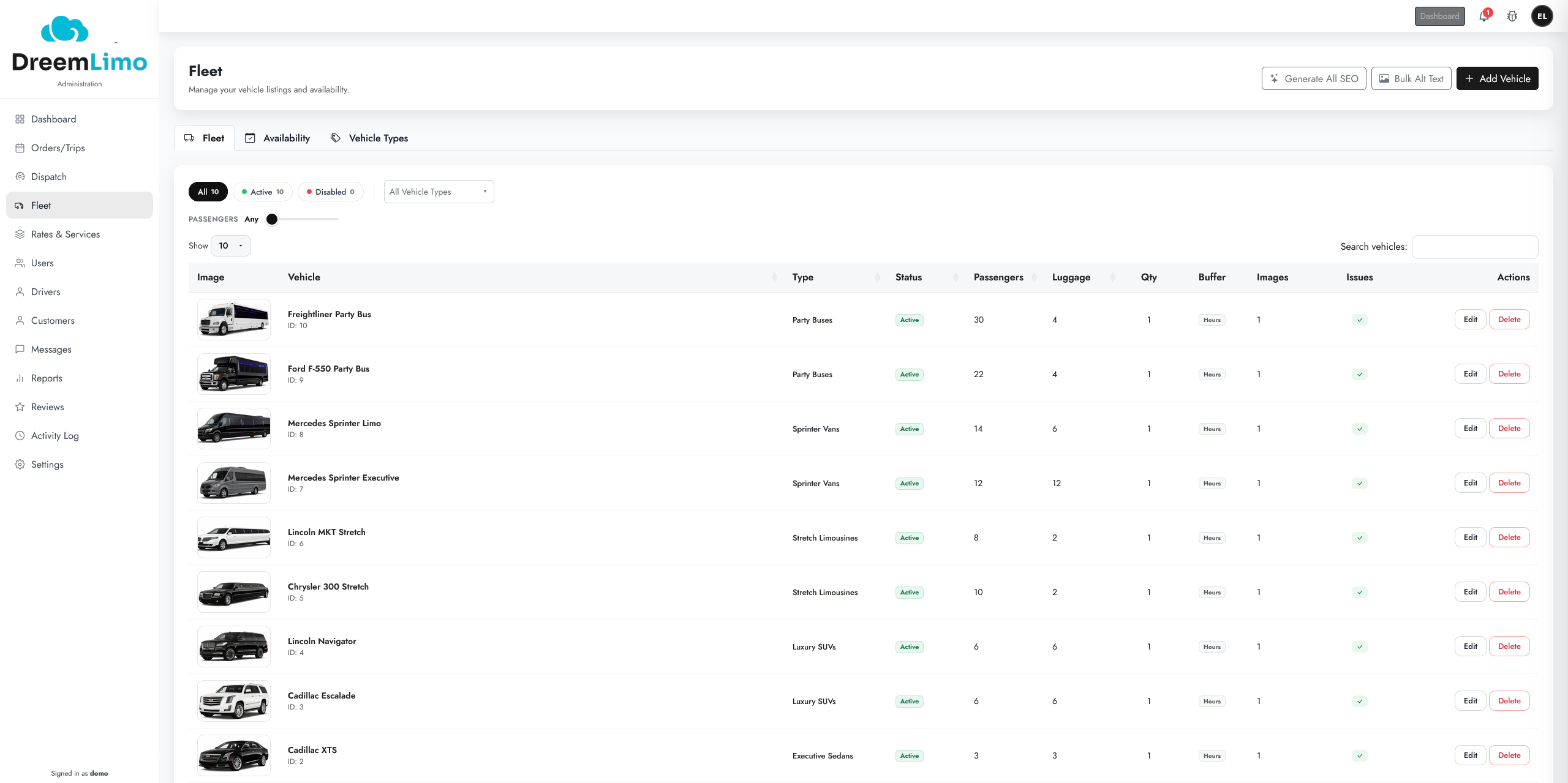
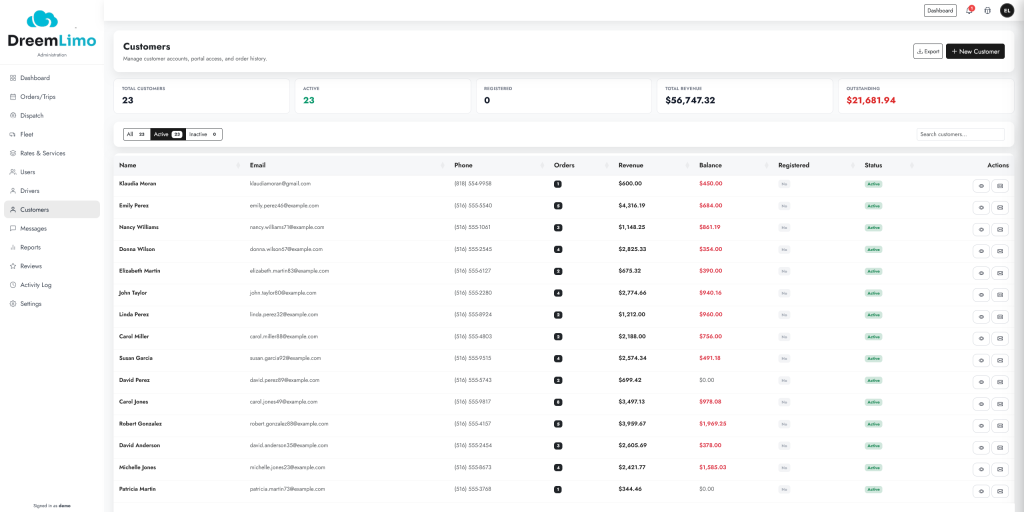
| Small fleet, 3–8 vehicles, mid-tier | $50–$150/month | Dispatch board, driver app, automated quotes, card-on-file capture, SMS reminders, basic reporting |
| Growing fleet, 9–20 vehicles, advanced tier | $150–$300/month | Farm-out management (sending overflow jobs to partner operators), zone-based pricing, affiliate network access, white-label passenger app, CRM tools |
| Large fleet or multi-location, 20+ vehicles | $300–$500+/month | Full API integrations, corporate account portals, custom branding, priority support, advanced analytics |
Per-booking fee models (where you pay 2–5% of each job instead of a flat monthly rate) can look attractive at first. But once you are running 30 or more bookings per month, a flat-rate plan almost always costs less. A $120/month flat plan breaks even against a 3% per-booking fee at roughly $4,000 in monthly gross bookings.
A $120/month flat plan breaks even against a 3% per-booking fee at roughly $4,000 in monthly gross bookings.
According to industry SaaS benchmarks tracked through 2025, operators who switch from manual quoting to automated limo apps report recovering 8 to 12 owner-hours per week. At a conservative $40 per hour value on your own time, that is $320 to $480 per week in recovered capacity — well above the cost of most mid-tier plans.
What Affects the Price of Limousine Software?
Six factors move the price of limo booking software up or down more than any other variables. Understanding them helps you avoid paying for features you will not use in 2026.
- Fleet size: Most platforms tier pricing by number of active vehicles or drivers. Adding a 10th vehicle to a plan capped at 9 can push you into the next pricing tier, sometimes adding $50–$100 per month.
- Booking volume: Per-booking fee models scale with your revenue. High-volume operators (50+ bookings per month) almost always save money on flat-rate plans.
- Farm-out and affiliate features: Farm-out (the ability to send overflow jobs to vetted partner operators and receive a commission) requires network integrations that typically appear only in mid-to-upper tiers.
- White-label passenger app: A branded app in the App Store and Google Play adds $50–$200 per month on top of base pricing in most platforms, as of 2026.
- Payment processing integration: Some platforms bundle payment processing; others require a third-party processor. Bundled processing often carries a higher per-transaction rate (2.9–3.5%) versus using your own Stripe or Square account (2.7–2.9%).
- Support tier: Phone and live-chat support is often reserved for higher-tier plans. Entry-level plans may offer only email or ticket-based support with 24–48 hour response windows — a real problem if your dispatch board goes down at 5 p.m. on a Friday before prom night.
Seasonal demand is worth factoring into your software decision, too. Prom season (April–May), wedding season (April–October), holiday corporate parties (November–December), and New Year’s Eve are the 4 periods when booking volume can spike 3x to 5x above a typical January week. Your software needs to handle that load without slowing down or requiring manual workarounds.
Across our service calls in the local area, we see operators underestimate how much zone-based pricing (setting different rates by pickup ZIP code or radius from a hub) saves them on deadhead costs. Operators who configure zone pricing correctly typically recover 8–12% of gross revenue that was previously absorbed by unpaid drive time.
Operators who configure zone pricing correctly typically recover 8–12% of gross revenue that was previously absorbed by unpaid drive time.
What Is NOT Included in Most Base Plans?
Several features that operators assume are standard are actually paid add-ons or require a higher tier. These are the most common surprises when operators compare limo software plans.
- SMS and text reminders: Many platforms charge per SMS sent, typically $0.01–$0.05 per message. At 200 bookings per month with 2 reminders each, that is $4–$20 per month in SMS costs alone.
- Flight tracking: Automatic flight delay monitoring (so your driver adjusts pickup time when a flight lands late) is a premium add-on on most platforms, often $15–$40 per month extra.
- Corporate account portals: Allowing a corporate client to log in, manage their own bookings, and pull invoices is an enterprise feature on most platforms.
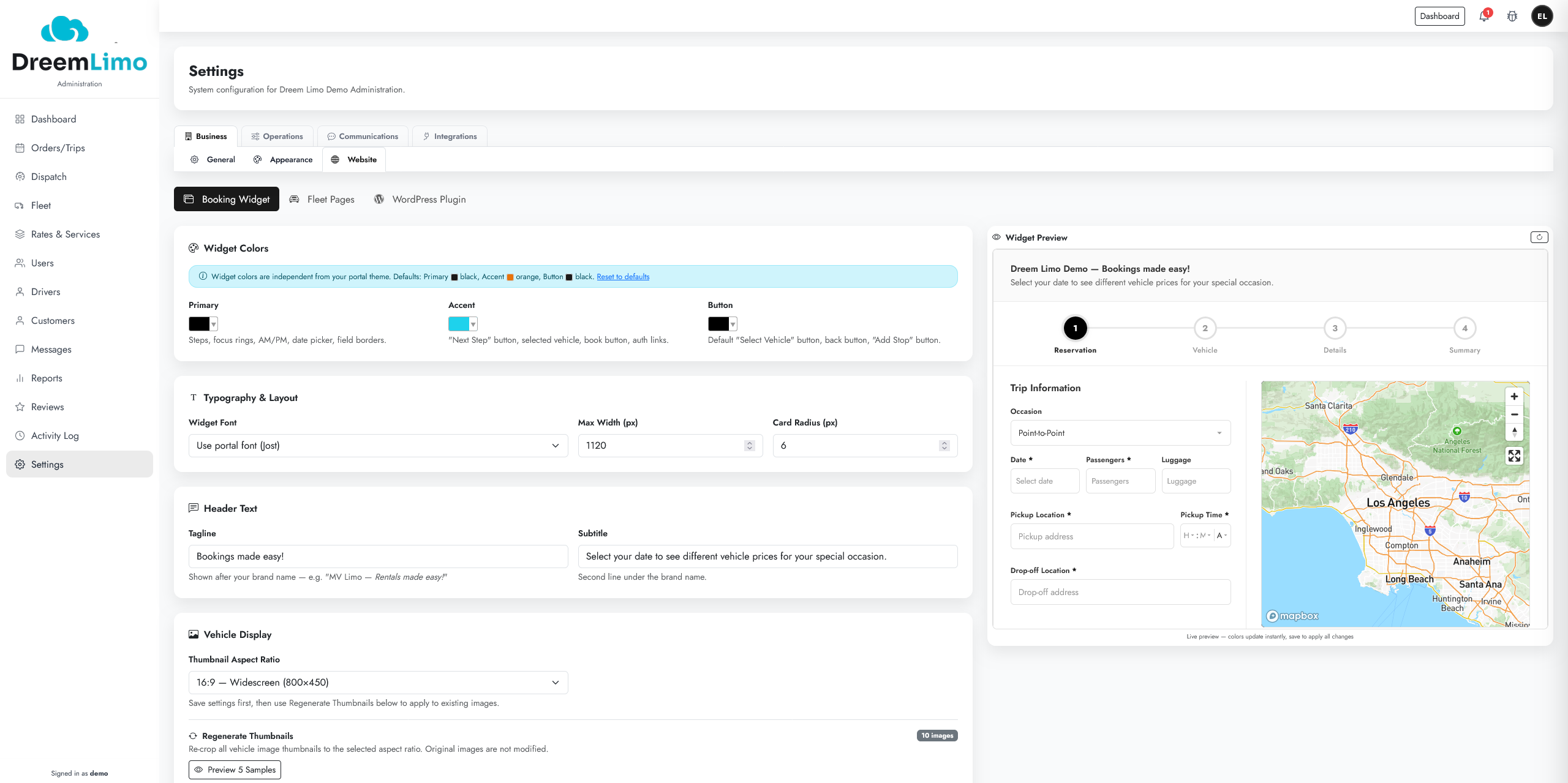
- Custom branding and white-label: Your logo on the booking widget is usually included. A fully branded passenger app is almost always an add-on.
- Accounting integrations: QuickBooks or Xero sync is included in some mid-tier plans but requires an add-on or manual export on others.
- Chargeback dispute documentation: Automated chargeback evidence packaging (timestamps, GPS logs, signed terms) is a premium feature that can save you significant money during holiday season when disputes spike.
How Do You Get an Accurate Quote for Limo Apps and Platforms?
Getting a real number from a limo software vendor takes about 10 minutes if you have the right information ready before you talk to them. Vendors price based on your specific operation, not a generic fleet size.
Have these facts ready before requesting a demo or quote:
- Number of active vehicles in your fleet (sedans, SUVs, stretch limos, party buses, sprinters — list them separately).
- Average monthly booking volume over the last 3 months.
- Your peak month booking volume (typically May, June, or December).
- Whether you do farm-out jobs or want to receive farm-in jobs from affiliate networks.
- Which payment processor you currently use, or whether you want the platform to handle payments.
- Whether you need a branded passenger app or just a web booking widget.
- Your current dispatch method: phone, text, spreadsheet, or existing software.
According to the ACCA’s 2024 small-business software adoption data, operators who demo at least 2 platforms before purchasing save an average of 18% on their first-year software costs compared to operators who sign with the first vendor they contact. Take the time to compare at least 2 options side by side.
Operators who demo at least 2 platforms before purchasing save an average of 18% on their first-year software costs.
Also ask vendors directly about their contract terms. Many limo apps offer month-to-month pricing at a 10–20% premium over annual contracts. If you are not sure the platform is right for your operation, month-to-month for the first 3 months is worth the premium. Annual contracts typically run 10–15% less but lock you in for 12 months.
The FTC’s guidance for small business software contracts recommends reviewing auto-renewal clauses and cancellation notice periods before signing — most SaaS contracts require 30 to 60 days written notice to cancel before an auto-renewal date.
Request a Custom Demo or Booking Platform Quote
The market ranges above give you a starting point for budgeting, but your actual limo booking software cost in 2026 depends on your fleet size, booking volume, and the specific features your operation needs. A solo operator running airport transfers in the local area has very different needs than a 15-vehicle fleet handling corporate accounts and farm-out jobs across the region.
Dreem Limo works with owner-operators to build and launch branded booking platforms built around how your business actually runs. Whether you need a simple online booking widget or a full dispatch-and-driver system, the right starting point is a conversation about your specific operation.
Call Dreem Limo at to schedule a demo or request a quote for your fleet. Bring your monthly booking volume and fleet count and you will have a real number in one call — no vague pricing tiers, no surprise add-ons after you sign.
Frequently Asked Questions
How much does limo booking software cost per month in 2026?
Most small-fleet operators pay between $50 and $150 per month for a solid mid-tier limousine software plan in 2026. Entry-level plans start near $0 but charge a 2–5% per-booking fee, which adds up quickly once you hit 30 or more bookings per month. Enterprise platforms for larger fleets can run $300 to $500 or more per month. Contact Dreem Limo to get a quote matched to your specific fleet size and booking volume.
Is there free limo software I can use to start?
Yes, several limo apps offer free base plans, but they almost always charge a per-booking percentage fee of 2–5%. For a solo operator just starting out, that can be a reasonable trade-off. Once your monthly gross bookings pass roughly $3,000 to $4,000, a flat-rate paid plan typically costs less than the per-booking fees. Always calculate your break-even point before committing to a free plan long-term.
What is the difference between limousine software and a regular booking app?
Limousine software is built specifically for chauffeur and black-car operations. It handles deadhead calculations, zone-based pricing, farm-out job management, driver dispatch boards, flight tracking, and card-on-file capture — features a generic booking app does not include. General booking tools like Calendly or Square Appointments are not designed for per-mile pricing, multi-vehicle dispatch, or affiliate network integrations that limo operators need.
Do limo booking platforms take a cut of every booking?
Some do and some do not — it depends on the pricing model. Per-booking fee platforms charge 2–5% of each job, which means the platform earns more as your revenue grows. Flat-rate subscription platforms charge a fixed monthly fee regardless of volume. Most operators with more than 30 bookings per month save money on flat-rate plans. Always ask a vendor upfront whether their pricing model includes a per-booking percentage.
Can limo software help me compete with Uber Black in the local area?
Yes, and the main advantage is your ability to offer pre-scheduled bookings with a fixed price, a named driver, and a card-on-file confirmation — things Uber Black does not guarantee. Limo software lets you capture bookings at 2 a.m. through an online widget, send automated confirmations, and store client preferences for repeat corporate accounts. Repeat clients and referrals are where independent operators consistently beat rideshare apps on margin.